The National Highways Authority of India (NHAI) said on 23 November 2026 that its barrier-free Multi-Lane Free Flow (MLFF) tolling system has raised net toll revenue by 19.84% across seven national highway fee plazas where it was operational before November, compared with the period just before each plaza switched over. The figures were released in New Delhi by the Ministry of Road Transport and Highways through the Press Information Bureau.
How much more toll has MLFF collected?
About ₹89.23 crore more in net revenue, according to NHAI. The seven plazas together collected roughly ₹538.95 crore in net revenue up to 1 November 2026, against a pre-MLFF benchmark of about ₹449.72 crore for the comparable period. NHAI described the 19.84% figure as a combined weighted increase; the simple average of the seven plazas works out to 21.10%.
Which toll plazas are covered?
The ministry listed the seven plazas, their go-live dates and the rise in net revenue at each:
- Choryasi, Gujarat (1 May 2026): 23.06%
- Mundka, Delhi (11 May 2026): 23.55%
- Daulatpura, Rajasthan (19 June 2026): 15.66%
- Gharaunda, Haryana (25 June 2026): 17.39%
- Manoharpura, Rajasthan (1 July 2026): 24.51%
- Shahjahanpur, Uttar Pradesh (1 August 2026): 16.57%
- Paranur, Tamil Nadu (1 October 2026): 26.95%
Two more plazas, Nemili and Chenasamudram in Tamil Nadu, went live on 12 November and 21 November 2026 respectively and were left out of the calculation because they had not been running long enough. MapMyTimes reported on the Chennasamudram launch earlier.
What does MLFF change for drivers?
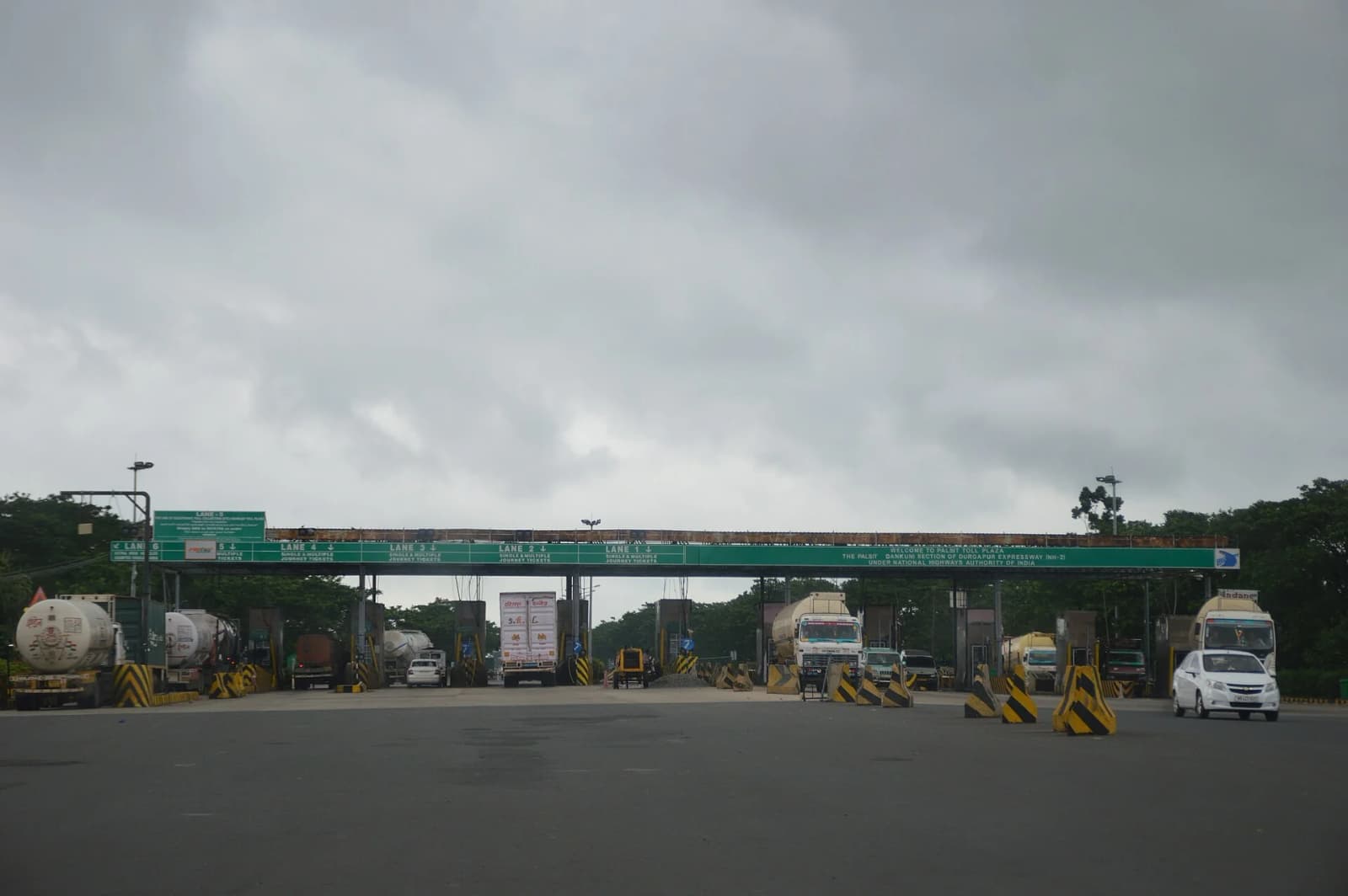
Under MLFF, vehicles are not stopped at a boom barrier; toll is collected electronically as they pass. The ministry said the system cuts congestion, travel time, fuel use and vehicle emissions, while making collection more transparent. NHAI added that the higher revenue came alongside a significant rise in transaction volumes and lower collection costs, which it read as evidence of reduced revenue leakage. For a background guide, see our explainer on MLFF tolling and e-notices.
What happens to vehicles that do not pay?
NHAI issues e-notices to recover unpaid fees, and it said about 60% of the value of e-notices issued at these plazas had already been recovered. If notices stay unpaid, the authority said, services on the VAHAN vehicle registration database can be restricted under the prescribed enforcement framework.
The authority also acknowledged a problem: some owners have been deliberately masking, hiding or tampering with number plates to avoid paying. NHAI said it is working with state governments and enforcement agencies against such cases. Police check posts have been set up at some MLFF locations, including the Gharaunda plaza in Haryana, where offending vehicles are being stopped and challaned under the Motor Vehicles Act, 1988. NHAI said it is also deploying AI-based tools, including vehicle fingerprinting and integration with VAHAN, to trace such vehicles and their registered owners.
Why it matters
The release gives a plaza-by-plaza revenue picture for barrier-free tolling since the first site opened at Choryasi on 1 May 2026. The numbers are NHAI's own and compare each plaza's post-launch collections with a pre-launch baseline; the release does not give transaction counts or the exact length of the baseline periods, so independent comparison is not yet possible.
What happens next?
NHAI said it remains committed to extending barrier-less tolling across the national highway network, while tightening technology-based monitoring and enforcement with state governments to curb toll evasion. It did not announce a list or timeline for the next plazas.
Photo source · Biswarup Ganguly, CC BY 3.0