The National Highways Authority of India (NHAI) switched the Chennasamudram Toll Plaza in Ranipet district, Tamil Nadu, to barrier-free tolling at midnight on 21 November 2026, making it the State's third such plaza. With more highways moving to the system, many drivers want to know how a toll plaza without barriers works and what happens if their FASTag payment fails. Here is what the official record shows.
What is Multi-Lane Free Flow tolling?
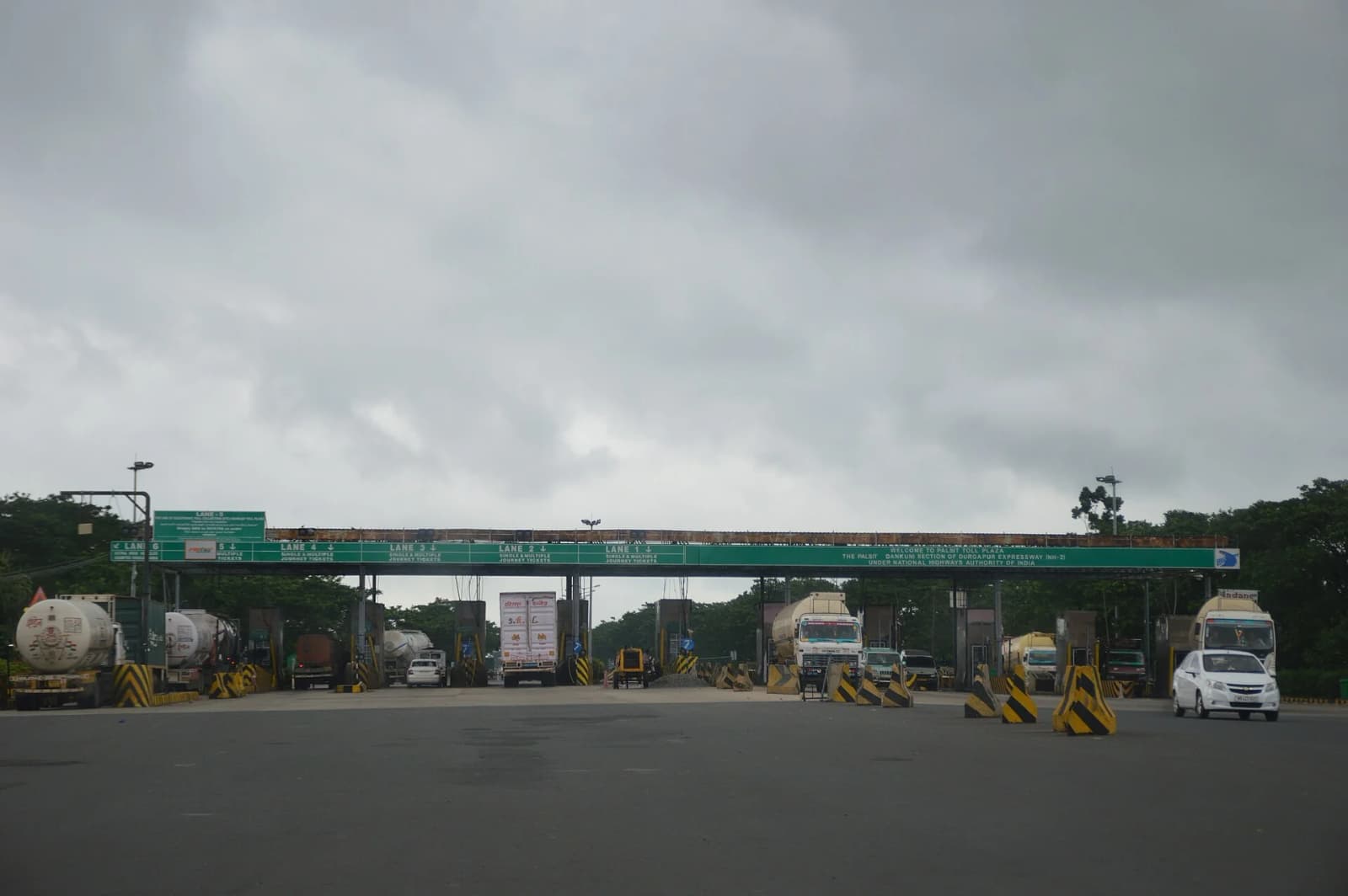
Multi-Lane Free Flow (MLFF) is a way of collecting tolls without making vehicles stop at booths or boom barriers. Instead, overhead gantries carry FASTag/RFID readers and Automatic Number Plate Recognition (ANPR) cameras that identify each vehicle as it passes, and the toll is deducted from the linked FASTag account, according to NHAI's release of 21 November 2026.
The camera reads the vehicle's registration number, while the reader picks up the FASTag. In its August 2025 description, NHAI said transactions work by reading both the FASTag and the vehicle registration number, using high-performance RFID readers and ANPR cameras.
Why is it in the news?
It is in the news because NHAI turned on MLFF at Chennasamudram, on the Karaipettai–Walajahpet section of NH-48 on the Chennai–Bengaluru corridor, at 00:00 hrs on 21 November 2026. NHAI said the plaza recorded 9,81,450 vehicles in October 2026, about 31,660 a day.
Tamil Nadu's first MLFF plaza was Paranur, in October 2026, followed by Nemili, the authority said. The idea has been in the works for over a year:
- 30 August 2025: Indian Highways Management Company Limited (IHMCL), a company promoted by NHAI, signed an agreement with ICICI Bank to build India's first MLFF system at Choryasi Fee Plaza in Gujarat on NH-48, plus one at Gharaunda Fee Plaza in Haryana on NH-44. NHAI said then it planned MLFF at around 25 fee plazas in that financial year, according to its release.
- 17 March 2026: Amended National Highways Fee rules took effect, creating a legal process for recovering tolls that are recorded but not paid.
- 2 May 2026: NHAI announced that MLFF had been launched at Choryasi on the Surat–Bharuch section, with around 41,500 vehicles crossing on the first day.
How does it affect you?
For drivers with a working FASTag and enough balance, the main change is that you do not need to stop at the plaza. NHAI says users must keep a functional FASTag with sufficient balance to avoid an Electronic Notice, or E-Notice.
The rules behind the E-Notice are set out in the government's release on the National Highways Fee (Determination of Rates and Collection) (Second Amendment) Rules, 2026, issued on 18 March 2026:
- What triggers it: An "unpaid user fee" is the toll due from a vehicle whose passage was recorded by electronic toll collection equipment but whose payment was not received. NHAI's May 2026 release lists insufficient balance and an invalid or non-functional FASTag as examples.
- How you are told: E-Notices go to the registered vehicle owner and show vehicle details, date and place of passage, and the amount. They may be sent by SMS, email, mobile app or other electronic means, and are also put on a designated online portal. NHAI's May release names nhfeenotice.parivahan.gov.in as the portal for viewing and paying notices.
- How much you pay: The amount due under an E-Notice is twice the normal toll. If you pay within 72 hours of the notice being issued, only the normal toll is charged.
- If you think it is wrong: You can file a representation on the portal within 72 hours of issue. It must be decided within five days, or the claim lapses.
- If you do not pay: Dues unpaid for more than 15 days, with no pending representation, are recorded on the VAHAN vehicle database, and restrictions may be placed on vehicle-related services until they are cleared. NHAI has also said non-payment may lead to the FASTag being blacklisted.
Because notices go electronically to the registered owner and the reduced rate lasts only 72 hours, a notice that is missed can mean paying double.
What is established and what is not?
The penalty structure, deadlines and grievance route are established in notified rules. NHAI's stated aims are less tested. It says MLFF improves transparency, cuts the cost of running physical plazas, eases congestion and reduces fuel use, but the releases reviewed for this article do not include before-and-after travel-time or error-rate data.
Some details are also unclear from official releases. The 21 November release does not give the E-Notice amount for Chennasamudram, a schedule for further conversions, or a national count of MLFF plazas. It is also not stated whether the target of around 25 plazas set in August 2025 was met.
What happens next?
NHAI says it will keep extending MLFF across national highways in phases, but has not published a list of the next plazas. Drivers using converted plazas, including Choryasi, Paranur, Nemili and Chennasamudram, should expect no barriers and should check the E-Notice portal if a FASTag payment fails. MapMyTimes will report new conversions and any change to the rules as they are notified.
Photo source · Biswarup Ganguly, CC BY 3.0