A Marshall Islands-flagged asphalt tanker slammed into a docked river cruise boat on the Mississippi River in New Orleans on Friday, 13 November 2026, rolling the five-deck paddlewheeler onto its side and leaving most of it under water. Despite scenes of passengers clinging to railings and jumping into the river, city officials said every person on board was accounted for and no one was killed. Mayor Helena Moreno called it a "miracle on the Mississippi".
The collision, between the 160-metre tanker Atlantic Asphalt and the American Cruise Lines riverboat American Heritage, quickly became one of the most widely followed stories in the United States. Federal investigators are now trying to establish why a large ocean-going ship appears to have lost steering in one of the busiest stretches of river in the country.
What happened
According to the Port of New Orleans, the tanker struck the docked riverboat at about 12:30 pm local time on Friday, near the port's facilities below the Crescent City Connection bridge and close to the French Quarter. Ship-tracking service MarineTraffic logged the two vessels coming together at 18:29 UTC, the maritime news site gCaptain reported.
The American Heritage had tied up roughly two hours earlier and was in the middle of letting passengers off, multiple outlets reported. gCaptain said the boat had arrived from Natchez, Mississippi, and the tanker hit its port side. NBC News reported that the riverboat was due to begin a seven-day cruise to Mississippi.
Moreno told reporters the tanker "lost control" and collided with the cruise ship, which began to sink and then toppled over, throwing some people into the water. Police were helping with the evacuation, but not everyone had got off before the boat capsized, ABC News reported. Those still aboard were picked up by a variety of vessels. Nearby boats said they had pulled more than a dozen people out of the river, according to CBS News, and the mayor said private boats joined the rescue as volunteers.
U.S. Coast Guard Captain Melanie Burnham said there appeared to have been "some type of a loss of steering" on the tanker, but stressed that the exact cause was not yet known. She described the cruise ship as "significantly damaged", with only a small part still above the waterline.
The two ships
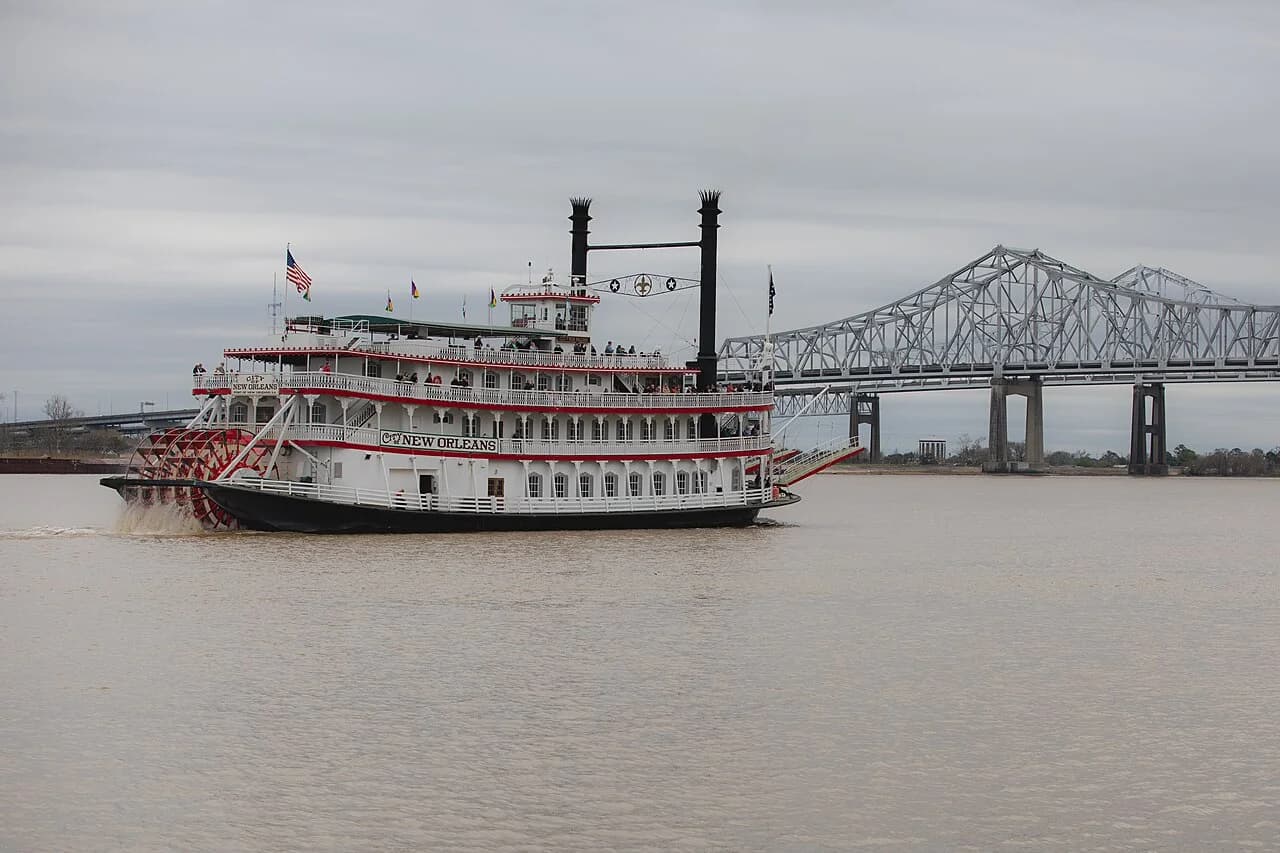
- American Heritage: a paddlewheel river cruise boat built in 2015 and operated by American Cruise Lines. CBS News describes it as five storeys high with room for up to 150 passengers; gCaptain gives its length as 81 metres and says it is U.S.-flagged.
- Atlantic Asphalt: a Marshall Islands-flagged tanker that carries asphalt and bitumen. The Associated Press, citing MarineTraffic, reported that it is owned by a subsidiary of China State Shipbuilding Corporation, a Chinese state-owned conglomerate. NBC News said public records show Chinese and Liberian companies as owners.
Ship-tracking data cited by gCaptain show the tanker called at Amuay in Venezuela in mid-October, reached Paulsboro, New Jersey, on 24 October, left on 26 October and arrived in New Orleans on 11 November, two days before the crash.
The human toll
No deaths were reported on either vessel, and Moreno said no one on the tanker was hurt. The mayor said 32 people from the cruise ship were taken to hospitals, none with critical injuries; LCMC Health said it was treating 32 injured passengers. Reports differ on how the two harbour police officers who went into the water are counted: ABC News said the 32 hospitalised included 30 passengers and two officers, while CBS News reported Harbor Police Chief Melanie Montroll as saying two of her officers were in hospital in good condition.
Passengers described terrifying moments. Rhonda Akers told NBC News that the tanker "hit us again" after the first impact and that she climbed over a railing to save herself; her husband was taken to hospital with a head injury. A restaurant manager on the boat told ABC News there was a hole in the hull in the dining room, and that the crew, who train weekly for emergencies, "just stayed calm" while guiding guests to safety.
The American Red Cross said volunteers were providing water, blankets and emotional support, and Lieutenant Governor Billy Nungesser secured 85 hotel rooms for affected passengers, local broadcaster WDSU reported. American Cruise Lines said it was "grateful to the U.S. Coast Guard, our crew, and the local first responders" and was settling guests into hotels.
Timeline
- 11 November: Atlantic Asphalt arrives in New Orleans, according to tracking data cited by gCaptain.
- 13 November, about two hours before the crash: American Heritage docks and begins disembarking passengers.
- About 12:30 pm: The tanker strikes the riverboat, which capsizes alongside the dock. The Coast Guard shuts the river between mile markers 93 and 96.
- Afternoon: Passengers are taken to the Port of New Orleans administration building for triage; the city's ferry service is suspended and later resumed.
- Late afternoon: Moreno and Louisiana Governor Jeff Landry tell a press conference everyone is accounted for.
- Later on 13 November: The NTSB says, because of the national flight ground stop, it will not send a board member and its investigators will drive to New Orleans.
- 14 November: NTSB investigators are expected on scene.
Who is investigating
The Coast Guard and the National Transportation Safety Board are both investigating. The NTSB has opened a marine investigation, numbered DCA27MM003, into the "collision of tank ship Atlantic Asphalt and passenger vessel American Heritage", and its case page lists the status as ongoing with no findings yet.
The probe was itself hit by the day's other big story. The NTSB had planned to fly a "Go Team" to the scene, but after the nationwide Federal Aviation Administration ground stop cancelled and delayed thousands of flights on Friday, the board said investigators would drive to New Orleans instead and no board member would attend. Governor Landry promised officials would "get down to the bottom of exactly what happened here". President Donald Trump praised the Coast Guard and first responders in a social media post.
What is established and what is not
Established: the date, time and place of the collision; the identities of both vessels; that the riverboat capsized at the dock; that no deaths were reported; that 32 people were treated in hospital with non-critical injuries; and that the Coast Guard and NTSB are investigating.
Still uncertain:
- Cause: Officials have spoken only of an apparent "loss of steering". Authorities have not said whether there was a mechanical or propulsion failure, gCaptain noted.
- How many were aboard: the Port of New Orleans said about 129 passengers plus crew; NBC News quoted Moreno as putting the figure at 180 to 190 people, and ABC News reported nearly 200, citing city officials.
- Ownership: accounts of the tanker's owners vary between reports.
- Reopening: no date had been announced for fully reopening the closed three-mile stretch of river, though the Coast Guard said it was working to do so as soon as possible.
Why it matters for readers in India
For readers in India, the episode is a striking example of how quickly one disruption can compound another: the same U.S. flight ground stop that left many travellers stranded, including those flying to and from India, also slowed the federal safety investigation into this crash. It also puts a spotlight on how a foreign-flagged, foreign-owned merchant ship's accident inside a busy U.S. port is handled. Briefings reported so far have not given a breakdown of the nationalities of those on board.
What comes next
With investigators on site, the immediate tasks are to examine the tanker, gather data and crew accounts, and work out how to deal with the half-submerged riverboat and reopen the waterway. The NTSB's case page is still blank under "What We Found" and "What We Recommended".