The Standing Committee of the National Board for Wildlife (SC-NBWL) met for the 92nd time in New Delhi on 23 November 2026, with Union Environment Minister Bhupender Yadav in the chair. The committee took up 133 project proposals needing wildlife clearance and, in a meeting built around marine conservation, released new studies on India's coastal protected areas, sea turtles, dugongs and humpback whales, according to a release from the Ministry of Environment, Forest and Climate Change.
What projects did the wildlife panel examine?
The committee considered 133 proposals from across the country that require wildlife clearance under the Wild Life (Protection) Act, 1972, the ministry said. These covered roads, defence infrastructure, drinking water supply and other development works. The ministry said the proposals were appraised on their ecological impact, their importance for public welfare and national development, and whether the mitigation measures offered were adequate to protect wildlife and habitats.
The release did not say how many proposals were approved, deferred or rejected, or name the individual projects.
Marine conservation in focus
The meeting was themed on marine conservation. Scientists from the Wildlife Institute of India (WII) made presentations on four subjects: the management effectiveness of coastal and marine protected areas, a pan-India assessment of marine turtles, the recovery of dugongs and their habitats between 2016 and 2026, and ways to reduce the impact of linear infrastructure such as roads and railways on wildlife.
Several reports were released at the meeting. The ministry listed:
- Management Effectiveness Evaluation of Coastal and Marine Protected Areas: findings of a 2024–26 assessment covering 108 coastal and marine protected areas.
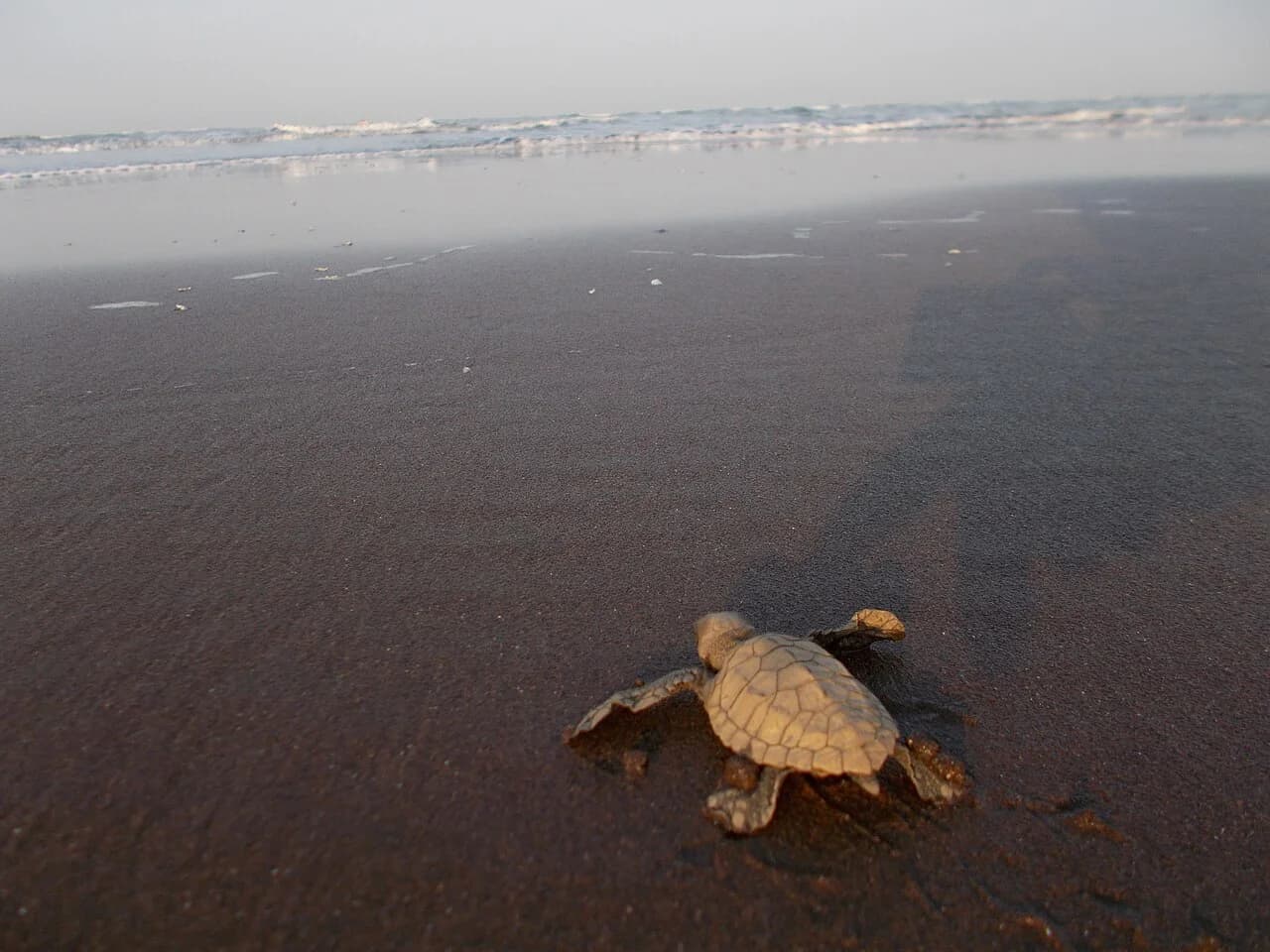
- Pan-India Assessment and Monitoring of Marine Turtles: a WII study spanning three nesting seasons (2022–25), about 1,300 km of coastline and 360 beach stretches, looking at the nesting status of four marine turtle species.
- Milestones of Recovery of Dugongs and their Habitats in India (2016–2026): a record of a decade of CAMPA-funded work by WII, including the first drone-based dugong population estimate in Tamil Nadu, put at 270 ± 16, and the notification of India's first Dugong Conservation Reserve in Palk Bay.
- Status of the Arabian Sea Humpback Whale in India: a 2022–25 WII assessment that identified seven potential sighting hotspots and flagged entanglement in fishing gear as a particular threat.
Three technical publications on marking, tracking and identifying marine turtles, produced under the Marine Turtle Action Plan (2021–2026), were also released. Separately, Yadav released a Field Manual on Small Cats, which the ministry said covers nine small cat species found in India and was developed under a Government of India–GEF project with Arunachal Pradesh, Uttar Pradesh and Rajasthan, supported by UNDP and the Global Tiger Forum.
Awards and a tiger reserve accreditation
The committee reviewed the report on Wildlife Week 2026, held under the theme "Connecting Habitats, Thriving Wildlife". According to the ministry, Yadav pointed to tiger reintroduction in Buxa, the release of Great Indian Bustards in Rajasthan and the expansion of Project Cheetah to a third site as highlights of the week.
The minister felicitated frontline staff and community groups selected for awards. For protection and anti-poaching, the awardees were the late Banoth Naveen of Telangana, Hukai H. Zhimo of Nagaland and V. Kumaresan of Tamil Nadu. For wildlife monitoring and special skills, the awards went to Umesh Bharat Kalsarpe of Maharashtra, Ashwinsinh Kiritsinh Jadeja of Gujarat and the Bahraich Human-Wildlife Conflict Management Group of Uttar Pradesh. Community conservation awards went to Shree Mahavir Machchhimar Sahakari Mandali Ltd of Mangrol, Gujarat, for whale shark conservation, and the Ponnuruvi Eco-Tourism Management Committee in Tamil Nadu's Sirumalai Hills.
Nameri Tiger Reserve in Assam was also accredited under the Conservation Assured | Tiger Standards (CA|TS), the ministry said.
Why it matters
The standing committee is the body that rules on development projects in or near protected areas, so its decisions directly shape where roads, defence works and water lines can be built. The new marine studies give officials a baseline for coastal protected areas and threatened species such as dugongs and humpback whales. The ministry has not yet published minutes showing the outcome of each of the 133 proposals.
Photo source · Pawar Pooja, CC BY-SA 4.0