Engineers assembling NASA's car-sized Dragonfly rotorcraft have completed installing and testing the mission's primary science vision system, DragonCam, according to a mission update published November 24, 2026. All seven science cameras, built by Malin Space Science Systems, were integrated into insulated housings aboard the spacecraft by mid-November at the Johns Hopkins Applied Physics Laboratory (APL) in Laurel, Maryland.
Thermal Protection and Multispectral Illumination
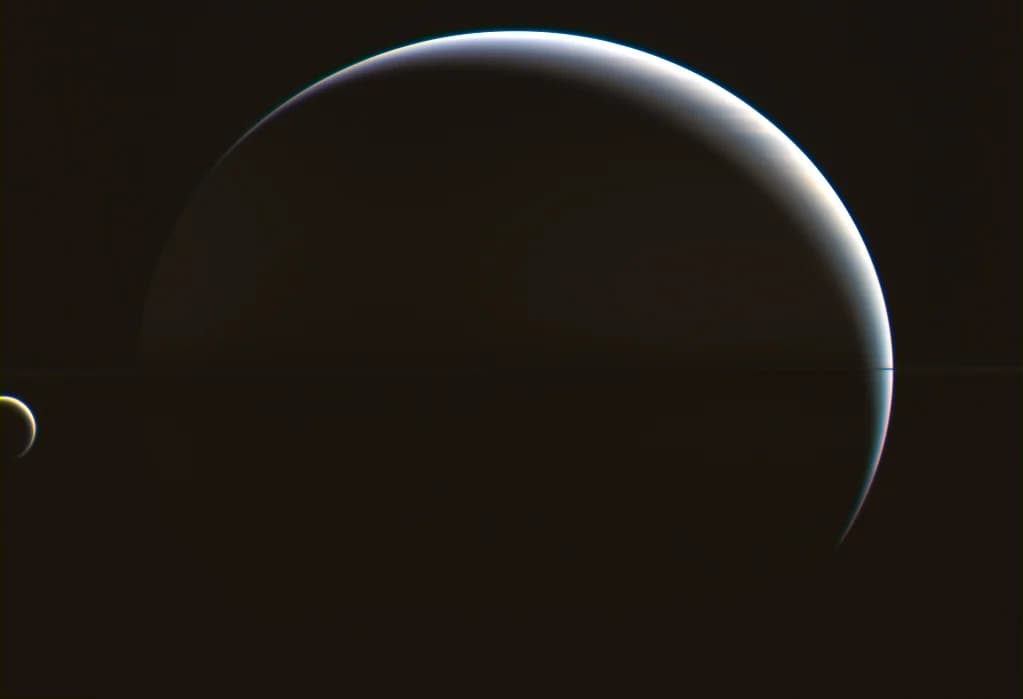
Because Saturn's largest moon, Titan, experiences cryogenic surface temperatures dropping to minus 290 degrees Fahrenheit, each DragonCam unit peeks outward through a dedicated window inside a protective foam enclosure. To examine surface grains and search for organic compounds during Titan's eight-Earth-day night, APL engineers built a configurable LED array spanning ultraviolet to infrared wavelengths.
"With the capability to take images when Dragonfly is on the surface as well as while flying, DragonCam will give us both detailed views and sweeping panoramas of Titan's landscape," said Elizabeth Turtle, Dragonfly principal investigator at APL.
Seven Angles Ahead of 2028 Launch
Alongside two navigation cameras installed earlier in the summer, the DragonCam array pairs a 90-degree forward wide-angle camera with a higher-resolution medium-angle unit for stereoscopic terrain mapping, backed by two side-facing wide-angle lenses. Underneath the lander, two downward cameras verify safe landing sites for the DrACO drill and seismometer, while a microscopic imager resolves millimeter-scale sand grains around sampling points.
Mission teams expect additional instruments—DraGNS, DraGMet, DraMS, and DrACO—for delivery and integration in the coming months ahead of Dragonfly's scheduled July 2028 launch and late-2034 arrival at Titan.