The United States space agency NASA said on 18 November 2026 that it, Northrop Grumman and SpaceX are targeting no earlier than 10:47 a.m. Eastern Standard Time on Sunday, 29 November (9:17 p.m. IST), to launch the next cargo mission to the International Space Station from Cape Canaveral Space Force Station in Florida, United States. The mission, called Northrop Grumman Commercial Resupply Services 25 (CRS-25), will carry roughly 11,000 pounds, or about 5,000 kg, of science investigations, supplies and equipment.
What is launching, and from where?
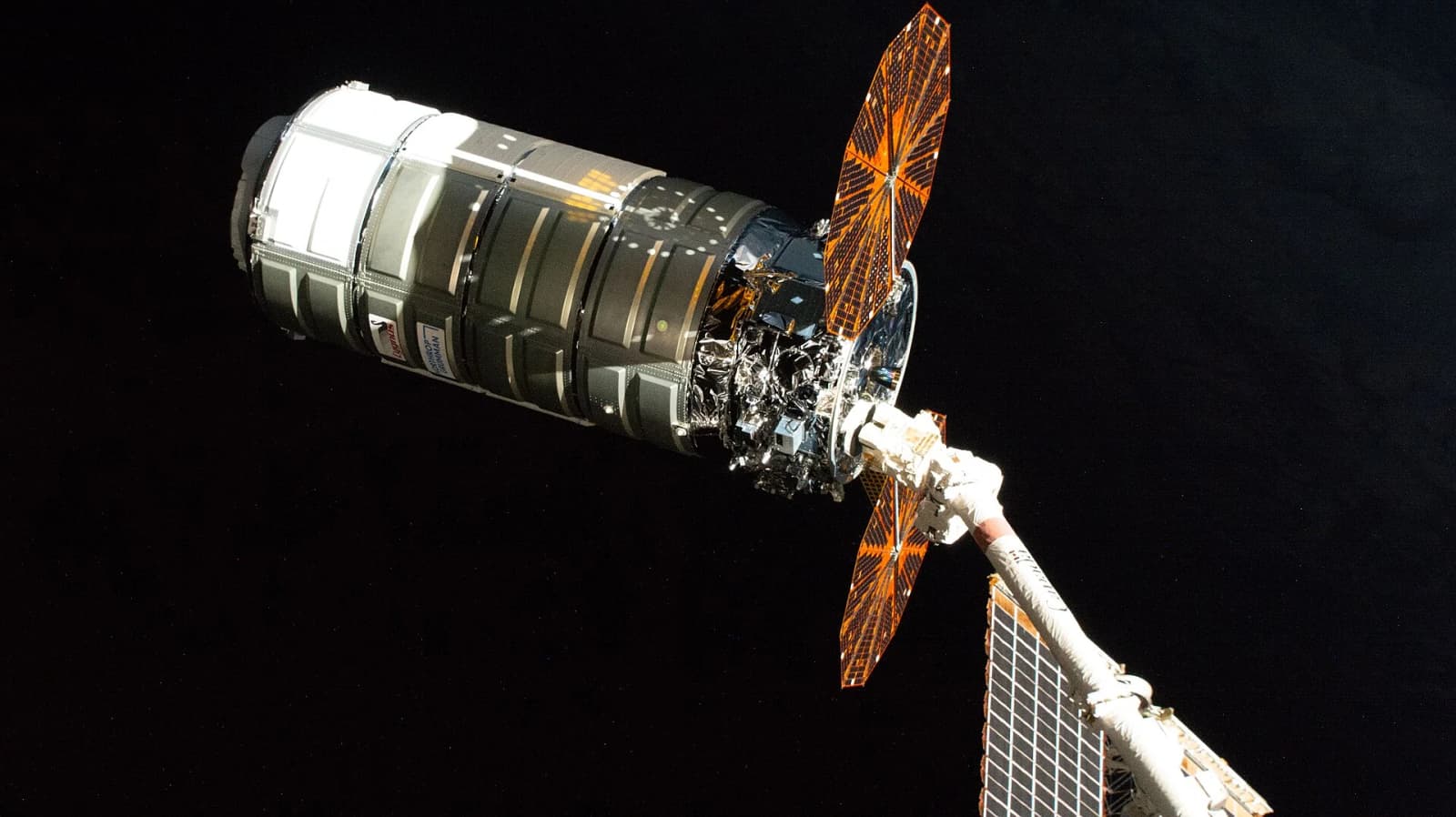
A Northrop Grumman Cygnus XL cargo spacecraft will fly on a SpaceX Falcon 9 rocket from Space Launch Complex 40, according to the NASA media advisory. Northrop Grumman has named this spacecraft the S.S. James "Jim" A. Lovell, in honour of the former NASA astronaut who flew four missions: Gemini VII, Gemini XII, Apollo 8 and Apollo 13, the mission that went around the Moon.
The previous flight in the series, CRS-24, also used a Cygnus XL on a Falcon 9 from the same pad and lifted off on 11 April 2026, NASA said.
When will Cygnus reach the space station?
Capture is planned for Tuesday, 1 December. NASA astronauts Jessica Watkins and Luke Delaney, who are currently aboard the station, will grab the spacecraft with the Canadarm2 robotic arm. NASA's schedule puts the capture at 2:35 a.m. EST (1:05 p.m. IST). Ground controllers will then attach Cygnus to the Earth-facing port of the station's Unity module so the crew can unload it.
What science is on board?
NASA highlighted several research payloads in the cargo:
- experiments aimed at improving drug delivery for cancer and osteoarthritis;
- work to predict how cancer spreads;
- studies to advance treatments for muscle loss;
- investigations to improve radiation sensing and food production for future long-duration missions.
The agency did not list individual experiment names in the advisory.
How long will it stay?
Cygnus XL is scheduled to remain attached to the orbiting laboratory until May 2027. It will then leave loaded with several thousand pounds of rubbish and unneeded cargo and burn up harmlessly on re-entry into Earth's atmosphere, according to NASA.
Why it matters
Commercial cargo flights such as Cygnus keep the space station stocked with food, hardware and fresh experiments for the crew. The CRS-25 launch comes as SpaceX's Dragon cargo craft prepares to leave the station; MapMyTimes reported that the Dragon CRS-35 departure was pushed to 19 November over splashdown weather.
What happens next?
NASA will hold a prelaunch media teleconference at 12 p.m. EST on Monday, 23 November (10:30 p.m. IST), streamed on its YouTube channel. Speakers listed are Gaurang Patel, operations integration manager for NASA's Low Earth Orbit Program; Jennifer Buchli, chief scientist of the same programme; Dave Schiller, vice president for civil space and sciences at Northrop Grumman; and Jared Metter, director of flight reliability at SpaceX.
Launch-day coverage is set to begin at 10:25 a.m. EST on 29 November on NASA's website and streaming platforms, and arrival coverage at 1:10 a.m. EST on 1 December. Members of the public can also register to attend the launch virtually. As with any launch, the target time is "no earlier than" and may change.
Photo source · NASA Johnson Space Center, public domain