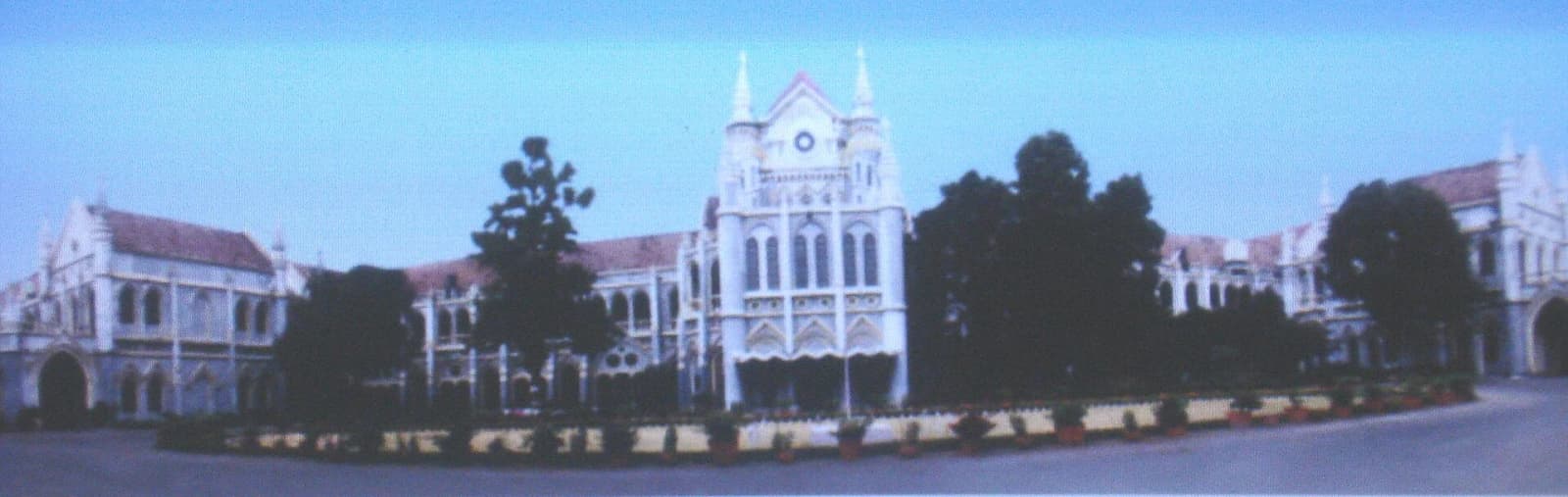
The Madhya Pradesh High Court on 27 November 2026 dismissed a petition by the OBC Advocates Welfare Association that challenged the Supreme Court collegium's recommendation to appoint seven advocates as judges of the High Court, holding at its principal seat in Jabalpur that courts have only a narrow role in reviewing judicial appointments.
The ruling came from a division bench of Chief Justice Alpesh Yeshwant Kogje and Justice Vivek Jain. The case, registered as Writ Petition No. 45950/2026, OBC Advocates Welfare Association vs Union of India and others, had sought adequate representation for Scheduled Castes (SC), Scheduled Tribes (ST) and Other Backward Classes (OBC) in appointments to the bench, according to reports in the Free Press Journal and Bhopal Samachar.
What did the petition challenge?
The petition targeted the Supreme Court collegium's recommendation of 26 October 2026, which named seven advocates for elevation to the Madhya Pradesh High Court. Arguing for the association, senior advocate Rameshwar Thakur told the court that none of the seven belonged to the SC or ST communities and only one was from the OBC category. Advocate Uday Kumar Sahu also appeared for the association, according to Bhopal Samachar.
The association further alleged that when the High Court collegium began the selection process on 13 May 2026, it issued no public notice to bar associations and laid down no transparent or objective criteria. As a result, the petition said, SC, ST, OBC and women advocates did not get a fair chance to be considered. It also claimed that reserved categories had been under-represented for years in law officer posts such as Additional Advocate General, Deputy Advocate General and Government Advocate.
When the plea was filed earlier this month, the association had cited the report of a parliamentary committee referred to as the Karia Munda committee and the Supreme Court's Kesavananda Bharati judgment on the basic structure of the Constitution to argue for diversity and transparency in the higher judiciary, Lalluram reported on 7 November.
Why did the High Court refuse to interfere?
The bench held that judicial review in matters of appointing judges is limited and that the High Court cannot set aside a collegium recommendation or send it back for reconsideration, because doing so would amount to substituting its own view for the collegium's. Relying on the Supreme Court's 2023 decision in Anna Mathews vs Supreme Court of India, it said courts can examine only a candidate's eligibility under Article 217(2) of the Constitution and whether the consultation required by Article 217(1) took place.
Citing Maruti Sondhiya vs Union of India (2024), the court said neither the Constitution nor judicial precedent provides for caste-based reservation or proportional representation in High Court appointments. It described a High Court judgeship as a high constitutional office rather than an ordinary civil post under the state government, so the absence of a public advertisement or a formal application process did not breach the equality guarantees of Articles 14 and 16.
The bench also said that representations forwarded from the President's Secretariat to the state government do not bind the appointing authority, and that the collegium's decision not to record a separate reasoned order does not make its recommendation illegal. Appointments of law officers such as the Advocate General and Government Advocates, it said, are a matter of executive policy and professional trust, distinct from judicial appointments.
Why it matters
The verdict comes amid wider debate over how judges are chosen. MapMyTimes recently reported that former Chief Justice of India B.R. Gavai wrote to President Droupadi Murmu alleging collegium bias in judges' appointments. The Madhya Pradesh ruling makes clear that, at least before a High Court, concerns about social diversity on the bench cannot be pressed as a legal ground to stall a collegium's choice.
What happens next?
The association has said it will challenge the High Court's order before the Supreme Court, Bhopal Samachar reported. Until then, the dismissal leaves the collegium's recommendation of the seven advocates unaffected by any order of the High Court.
Photo source · Gyanendra Singh Chau…, CC BY 3.0