The Ministry of Electronics and Information Technology (MeitY) has changed how manufacturers of laptops, desktops, servers and three other IT hardware products must calculate their local content to qualify for preference in government purchases, the ministry said in New Delhi on 20 November 2026. The revised method replaces the ministry's September 2020 rules for these products under the Public Procurement (Preference to Make in India) Order, 2017.
Which products are covered?
The revised methodology for calculating local content, or domestic value addition (DVA), applies to six products, according to the ministry's release:
- Desktop PCs and all-in-one PCs
- Laptop PCs
- Thin clients
- Servers
- Computer monitors
- Interactive flat panel displays
What changes in the calculation?
The new framework is process-based and built around a product's bill of materials, MeitY said. It gives credit for specific manufacturing steps carried out in India. These include assembling the mainboard or motherboard using surface mount technology (SMT), sourcing bare printed circuit boards locally, assembling, testing and packaging memory (RAM) and storage (SSD), display assembly, local sourcing of the chassis and power module, and final assembly and testing.
The method also gives weightage to eligible research and development carried out in-house in India. Products designed in India, and those whose intellectual property rights are created in India, get additional weightage, the ministry said.
How will companies prove their local content?
Manufacturers will use a standardised format to calculate DVA and certify it themselves. MeitY said the common format is meant to make assessments objective and transparent, and to allow officials to verify a manufacturer's self-declared figure where needed.
Why does it matter?
Under the Make in India procurement order, the local content a product contains affects how it is treated in government purchases. A clearer, step-by-step method changes what counts towards that share for makers of computers and displays. MeitY said the revision aims to promote domestic manufacturing, strengthen indigenous capabilities and create jobs. By rewarding activities such as motherboard assembly and component sourcing, along with Indian design and IP, the rules favour deeper manufacturing in India over final assembly alone.
When does it take effect?
The revised methodology will come into force six months after it is published in the Official Gazette, MeitY said. It will then supersede the relevant provisions of the September 2020 notification for these six products. The release did not give the Gazette publication date or the specific value-addition thresholds products must meet, so the exact start date and percentage requirements are not yet confirmed.
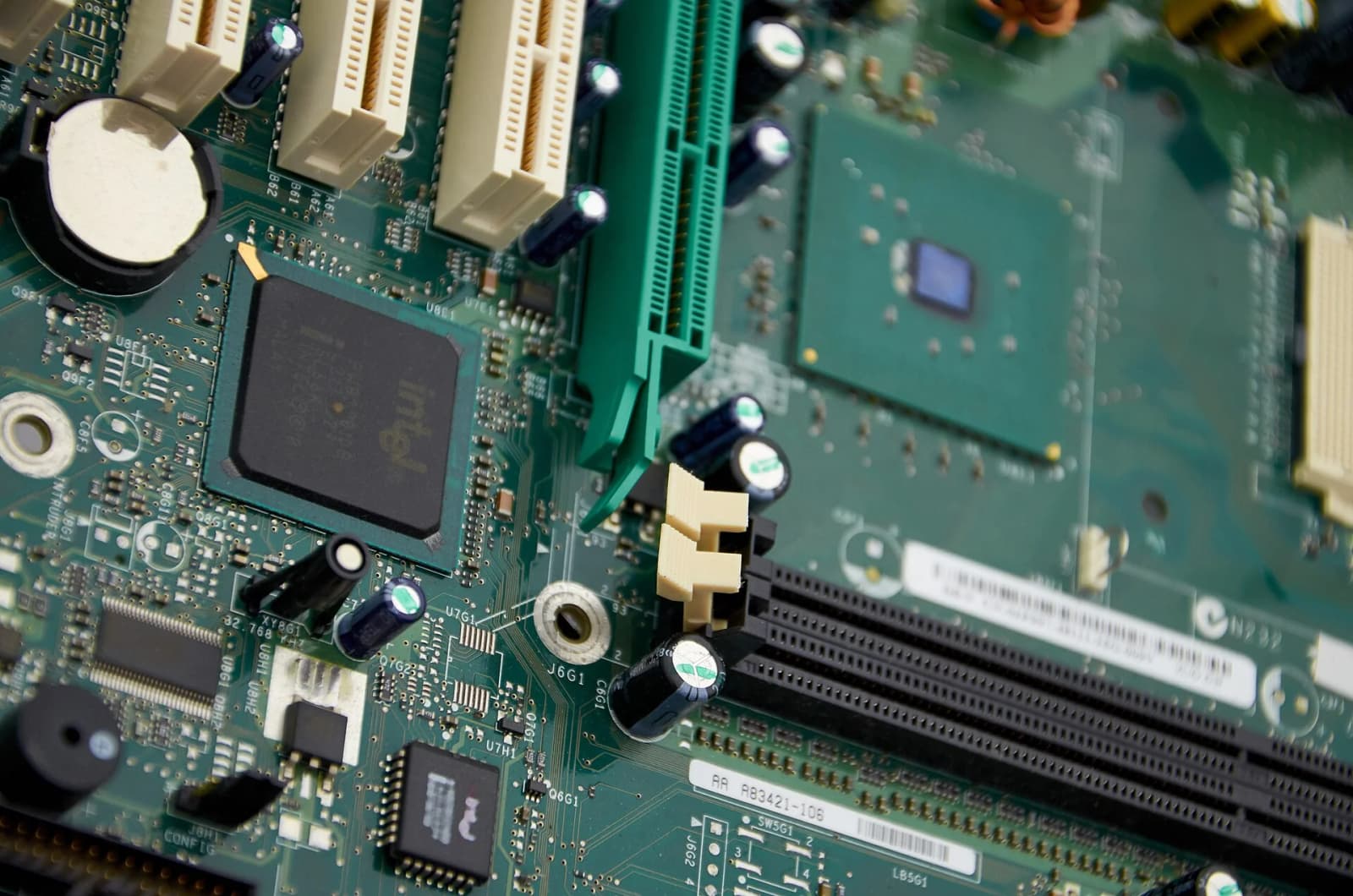
Photo source · Lenharth Systems, CC0 (public domain)