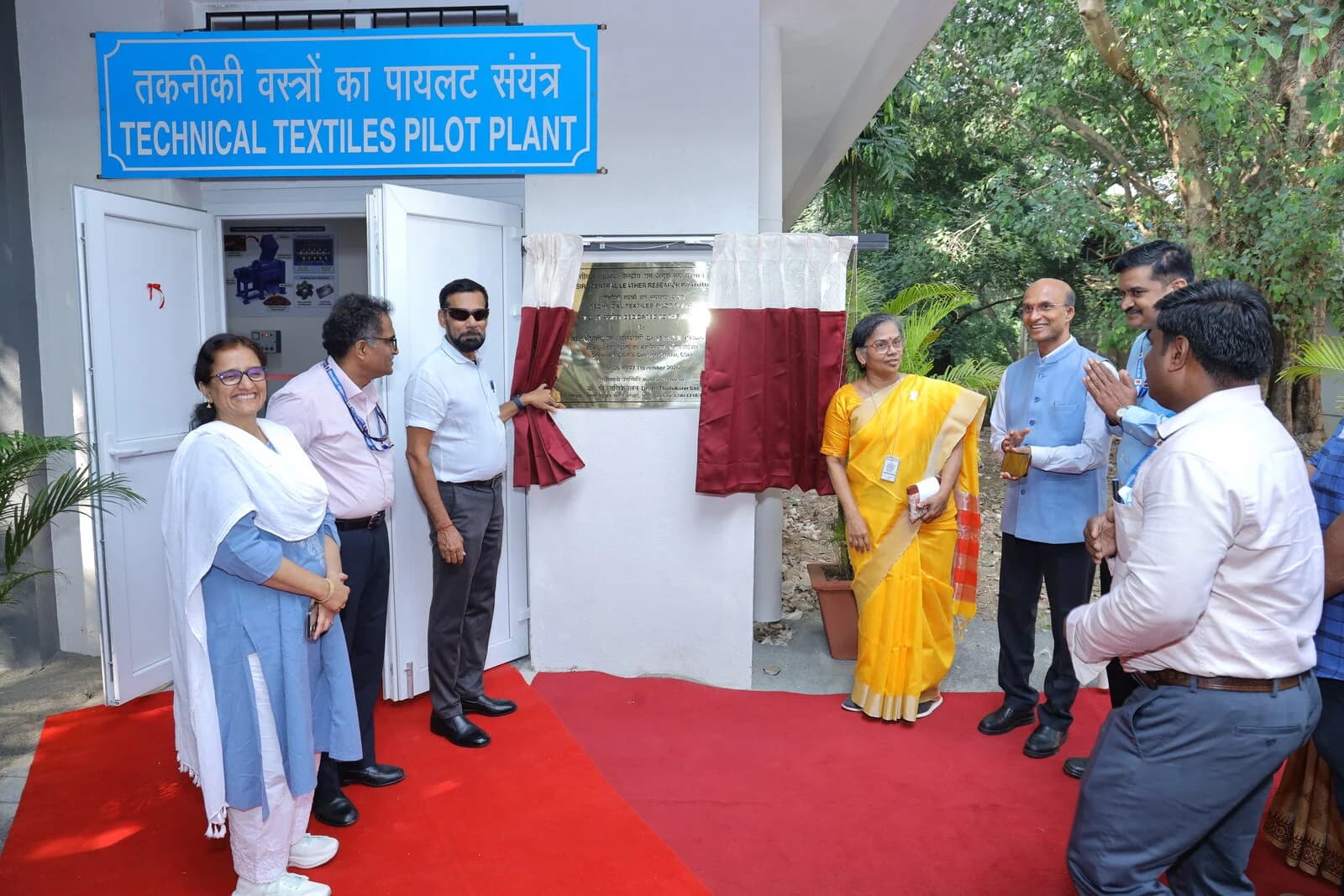
The Council of Scientific and Industrial Research (CSIR) opened a technical textile pilot plant and a 600 MHz nuclear magnetic resonance (NMR) spectrometer at its Central Leather Research Institute (CSIR-CLRI) in Chennai, Tamil Nadu, on 20 November 2026, and handed a carbon-footprint software platform for tanneries to four leather companies, according to a Press Information Bureau (PIB) release issued on 21 November.
The facilities were inaugurated by Dr N. Kalaiselvi, Secretary of the Department of Scientific and Industrial Research (DSIR) and Director General of CSIR, at a function hosted by CSIR-CLRI Director Dr P. Thanikaivelan.
What is in the technical textile pilot plant?
The pilot plant houses six machines: a miniature carding machine, a miniature rotor spinning machine, a needle-punching nonwoven machine, a fibre extracting and grinding machine, a leather scraps shredder and a yarn coating machine. According to the release, it gives the leather, footwear, textile and allied sectors access to equipment for developing materials, building product prototypes and validating processes.
CSIR describes the plant as an industry-support platform meant to lower development risk, use resources more efficiently, encourage sustainable manufacturing and make firms more competitive. Dr Kalaiselvi watched technical textiles being made from natural and synthetic fibres on the new equipment.
What will the NMR spectrometer be used for?
The high-resolution 600 MHz NMR spectrometer will support the institute's research in areas listed in the release as sustainability; footwear, apparel and components; collagen bio-products; and biomaterials and therapeutics, along with several ongoing CSIR projects.
What is CLI-Mate, the carbon platform for tanneries?
CLI-Mate is a digital platform developed by CSIR-CLRI to measure greenhouse gas emissions from leather manufacturing processes and the waste treatment systems linked to them. The institute calls it the first sector-specific platform of its kind. It is designed to help firms work out their carbon footprint, find the biggest sources of emissions and plan cuts.
Technology transfer agreements for CLI-Mate were exchanged with four companies:
- Sai Chamois Inc., Dindigul
- KAR Leathers Pvt. Ltd., Dindigul
- Vaigai Leathers, Dindigul
- VRS Leathers, Chennai
The release links the transfer to India's goal of reaching net-zero emissions by 2070.
Was any other technology licensed?
Yes. CSIR-CLRI also signed a licensing agreement with Kshetragna Agronym Pvt. Ltd. of Hyderabad for a water-based, bio-based polyurethane–silica coating for leather. Developed under CSIR's Specialty Chemicals Mission Mode project, the coating is meant to give leather a clear, smooth, non-sticky finish that resists water, oil and household stains such as tea and coffee, the release said.
Why it matters
The announcements show CSIR laboratories trying to move research into industry use through shared equipment and licensed technologies. Leather makers that adopt CLI-Mate will have a tool to track emissions across their processes, while the pilot plant is meant to let industry test materials, prototypes and processes on shared equipment. In separate CSIR work reported this week, another laboratory, CSIR-NEERI, brought scientists together in New Delhi on air pollution.
What happens next?
The release did not give a timeline for commercial use of the licensed coating or say how many more firms may take up CLI-Mate. The pilot plant and NMR facility have been dedicated to the scientific community and industry users.