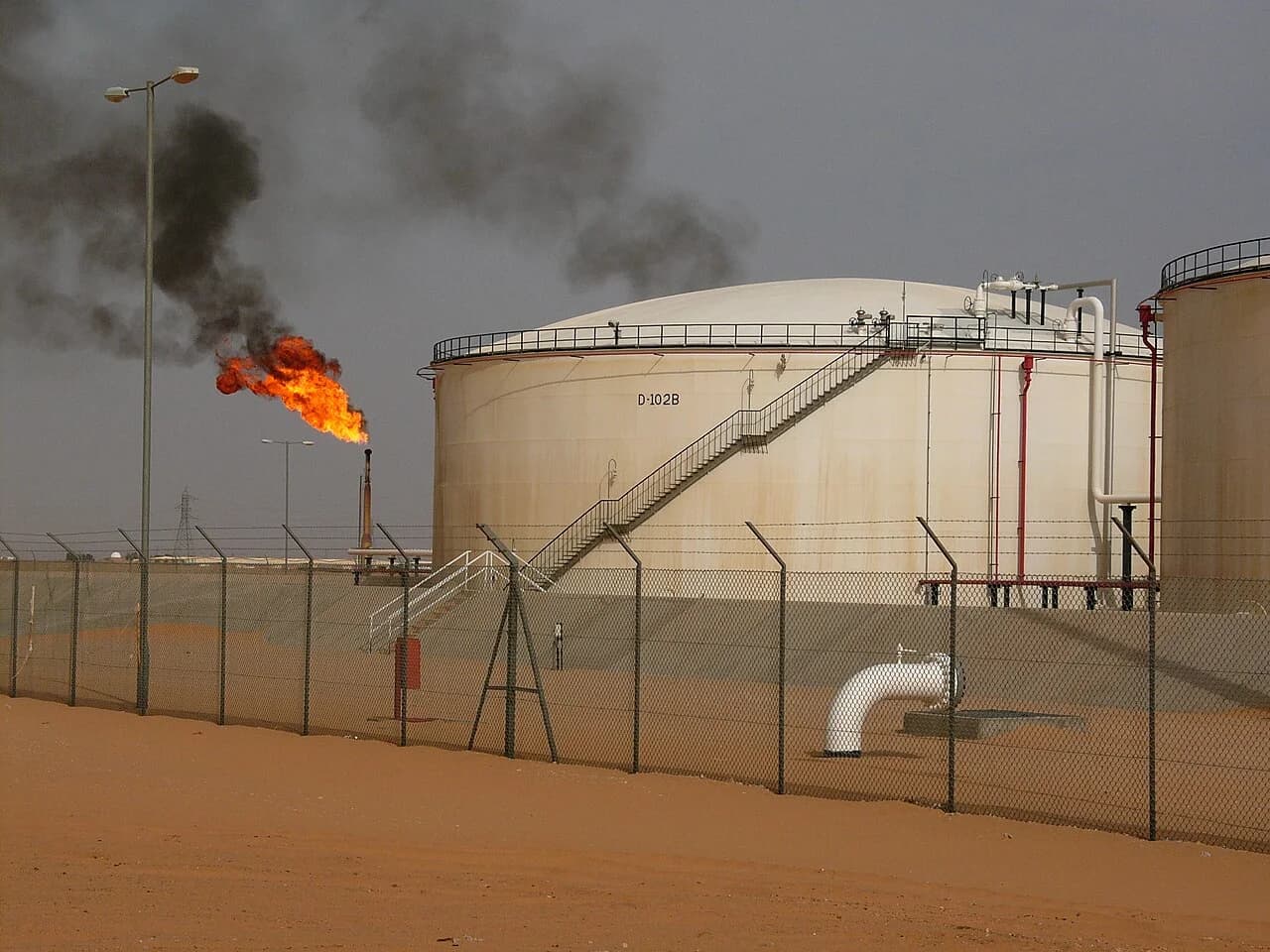
Libya's state-owned National Oil Corporation (NOC) said in a statement reported on 22 and 23 November 2026 that a group acting outside the law had shut a valve on the pipeline from the Sharara oil field in the country's south-west, a move it warned would cut production by about 350,000 barrels per day (bpd). Together with a separate pipeline outage, the NOC put Libya's total losses at roughly 365,000 bpd.
How much oil is Libya losing?
Libya stands to lose about 365,000 barrels a day, according to the NOC. The corporation said the Sharara valve closure alone would cost around 350,000 bpd, while the Hamada pipeline, shut for more than two weeks, was already causing a loss of about 15,000 bpd, China's Xinhua news agency and Türkiye's Anadolu Agency reported. Reuters carried the NOC's warning late on 22 November, describing the closure as "unlawful".
Anadolu Agency said the combined shortfall equals about 26% of Libya's average crude output in October, when the NOC reported production of 43.47 million barrels, or about 1.4 million bpd.
What is the Sharara field?
Sharara, in the Murzuq Basin in south-western Libya, is the country's largest oil field, Xinhua reported. Akakus Oil Operations runs it on behalf of the NOC and four foreign partners: Spain's Repsol, France's TotalEnergies, Austria's OMV and Norway's Equinor, according to Anadolu Agency. Its crude flows to the coastal Zawiya terminal, which supplies a local refinery and export tankers.
Anadolu reported that Sharara was producing about 335,000 bpd in August, and that the NOC and Akakus had discussed raising output to about 355,000 bpd by mid-2027.
What has the NOC said it will do?
The NOC board called on the Petroleum Facilities Guard and state authorities to help reopen both pipelines and said it intends to take legal action against those responsible for the Sharara shutdown, Anadolu reported. The corporation warned that the losses would add pressure on the economy at a time of rising global oil prices and existing domestic difficulties, according to Xinhua.
The NOC has not publicly named the group behind the closure in the reports reviewed.
Second Sharara disruption in two months
This is not the first such shutdown this autumn. In a statement on 21 September 2026, the NOC said an armed group had closed Valve No. 7 on the Sharara-to-Zawiya line, causing a pressure build-up and a sharp fall in production, and that technical teams could not reach the area. Anadolu reported that the NOC then shut one of the two units at the Zawiya refinery, and that flows resumed on 26 September.
The Hamada outage has also been costly. On 21 November, the NOC said the forced closure of the Hamada pipeline, which links oil fields to the Zawiya refinery, had lasted more than 20 days and cost 302,778 barrels of crude worth about $30.79 million, Syria's SANA news agency reported. The NOC urged authorities to reopen the closed valve and prevent further attacks on oil infrastructure.
Why it matters
Libya holds Africa's largest proven crude reserves, according to SANA, and Xinhua described Sharara as central to the country's oil output and national revenue. The new outages come as Libya's eastern-based authorities are already dealing with the fallout of a suspected drone strike on a Russian warship at Benghazi, and as importers such as India face a sharply higher energy bill: India's oil and gas import bill rose 60% in October. How quickly the Sharara valve is reopened will decide whether the loss becomes a lasting cut in Libyan supply.
Photo source · Javier Blas, CC BY-SA 3.0