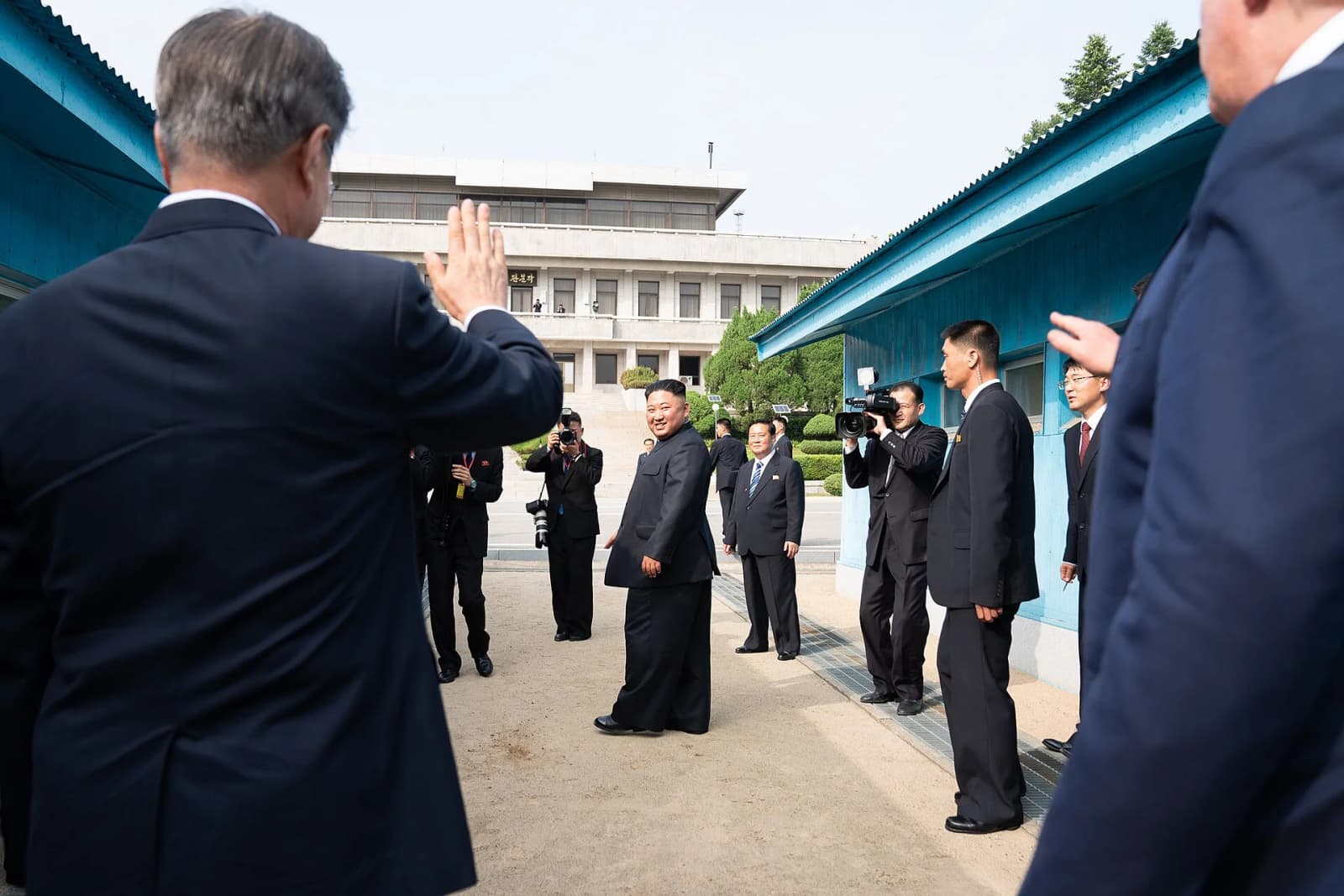
North Korean leader Kim Jong Un personally received the credentials of ten newly appointed foreign ambassadors, including India's and Russia's, at a ceremony in Pyongyang on 22 November 2026, and used the occasion to say his country seeks neither "supremacy" nor "expansion", state media reported on 23 November.
The ceremony was held at the headquarters of the Central Committee of the ruling Workers' Party of Korea, Russia's TASS news agency reported, citing the Korean Central News Agency (KCNA). Foreign Minister Choe Son Hui attended.
Which countries' ambassadors presented credentials?
Envoys from ten countries presented their papers: Russia, Indonesia, Sweden, Vietnam, Brazil, the Czech Republic, India, the Philippines, Thailand and Bangladesh, according to TASS and the Korea Herald. Kim posed for a photograph with each diplomat.
Russia's new ambassador, Andrei Podelyshev, was appointed in July and arrived in Pyongyang in September, about ten months after his predecessor, Alexander Matsegora, died in December 2025, the Korea Herald reported. The reports did not name India's envoy.
What did Kim say?
Kim said North Korea would build up "power and capability" to guarantee its security and peace, but would not seek dominance. "The DPRK neither pursues supremacy nor expansion," he said, according to KCNA as quoted by AFP and the Korea Herald. DPRK is the abbreviation of the country's official name, the Democratic People's Republic of Korea.
"High-handedness and pressure have nothing to do with the foreign policy of the DPRK," Kim added, describing both his military and foreign policies as defensive. He said the world was facing an unstable security crisis and political and economic turmoil, and that the security situation in East Asia demanded that Pyongyang strengthen its defences.
He said North Korea was ready to deepen friendship and cooperation with countries that respect its sovereignty on the basis of equality and mutual benefit, and assured the envoys that their diplomatic privileges and immunities would be respected, TASS reported.
Why is the ceremony unusual?
It is the first time in about three decades that North Korea's top leader has accepted ambassadors' credentials in person. Under a constitutional revision in March, that power passed to the chairman of the State Affairs Commission, the post Kim holds, from the chairman of the Standing Committee of the Supreme People's Assembly, who had performed the role since the era of Kim Jong Il, the Korea Herald reported. Kim's grandfather, state founder Kim Il Sung, received credentials himself.
South Korea's Unification Ministry spokesperson, Yoon Min-ho, said the ceremony appeared designed to project Kim's status as head of state to audiences at home and abroad, and that his speech restated Pyongyang's existing positions on defence and sovereignty, according to the Korea Herald.
The Trump context
The ceremony came days after Kim ignored overtures from US President Donald Trump during Trump's visit to China for the APEC summit, AFP reported. Trump left Asia late on Thursday after a three-way summit with the Chinese and Russian presidents, without meeting Kim, although he had suggested he might.
Trump held summits with Kim during his first term aimed at curbing North Korea's nuclear programme, but they produced no concrete deal. Pyongyang has since written its status as a nuclear-armed state into law and declared its arsenal irreversible, and it has deployed troops to support Russia's war in Ukraine, AFP noted.
Why it matters for India
India's new ambassador was among the ten envoys who handed their credentials directly to Kim under the new arrangement. Kim's emphasis on building "power and capability" also signals that North Korea does not intend to slow its weapons build-up despite its talk of peaceful intentions.
What happens next
With their credentials presented, the ten ambassadors can formally begin their work in Pyongyang. Reports on the ceremony did not mention any new contact with Washington after the expected meeting with Trump failed to happen.
Photo source · The White House, public domain