Jordan's State Security Court on Sunday, 15 November, sentenced three men to death over last month's gun attack on a Greek Orthodox church in Karak governorate, in which nine people were killed during a funeral service. The verdict was reported by the state news agency Petra and carried by several regional outlets, including The National and Anadolu Agency.
The charges
According to the reports, the court convicted the three men of carrying out terrorist acts that caused death, carrying out terrorist acts using weapons and ammunition, and promoting the ideology of a terrorist group. One of the three was additionally found guilty of financing terrorist acts under Jordan's anti-money laundering and counter-terrorism financing law, The National said. Anadolu reported that the men were also convicted of conspiracy to commit terrorist acts. The men were not named in the reports.
The ruling is not final. Under Jordanian procedure it can be appealed before the Court of Cassation, and it is also automatically referred to that court for review, The National reported.
The attack
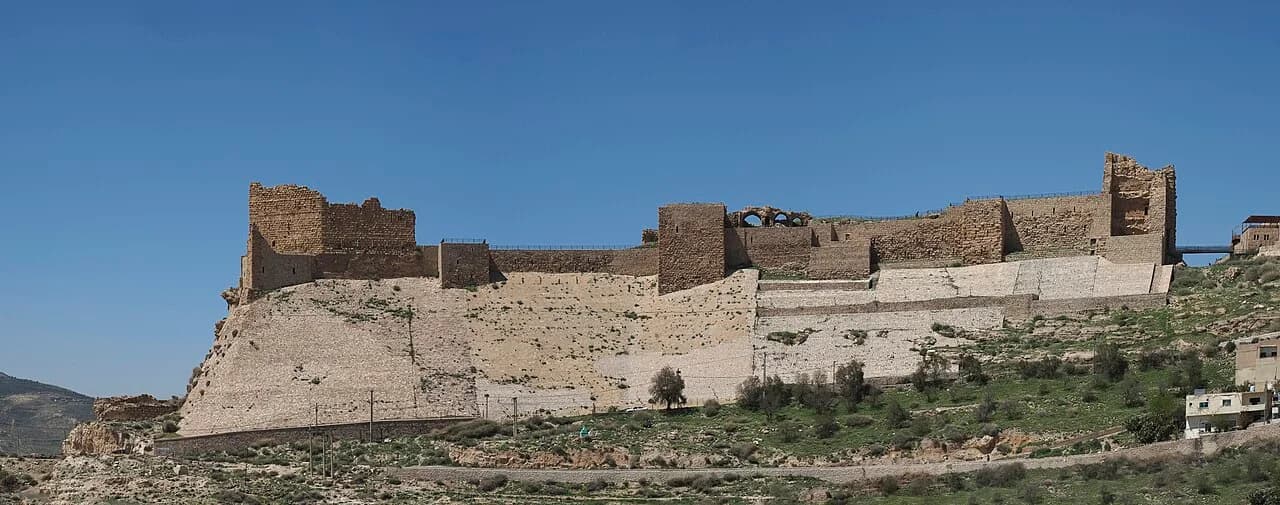
Gunmen opened fire on 23 October at Saint George's Orthodox Church in the village of Hmoud, about 80 kilometres south of Amman, while mourners were gathered for a funeral. Nine people were killed and 34 wounded. The National said all nine victims were men, most of them from the Halasah clan, a prominent Jordanian family, and described the shooting as the deadliest attack on the country's Christian minority since the 1950s. Christians number about 250,000 in a country of roughly 11 million people.
Three days later, on 26 October, Jordan's Public Security Directorate said the three suspects had been arrested after joint search operations, Anadolu reported. Security forces found them hiding in an abandoned house in Karak; the men refused to surrender and opened fire, and all three were wounded in the operation. Weapons and ammunition were seized, and no security personnel were hurt, the directorate said.
Officials have described the attackers as followers of an extremist ideology but said they were not tied to an organised group, according to an Associated Press round-up, and no group claimed responsibility.
Why it matters
The shooting was the worst attack on Jordan's Christians in roughly seven decades, and the verdict came a little over three weeks after the shooting. King Abdullah II has said terrorists will not be allowed to threaten the country's unity and security, The National noted.
The verdict also comes amid other security incidents. Earlier in November, a member of Jordan's security forces was attacked with a sharp object on a street in Amman in what authorities called a "cowardly terrorist attack", according to The National.
What happens next
The case now moves to the Court of Cassation, Jordan's highest court, which must review the death sentences before they can be carried out.
PS · Petar Milošević, CC BY-SA 4.0