Johns Hopkins Bloomberg School of Public Health brought holiday food safety and food waste together in a media briefing on November 10, 2026, ahead of the US Thanksgiving season. The discussion addressed how households handle large meals, store ingredients and deal with food left after guests have eaten.
David Love and Roni Neff took part in the briefing. Their discussion connected everyday kitchen decisions with two practical concerns: preventing foodborne illness and avoiding unnecessary waste. Preparing more than a household can use can leave substantial leftovers, while keeping perishable dishes out for too long creates a separate safety problem.
Prompt refrigeration matters
The US Centers for Disease Control and Prevention advises refrigerating perishable food within two hours. That limit falls to one hour when food is exposed to temperatures above 90°F, about 32°C. These are existing agency recommendations, rather than a new rule announced at the briefing.
Warm food can be divided among several clean, shallow containers and placed in the refrigerator in small portions, which cool more quickly. The refrigerator should be kept at 40°F, roughly 4°C, or below. An appliance thermometer can help check this when the refrigerator has no built-in temperature display.
Keep raw and ready-to-eat food apart
CDC guidance also stresses washing hands and kitchen surfaces, separating raw meat from food that is ready to eat, and checking cooking temperatures with a food thermometer. Leftovers should reach 165°F, around 74°C, when reheated. Their colour or texture alone is not a reliable cooking-temperature check.
Leftovers have a storage limit
The US Department of Agriculture recommends using properly refrigerated leftovers within three to four days, or freezing them for longer storage. Shallow containers help food cool evenly; suitable lids or wrapping protect stored portions. This advice assumes food was handled safely before refrigeration.
Refrigeration slows bacterial growth but does not stop it. USDA distinguishes spoilage bacteria from pathogens that can cause illness without necessarily changing a food’s smell, taste or appearance. Tasting leftovers is therefore not a safe way to decide whether to keep them.
The briefing focused on the US holiday season. Its practical context is meal planning and safer storage, while the temperature and storage limits above come from standing US public-health and food-safety guidance. They should not be read as a new Indian regulatory announcement.
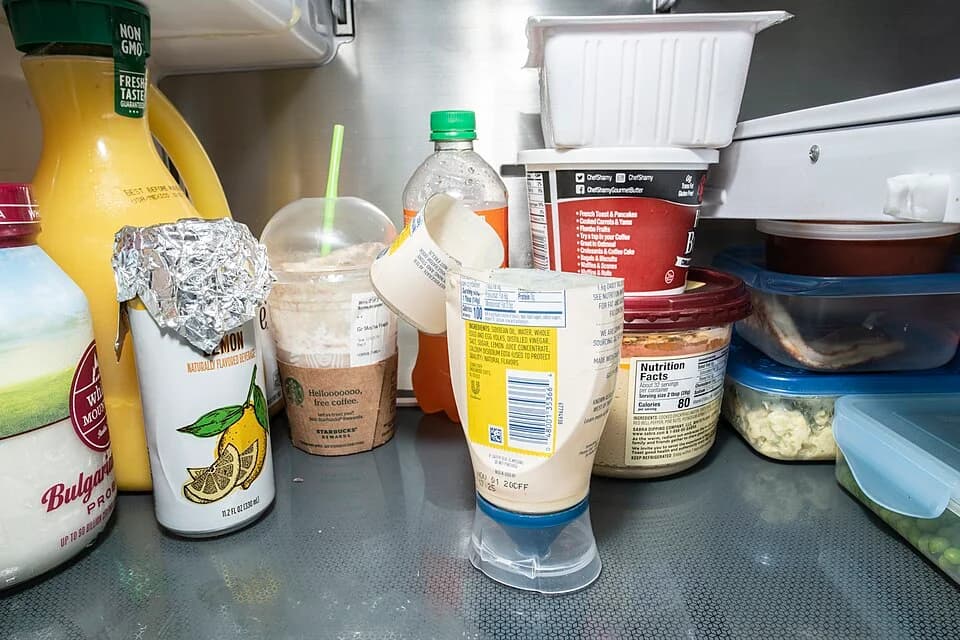
Archive photo, June 8, 2020: both recommended and unrecommended storage practices are shown. Lance Cheung / USDA, public domain. PS