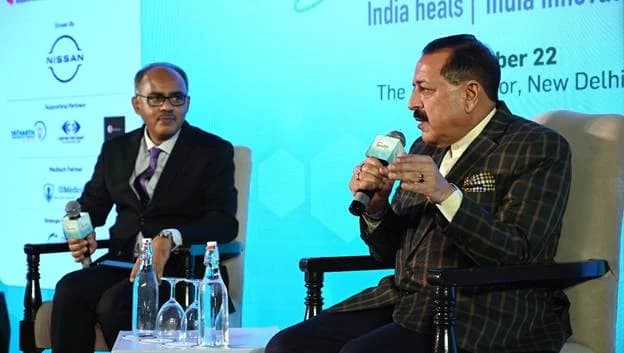
Union Minister Dr Jitendra Singh said on 22 November 2026 that India's health research is shifting towards prevention and work at the molecular and genetic level, as diabetes, obesity, hypertension and heart disease increasingly affect younger people. He was delivering the chief guest address at THE WEEK Health Summit 2026 in New Delhi, according to a Ministry of Science and Technology statement issued through the Press Information Bureau (PIB) the same day.
Dr Singh, Minister of State (Independent Charge) for Science and Technology, spoke on the Union Government's healthcare initiatives and took part in an interaction with doctors, researchers and industry representatives. Speakers at the summit included Dr Nikhil Tandon, Director of AIIMS New Delhi; Sharad Aggarwal, Director at the Food Safety and Standards Authority of India (FSSAI); and Dr Andrei Kozik, Deputy Head for India at the International Committee of the Red Cross, the statement said.
Why is the minister stressing prevention?
Because lifestyle diseases are reaching younger Indians, Dr Singh said, making early detection and prevention essential. He linked the trend to changing diets, falling physical activity and the spread of lifestyle risks across both urban and rural India, and said prevention cannot be left to doctors alone but needs wider public awareness and participation.
What did he say about genomics?
The minister said genome sequencing has been carried out for 10,000 Indians from 84 different populations, reflecting the country's genetic diversity. He said more than 400 genetic traits across populations give researchers scope to study disease susceptibility and develop targeted treatments.
He described precision medicine, in which treatment is tailored to a person's genetic profile, lifestyle and environment, as an important frontier, noting that the same disease may need different treatment in different people. He referred to ongoing research on biomarkers in women with gestational diabetes, aimed at identifying those at higher risk of developing Type 2 diabetes later so they can be followed up more closely.
Vaccines, rare diseases and gene therapy
Dr Singh cited the HPV vaccination drive, under which he said more than 50 lakh adolescent girls have been vaccinated as part of efforts to prevent cervical cancer. MapMyTimes has explained how the HPV campaign works. The Union Health Ministry said on 21 November 2026 that the campaign for 14-year-old girls had crossed 1 crore doses; the minister did not say how his figure of 50 lakh was arrived at. He also referred to the indigenous DNA vaccine developed during the COVID-19 pandemic.
The government and the Indian Council of Medical Research (ICMR) are working to widen coverage of rare genetic diseases so that diagnosis and treatment become more accessible and affordable, he said, adding that such diseases place a heavy burden on families because of diagnostic difficulty, high costs and scarce medicines.
He pointed to work on new antibiotics and genetic therapies, citing haemophilia gene therapy research by Christian Medical College, Vellore, which he said was published in the New England Journal of Medicine.
Kidneys, dialysis and private research
The minister said the expansion of dialysis facilities in district hospitals has improved access for kidney patients, and that research is moving towards detecting kidney disease before symptoms appear. Managing diabetes and blood pressure, he said, remains key to protecting vital organs.
He called for closer collaboration between government institutions, research bodies, doctors and private companies, and said philanthropy should be encouraged to support medical research.
A warning for young people
Dr Singh cautioned young people against health misinformation, unverified nutrition advice and the unsupervised use of medicines for cosmetic purposes, and urged them to consult qualified doctors and rely on authenticated scientific information.
What next?
The statement did not announce new schemes, funding or timelines. The figures cited, including the HPV vaccination count and the genome sequencing numbers, are the minister's own and were not accompanied by new data releases.
Photo source · Press Information Bureau, PIB copyright policy