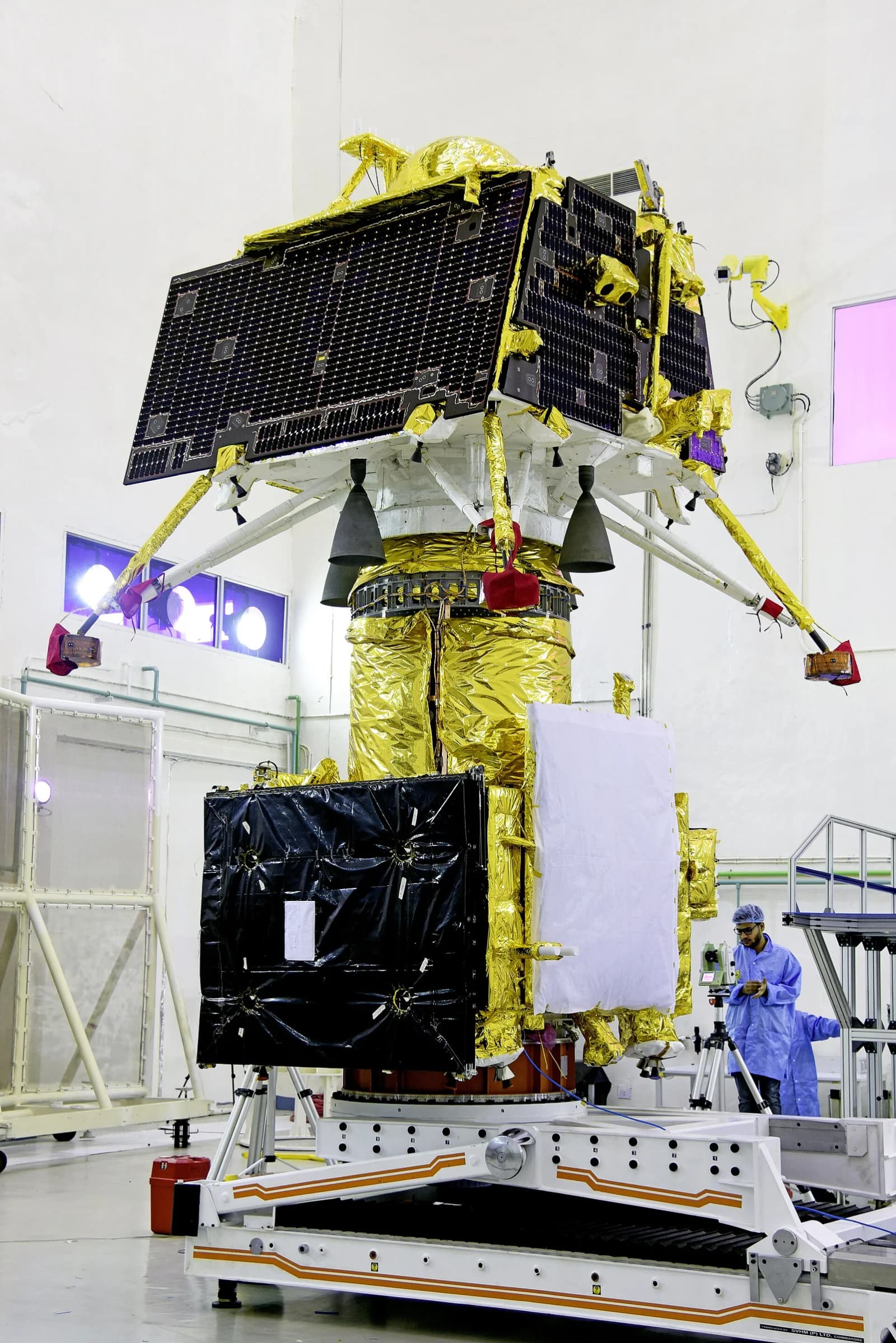
Japan's space agency JAXA unveiled and test-ran a prototype lunar rover on November 25, 2026, at its Chofu Aerospace Center in Tokyo for the joint Chandrayaan-5 Lunar Polar Exploration (LUPEX) mission with the Indian Space Research Organisation (ISRO). Scheduled for launch in fiscal 2028 aboard Japan's H3-24L rocket, LUPEX aims to search for lunar water and volatile resources near a permanently shadowed region of the Moon's south pole.
Trial Run on Simulated Lunar Terrain
During the demonstration at Chofu, the prototype moved slowly using caterpillar tracks mounted across its four legs, navigating smoothly over rocks and a crater-like depression built to test mobility in fine lunar dust known as regolith. Under the bilateral division of responsibilities, JAXA is building the rover alongside observation and subsurface drilling equipment, while ISRO is developing the lunar lander.
The Union government cleared financial sanction for Chandrayaan-5/LUPEX on March 10, 2025. The mission builds on India's lunar exploration roadmap following Chandrayaan-1 in 2008, Chandrayaan-2 in 2019, and Chandrayaan-3 in 2023, serving as a key technical stepping stone before India's planned lunar sample-return mission Chandrayaan-4 and a crewed Indian Moon landing by 2040.
Multilateral Payloads From NASA and ESA
Alongside ISRO and JAXA instruments, the mission will carry scientific payloads contributed by the European Space Agency (ESA) and the United States space agency NASA. All instruments are focused on in-situ exploration and analysis of polar volatiles reserved beneath or just above the lunar surface.
NASA will contribute a Neutron Spectrometer designed to hunt for subsurface hydrogen and water signals, while ESA's Exploration Mass Spectrometer for LUPEX (EMS-L) will study atoms and molecules in the Moon's ultra-thin exosphere. Together, the partners aim to establish whether frozen water near the south pole can sustain future long-duration exploration.