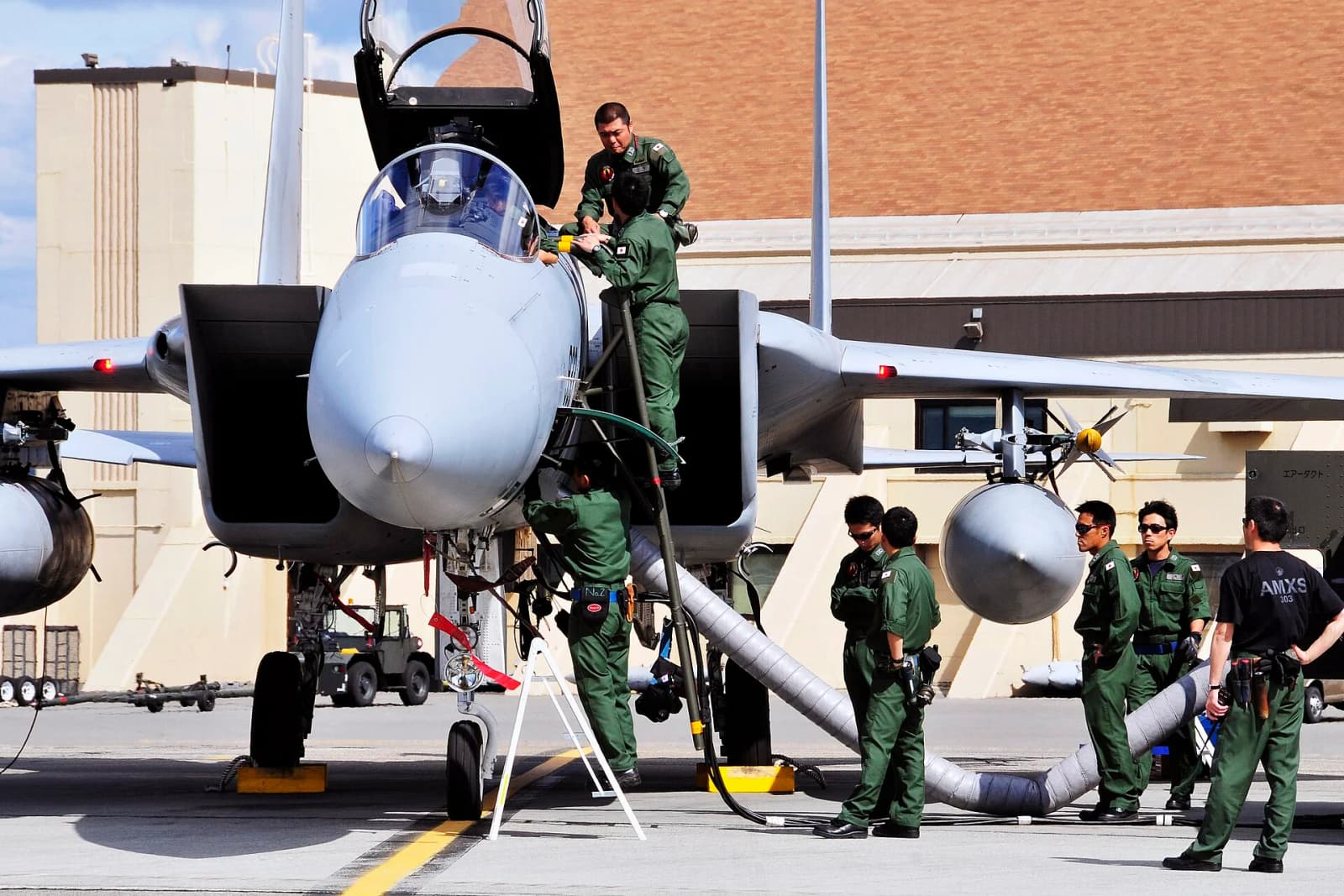
Japan scrambled fighter jets and lodged a strong protest with Moscow on Tuesday, 17 November, after two suspected Russian aircraft entered Japanese airspace near Okinoshima island in the country's south-west. South Korea and Taiwan separately reported Russian military aircraft in their air defence identification zones the same day. Russia had not commented at the time of the BBC's report.
What Tokyo says happened
According to The Japan Times, Japan's Defense Ministry said the two aircraft separately entered Japanese airspace near Okinoshima, off Fukuoka Prefecture, for several minutes at around 4 a.m. on Tuesday. Air Self-Defense Force fighters issued warnings and took other measures that the ministry did not specify.
Chief Cabinet Secretary Minoru Kihara said the planes then flew on through the Tsushima Strait, passed between Yonaguni island and Taiwan, and headed out into the Pacific, DW reported, citing news agencies.
"The violation of our national airspace by Russian aircraft is not only a grave infringement of our country's sovereignty, but also a threat to our security and is completely unacceptable," Kihara said, as quoted by DW.
He added that Japan had "lodged a very stern protest with Russia through diplomatic channels and strongly demanded measures to prevent any recurrence."
South Korea and Taiwan also respond
South Korea said it sent up fighter jets after Russian military aircraft entered its air defence identification zone over the Sea of Japan. The number of aircraft was not specified, and South Korean authorities said the planes left without entering the country's territorial airspace, the BBC reported.
Taiwan said its military "responded accordingly" after two Russian military aircraft entered its air defence identification zone, also on Tuesday.
The BBC noted that it is unclear whether the three governments were reacting to the same aircraft or to different ones.
Airspace versus identification zone
The two terms are not the same. Territorial airspace is sovereign, and Japan says that is what was breached. An air defence identification zone is a wider buffer area that a government declares on its own in order to identify approaching aircraft. Foreign military aircraft are expected to give notice before entering such a zone, but are not legally obliged to, both the BBC and DW pointed out.
A relationship already under strain
- Japan last protested over a Russian airspace incursion in 2024, when a Russian military patrol plane entered its airspace off Rebun island in Hokkaido. DW reported that the plane entered three times and that it was the first confirmed incursion since 2019.
- The two countries have a decades-old dispute over a group of islands in the Pacific.
- In August, Russian President Vladimir Putin visited one of the disputed islands for the first time, drawing a sharp rebuke from Japanese Prime Minister Sanae Takaichi, according to the BBC. In October, Russia detained a Japanese journalist on spying allegations.
- DW also reported that Russia had seized four of Japan Tobacco's Russian assets, and that ties worsened after Tokyo joined sanctions against Moscow over the war in Ukraine.
What happens next
Tokyo has demanded that Moscow take steps to prevent a repeat; no Russian response had been reported in the coverage reviewed for this article. The incident comes just before the APEC summit in China this week, which, according to the BBC, Putin is due to attend alongside US President Donald Trump.