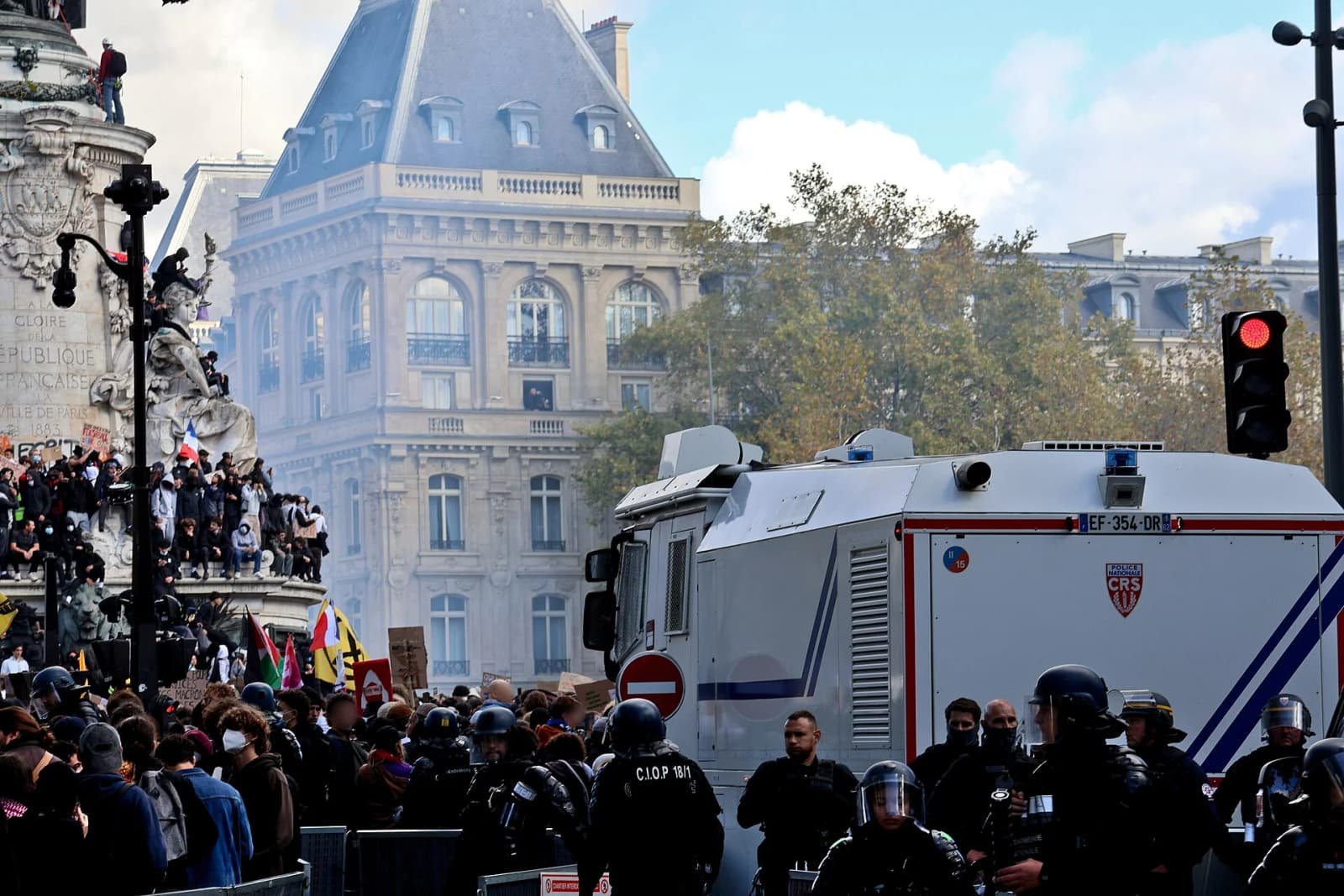
France faced another day of strikes and street protests on Tuesday, 17 November 2026, as unions called out public sector workers across the country to press for higher pay. Police expected between 220,000 and 300,000 people to march nationwide, including 40,000 to 80,000 in Paris, a police source told the news agency AFP, according to France 24.
Why public workers are striking
France has 5.8 million public sector employees. Their unions have been demanding an across-the-board pay rise since the government announced an increase in the minimum wage, which benefits private-sector workers. Talks with Prime Minister Sébastien Lecornu on Friday did not satisfy them, France 24 reported.
The English-language newspaper The Connexion reported that the CGT, UNSA, FSU, Solidaires, CFE-CGC and FA-FP unions announced the 17 November action after a meeting with the government on 9 November. The unions asked retirees, school pupils, university students and "gilets jaunes" (Yellow Vest) protesters to join the marches, it said.
According to France 24, this is the third united day of strikes and protests in the public sector since September. An earlier one this month drew hundreds of thousands of marchers, and police fired tear gas when clashes broke out in some cities.
What the government and unions said
Government spokesperson Mathieu Lefèvre told Sud Radio that the government had given a "very concrete response" to the unions on Friday. He said no civil servant is paid below the national minimum wage and that more than 1.3 million civil servants would get rises of up to 650 euros gross. He added that the government had little "room for manoeuvre" because it has no majority in the National Assembly and a presidential election is approaching.
Sophie Binet, general secretary of the CGT union, rejected that offer. Speaking to RMC, she called it "too little, too late" and said the country was seeing "an unprecedented level of social anger". She said the only answer workers had received was an extra five euros a month above the minimum wage.
Transport and Paris march
The main Paris rally was due to start at 2 pm local time, with dozens of other gatherings planned around the country. Several Paris metro stations, among them Charles-de-Gaulle-Étoile, Concorde, Invalides and Gare d'Austerlitz, were to be closed to the public from 11 am because of the demonstration, France 24 reported.
The national rail operator SNCF warned of "minor to major disruption" on regional TER trains in several regions and on the RER D line around Paris. High-speed TGV services were not affected, it said.
A protest wave that began in schools
The current wave of unrest began in September, when high school students started blockading schools over a shortage of teachers and run-down buildings, France 24 reported. It has since widened to include unions and Yellow Vest activists, with grievances ranging from inflation and the cost of living to a proposed police law. The interior ministry counted more than 100,000 protesters across France on 14 November.
The protests come as the government tries to pass a 2027 budget while under pressure to cut the deficit, and less than five months before the presidential election.
What happens next
Turnout figures from the interior ministry and the unions were awaited later on Tuesday. Neither side had announced a date for fresh pay talks at the time of writing.
PS · FreCha, CC BY-SA 4.0