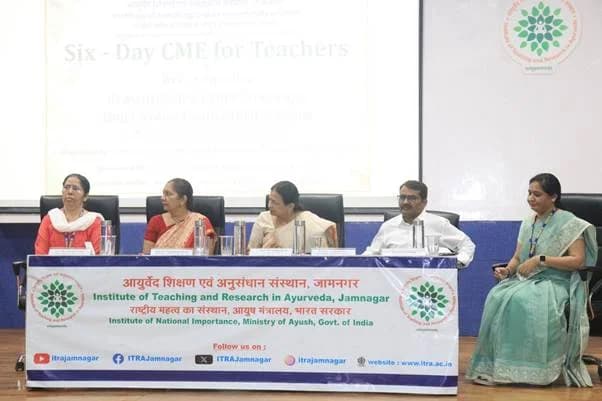
The Institute of Teaching and Research in Ayurveda (ITRA), Jamnagar, in Gujarat, held three parallel six-day national continuing medical education (CME) programmes for Ayurveda teachers from 16 to 21 November 2026, the Ministry of Ayush said on 21 November. Ninety Ayurveda faculty members from 13 states took part, according to a release issued through the Press Information Bureau (PIB).
ITRA is an Institute of National Importance under the Ministry of Ayush. The ministry said about 45 academics, clinicians and health experts from established institutions served as resource persons.
What did the programmes cover?
Each programme was run by a different ITRA department and focused on that department's subject, according to the ministry:
- Kriya Sharir (physiology): sessions on understanding human physiology through classical Ayurvedic concepts alongside modern physiological knowledge.
- Roga Nidana evam Vikriti Vigyana (diagnosis and pathology): a CME titled "Madhava Mimamsa 2026", covering nadi pariksha (pulse examination), clinical diagnosis, advanced laboratory investigations, electrocardiography (ECG), computed tomography (CT) and magnetic resonance imaging (MRI), with emphasis on systematic clinical assessment and the appropriate use of diagnostic tests in evaluating disease.
- Prasuti Tantra evam Stri Roga (obstetrics and gynaecology): sessions on antenatal care, high-risk pregnancy, infertility and assisted reproductive techniques, recurrent pregnancy loss, obstetric emergencies, postnatal care, contraception and breast disorders. Practical demonstrations included episiotomy and suturing techniques, colposcopy, Pap smears, culture techniques and antenatal ultrasonography, the ministry said. The sessions also discussed the role of Panchakarma procedures in gynaecology and infertility within holistic women's healthcare.
Why were the programmes held?
The programmes were meant to strengthen Ayurveda teachers' subject knowledge, diagnostic and clinical skills, and teaching ability, the ministry said. They were held under the leadership of ITRA Director Prof. (Dr) Tanuja Nesari, who, according to the release, stressed continuing professional development and linking contemporary medical knowledge with Ayurveda's classical foundations at the inaugural session.
The CME chairpersons, Prof. Shilpa Donga, Prof. Darshana Pandya and Dr Swati Khandale, highlighted patient-centred care, accurate diagnosis, clinical reasoning, evidence-based research and modern teaching methods, the ministry said.
Why it matters
CME programmes for faculty shape what future Ayurveda practitioners are taught. The ministry described the three programmes as a national platform for professional development and the exchange of knowledge across disciplines among Ayurveda teachers.
Resource persons contributed through expert lectures, interactive discussions and hands-on sessions, which the ministry said encouraged interdisciplinary learning and the sharing of academic and clinical experience. The release did not give details of any assessment of participants or say when the next round of programmes will be held.
Photo source · Press Information Bureau, PIB copyright policy