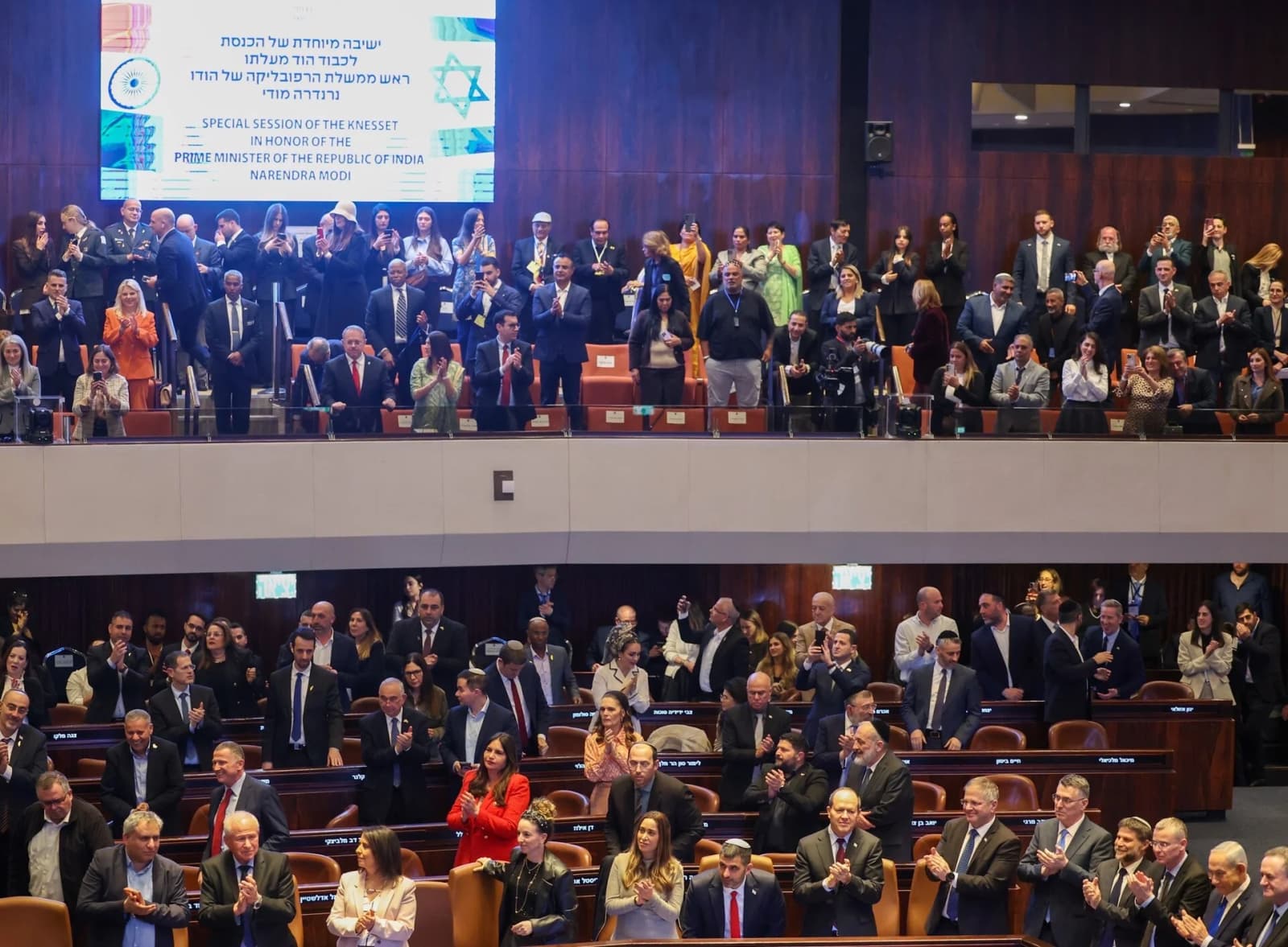
Israel's parliament, the Knesset, on Tuesday night, 17 November, elected Matan Kahana of Gadi Eisenkot's Yashar party as its speaker by 66 votes to 52, handing control of the legislative agenda to the bloc opposed to Prime Minister Benjamin Netanyahu. Kahana replaces Amir Ohana of Netanyahu's Likud, who had held the post since 2022.
How the vote went
Kahana ran against Likud lawmaker Ofir Katz, who received 52 votes, The Times of Israel and France 24 reported. The vote came at the end of a six-hour filibuster by lawmakers from Netanyahu's bloc, according to The Times of Israel, which said the election needed only a simple majority of votes cast rather than 61 of the 120 seats.
Six parties holding 67 seats backed Kahana, the newspaper said: 48 from Eisenkot's bloc and 19 from the two Arab-majority parties, Ra'am and the Joint List. One Ra'am lawmaker, Yasser Hujirat, was absent. On the other side, Katz received 52 of the Netanyahu bloc's 53 votes, with Likud's Nir Barkat absent. The ultra-Orthodox United Torah Judaism party voted for Katz after speculation that it might abstain.
'A speaker for everyone'
"I will be a Knesset speaker for everyone, irrespective of race, religion or gender," Kahana said in his first speech, as quoted by France 24. The Times of Israel reported that he also said the Knesset would obey court rulings, and called for a move away from extremism and division.
France 24 described Kahana, 54, as a former special forces soldier and an observant Jew who served as religious services minister in the 2021-2022 government that did not include Netanyahu.
Likud called the result an "eternal disgrace", The Times of Israel reported. Eisenkot said the Knesset would return to being "the house of the people", according to the same report.
Why the post matters
The speaker sets the parliamentary timetable and can speed up or delay debates and votes on legislation, France 24 noted. The speaker also acts as head of state when the president is unable to carry out his duties.
The vote follows the 27 October election, in which neither side won a majority. Netanyahu's bloc took 53 seats and Eisenkot's 48, while two Arab-majority slates won 19 seats, a number France 24 called unprecedented.
What happens next
Netanyahu remains prime minister while coalition talks continue. France 24 reported that Eisenkot, a former military chief, has until next month to form a government.
The Eisenkot bloc had been expected to begin repealing key parts of the Netanyahu government's judicial overhaul as early as Wednesday. However, The Times of Israel cited a Ynet report that the bloc agreed to hold off until Monday in return for the Netanyahu bloc not prolonging its filibuster.
Eisenkot has also pledged to quickly set up a state commission of inquiry into the security failures surrounding the Hamas attack of 7 October 2023, France 24 said. Netanyahu has refused an independent probe.
Separately on Tuesday, Israel's Central Elections Committee said there was no evidence of vote-buying on a scale that could have affected the election results, while noting that an investigation into fraud accusations led by the Shin Bet security agency is continuing, France 24 reported.
PS · Prime Minister's Office, Government of India, GODL-India