Iraqi Prime Minister Ali al-Zaidi has dismissed nine senior security and administrative officials and ordered that everyone suspected of taking part in oil smuggling be sent before the courts, after an official inquiry backed allegations that crude was being siphoned from pipelines in Jurf al-Nasr, an area south-west of Baghdad where the Iran-aligned armed group Kataib Hezbollah holds sway.
The decision came out of an emergency security meeting in Baghdad late on Saturday, 14 November, according to Rudaw and The National. The prime minister's office said he had ordered the referral of "all suspects involved in the oil smuggling operations" to the judiciary.
Who was removed
Rudaw listed the nine officials removed from their posts:
- the Babil police commander and the north Babil police director;
- the Popular Mobilization Forces (PMF) commander in Babil;
- the province's national security director and the head of the Babil intelligence service;
- the Interior Ministry's and Defence Ministry's intelligence directors for Babil;
- the commander of the Energy Police's 6th Brigade;
- the Oil Ministry's director of the Oil Pipelines Company.
The National, citing the government statement, described the group as eight security officials and one oil official. The statement did not say how many suspects were involved and did not name Kataib Hezbollah, the paper reported.
A leaked report and a fast-moving week
The dismissals capped a week of rapid developments. Iraqi media on Monday published details of a leaked 19-page intelligence report alleging organised crude theft in Jurf al-Nasr going back to 2021, Rudaw reported. The state-run Iraqi News Agency, citing an unnamed source, confirmed the document was genuine.
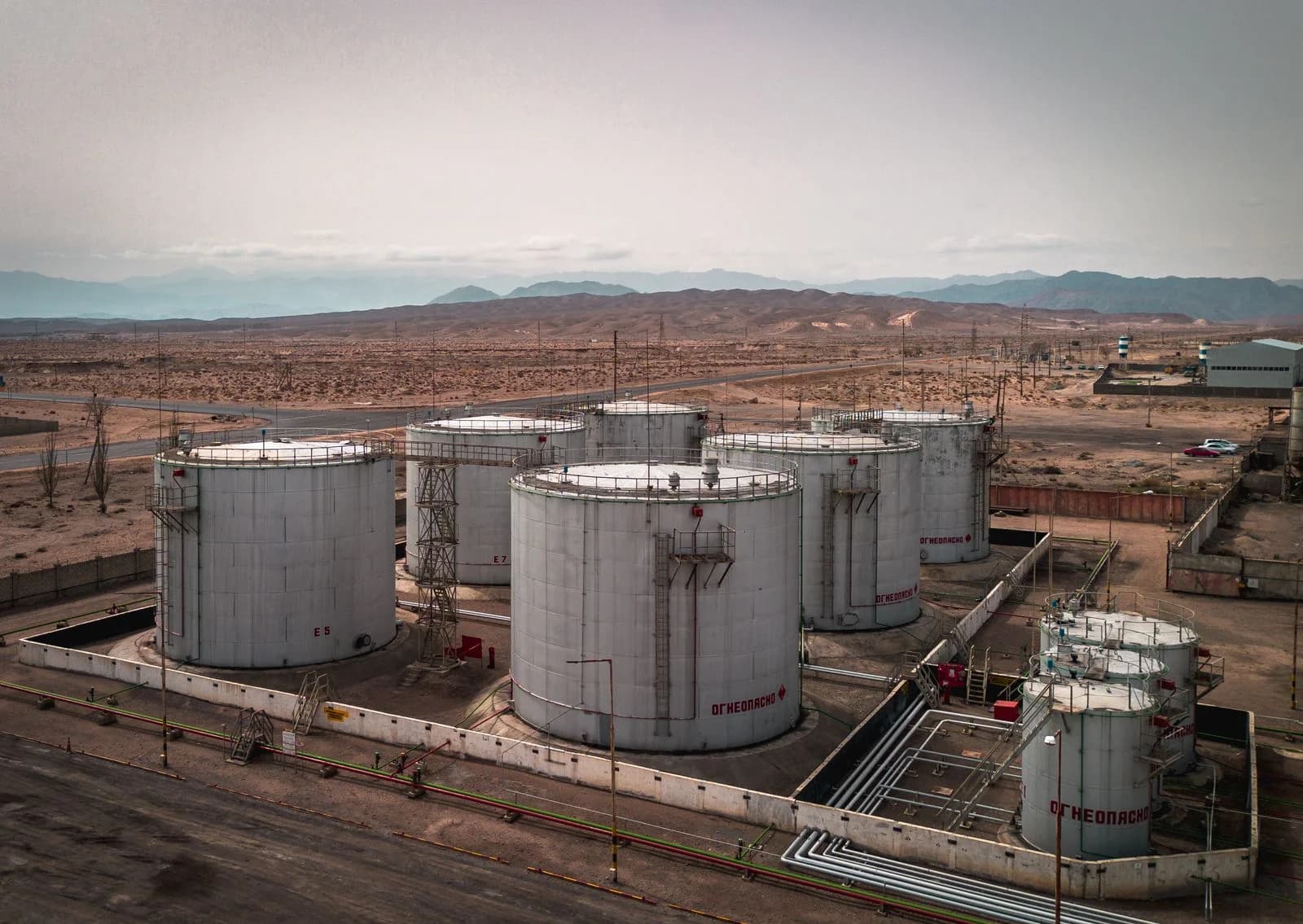
According to The National, the report by the Federal Intelligence and Investigations Agency drew on satellite imagery from 2021 to 2026 and identified four sites near the pipelines where tankers repeatedly appeared, saying the locations were under the control and protection of "an armed faction". Rudaw said the report alleged that smugglers hid pipeline breaches under metal structures, used underground pits, ran a small illegal refinery and moved tankers at night.
A first investigating team was unable to inspect the sites, The National said, so a larger, high-level committee was set up on Thursday. On Friday a sizeable military force escorted that committee to the entrance of the area. Its findings, which the government said confirmed the intelligence report, were presented at Saturday's meeting.
Babil Governor Ali Turki al-Jamali announced his resignation on Thursday, Rudaw reported. Days earlier he had visited the site and described it as an old fuel station used by PMF and Federal Police vehicles.
Why Jurf al-Nasr matters
Jurf al-Nasr, formerly known as Jurf al-Sakhar, lies about 60 km south-west of Baghdad. Iraqi forces drove the Islamic State group out in 2014, and the area has since stayed largely closed to its mostly Sunni displaced residents, The National reported. Kataib Hezbollah, which the United States designates as a terrorist organisation, is widely regarded as controlling it.
Al Jazeera reported that the smuggling network was said to be worth up to $30 million a month, and that Kataib Hezbollah had recently issued sharp statements against al-Zaidi. Akeel Abbas of the Atlantic Council told the broadcaster that the move was less about fighting graft than about disarming militias by cutting off the group's money.
"Not a single inch of Iraq will remain where smuggling is practised, from Zakho to Basra," al-Zaidi said, according to Rudaw. A statement issued in his capacity as commander-in-chief made operations commanders, provincial police chiefs and security and intelligence directors fully responsible for smuggling in their areas.
What comes next
The case sits within a wider push by Baghdad to bring weapons held by armed factions under state control. The National reported that this process is now not expected to start before 30 June 2027, and that Kataib Hezbollah and Harakat Hezbollah al-Nujaba have said they will not disarm, while three other groups say they have placed their weapons under state authority.
Separately, a temporary parliamentary committee ordered by Speaker Haibat al-Halbousi is examining the reports, including alleged crude smuggling from Kirkuk and the Kurdistan Region through Iran to Afghanistan, Rudaw said. No timetable has been given for court proceedings against the suspects.