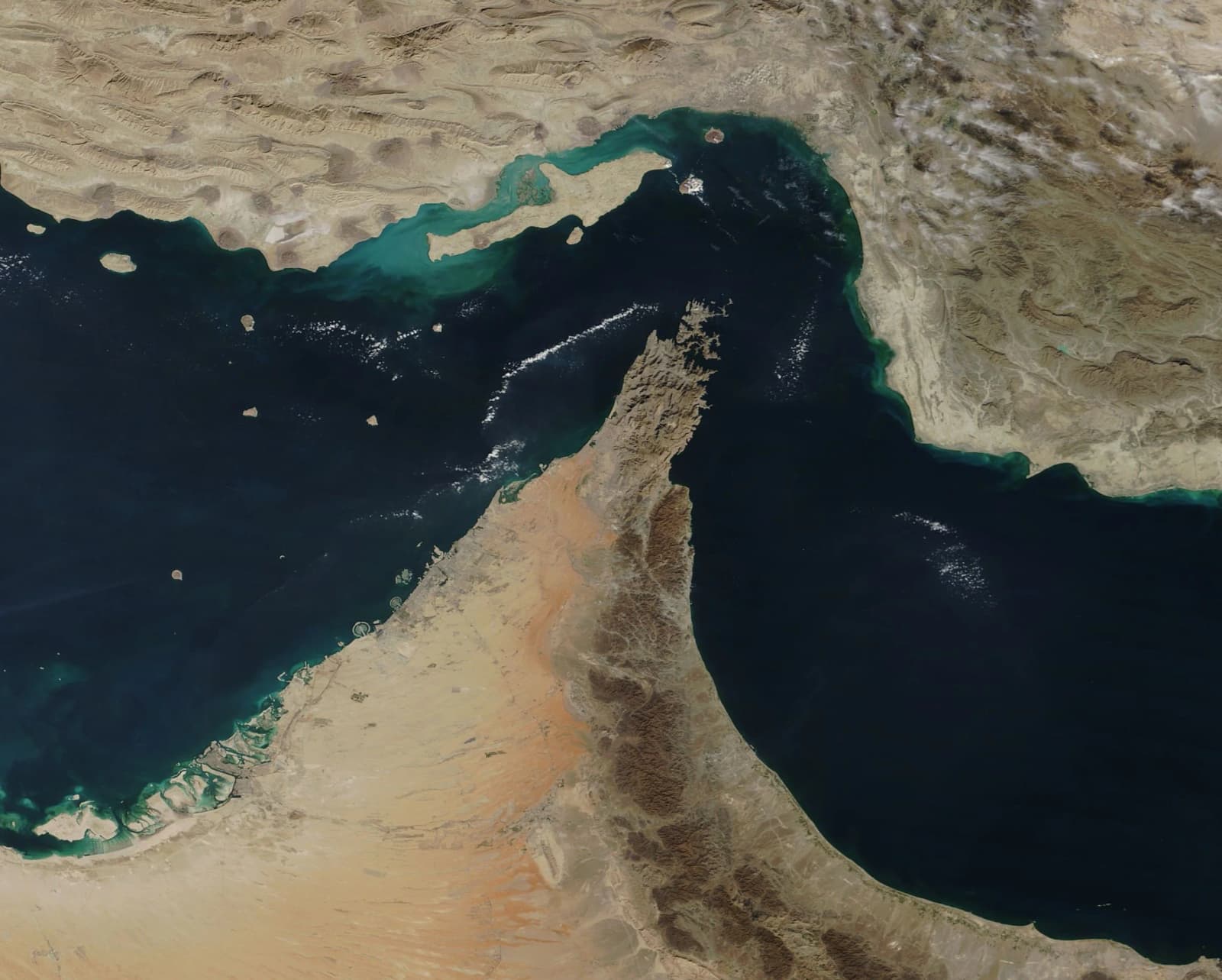
Iran's Islamic Revolutionary Guard Corps (IRGC) said on Friday, 13 November, that it had struck a US early-warning radar in Bahrain. Within hours the US military's Central Command (CENTCOM) rejected the claim. It said American forces had shot down two Iranian drones heading for Bahrain and that nothing was damaged. The two accounts cannot both be true, and neither has been independently verified. The episode, together with fresh reports of tankers hit by mines in the Strait of Hormuz, made it one of the most widely covered stories of the past day. It matters to India because oil shipments from the Gulf have only partly recovered, according to the International Energy Agency.
What happened
Iranian state media carried an IRGC statement saying the attack on the radar was "in response to the enemy's air aggression against a telecommunications tower in Sirik", a port in Hormozgan province on Iran's Hormuz coast. Iran's official news agency IRNA described Sirik as hit by an "enemy" strike. It did not name the attacker or give any figures for damage or casualties, according to Radio Free Europe/Radio Liberty (RFE/RL). The IRGC also warned Washington to stop what it called "aerial provocations and oil smuggling in the Strait of Hormuz", the London-based outlet The New Arab reported.
CENTCOM's response was brief. "The IRGC launched two one-way attack drones toward Bahrain and both were shot down by US forces," it said. "There were no injuries or damage." CENTCOM's statement did not address the reported strike on Sirik. The Associated Press (AP) said Bahrain's Ministry of Information did not immediately respond to its request for comment.
According to AP, this was the first time since September that Iran had reported targeting a facility in Bahrain. Bahrain is home to the US Navy's Fifth Fleet. RFE/RL noted that Iran has answered earlier attacks on Sirik by striking US facilities in Bahrain. Sirik hosts part of Iran's radar and communications network that watches the waterway, and it has been hit repeatedly since the war began.
Mines and tankers in the Strait of Hormuz
The radar claim came during a run of incidents at sea. On Friday the IRGC said a liquefied gas tanker hit a mine while passing through the eastern part of the strait. It said the ship had ignored repeated warnings and was on an "unauthorised and dangerous route". AP said the claim could not be independently verified.
A day earlier, on 12 November, Iran's army said two oil tankers caught fire after hitting naval mines in a "prohibited and unsafe zone", RFE/RL reported. Iranian media put the number of tankers hit by explosions that Thursday at four.
Independent figures show how dangerous the waterway has become:
- The UN's International Maritime Organization counted about 134 incidents in the Strait of Hormuz and the wider Middle East maritime area as of 11 November. Twenty-five seafarers were dead and many more injured or missing, AP reported.
- The UN said October had the most incidents against commercial ships since the war began in February.
- The Washington Institute counted at least 10 ships hit in the first 10 days of November, after 37 attacks in October, The New Arab reported.
- The International Energy Agency (IEA) said Gulf oil shipments had recovered to 18.4 million barrels a day, still 26% below pre-war levels.
Background: how the conflict reached this point
The war began with US and Israeli strikes on Iran on 28 February 2026. Iran has tried to close the Strait of Hormuz since the early days of the conflict, RFE/RL reported. The United States now enforces a naval blockade of Iran. AP has noted that President Donald Trump announced halts to strikes on several occasions after February, only for fighting to resume.
Diplomacy appears to have stalled this week. On 12 November Trump wrote on Truth Social: "We don't need a deal with Iran. Those days have long since passed." In the same post he said: "We've got their money, Hundreds of Billions of Dollars, and we've got their Strait!" He also asked Vice-President JD Vance, who had spent months working on ceasefire and nuclear talks, to turn his "complete and total attention" to crime in Democratic-run cities, RFE/RL reported.
The nuclear question is also unresolved. According to a confidential International Atomic Energy Agency (IAEA) report cited by AP, Iran told the agency that talks on monitoring cannot go ahead while it faces military threats. Iran has not let inspectors into sites struck by Israel and the US in the June 2025 war. The IAEA said it was "increasingly concerned" about an underground enrichment plant at Isfahan that it has not been able to inspect, The New Arab reported. RFE/RL reported that Iran's Assembly of Experts said leaving the Nuclear Non-Proliferation Treaty had become an "unavoidable necessity".
What each side is saying
- Iran's Revolutionary Guard: commander Ahmad Vahidi promised "devastating and painful strikes" in response to any US aggression, according to The New Arab.
- Tehran's mixed signals: Foreign Minister Abbas Araqchi has said Iran would negotiate. Security chief Mohsen Rezaei has said there will be no talks until Washington accepts seven Iranian conditions. These include ending the US naval blockade, releasing frozen Iranian assets and halting fighting on all fronts, RFE/RL reported.
- The US Treasury: Treasury Secretary Scott Bessent, who was reportedly moved to a military base after Iranian threats, told CNBC that he would not be cowed. He called the IRGC "a dangerous, cornered animal". He also said the Federal Reserve should treat current inflation as an "energy supply shock" linked to the war and should not raise interest rates in response.
- An outside view: Shayan Samii, a US-based national security analyst, told RFE/RL's Radio Farda that Trump appears to be pursuing "neither war nor negotiation". In his view, Trump is using economic pressure to get what military action has not delivered. Samii added that Iran's mixed messaging leads world leaders to conclude there is "no reliable decision-maker" in Tehran.
Why it matters for India
For Indian readers, the main concern is oil. According to the IEA figures cited above, oil shipments from the Gulf have climbed back to 18.4 million barrels a day but remain about a quarter below where they were before the war. Any setback to that recovery would affect a supply route that Indian refiners rely on.
So the timing of the new mine strikes is significant. Gulf shipments are recovering just as tanker attacks are rising, and any fresh disruption in the strait would hit that recovery. Higher freight, insurance or crude costs could then feed through to fuel prices and inflation at home. No Indian-flagged vessel has been reported involved in the latest incidents, and the Indian government had not commented publicly on Friday's events in the reports reviewed for this article.
What is established and what is not
Established: the IRGC claimed a strike on a US radar in Bahrain. CENTCOM said it shot down two IRGC drones heading for Bahrain and reported no damage or injuries. Iranian state media reported a strike on Sirik. UN and IMO figures show October was the worst month for attacks on shipping since February.
Unverified or disputed: whether any radar was hit at all. Who struck Sirik, and what was damaged: Iran did not name the attacker, and CENTCOM did not mention the incident. The details of the gas tanker that Iran says hit a mine on Friday. And how many ships were damaged on 12 November, since the Iranian army and Iranian media gave different numbers.
What happens next
Several things are worth watching in the coming days. Will Bahrain or the US release more detail on the drone interceptions? Will maritime security agencies confirm the latest mine incidents, and how will tanker traffic through Hormuz respond? Will Washington and Tehran resume the stalled talks, given Trump's statement that a deal is no longer needed and Iran's demand that its conditions be met first? Will the IAEA regain access to Iran's nuclear sites? For India, the next set of tanker-tracking data for November will show whether the recovery in Gulf oil flows holds up.