Iran said on Saturday, 21 November 2026, that a Qatari delegation had travelled to Tehran for talks aimed at reviving diplomacy with the United States, even as Foreign Minister Abbas Araghchi insisted the Strait of Hormuz would stay closed until Washington accepts Iran's conditions. Iran's Deputy Foreign Minister Kazem Gharibabadi said the Qatari team held about two hours of talks with Iranian officials in Tehran on Friday night, according to the semi-official Tasnim news agency, as quoted by Al Jazeera and Arab News.
On the same day, US President Donald Trump told Fox News that he wants a "permanent" deal that stops Iran from obtaining a nuclear weapon.
What did Iran say about the Qatari talks?
Iran described the contacts as an effort to test whether diplomacy still has room, not as formal negotiations. "We are in contact with mediators, including the Qataris, both in person and virtually, and are holding the necessary discussions to see whether another opportunity can be given to diplomacy," Mr Gharibabadi said, according to Tasnim.
He said the talks had not yet become formal negotiations, Al Jazeera reported. If they do, he said, the technical details of Iran's nuclear programme would be discussed, but Iran's position is that its enriched uranium must not leave the country. He also said Tehran regards the US economic blockade as an act of war and will "take any action necessary" to break it.
What are Iran's conditions for reopening Hormuz?
Iran wants an end to the war on all fronts, the release of frozen Iranian assets, the lifting of oil sanctions and an end to the US blockade of Iranian ports, according to Al Jazeera's summary of Tehran's demands. Mr Araghchi said on Saturday, according to Iranian state television, that "as long as Iran's demands are not met, the discussion on the Strait of Hormuz and its opening is pointless".
He added that reopening the waterway was "not difficult" and required the US only to "accept reasonable conditions that are in accordance with international law", Tasnim reported. In an interview published by the state-run Iran newspaper, he repeated that enriched uranium stockpiles would not be taken out of the country, Asharq Al-Awsat reported.
How did Washington respond?
Mr Trump told Fox News that Iranian officials were "very, very difficult" to deal with. "We make a deal, and then they break the deal the next day," he said. Arab News reported that he also accused Iran of violating a memorandum of understanding that paused the conflict in July, a day after it was signed.
Why it matters
The war began when the United States and Israel attacked Iran on 28 February 2026, prompting Iranian strikes on Israel and on Gulf states that host US bases. Iran has restricted shipping through the Strait of Hormuz, which normally carries about a fifth of the world's oil, and the US has responded with a naval blockade of Iranian ports. The standoff has disrupted shipping and pushed up global energy prices.
The diplomatic signals came as fighting continued around the Gulf. On Saturday, Bahrain said an Iranian attack set a civilian industrial facility on fire, a day after Iran's Islamic Revolutionary Guard Corps (IRGC) claimed to have shot down a US MQ-9 drone over the strait.
Pressure on Iran's economy
Iranian President Masoud Pezeshkian told a meeting of investors and producers on Saturday that the country was in "a silent war" that was "much more difficult" than a missile war, according to the state news agency IRNA. He said the government was working to avoid power cuts over the winter, Al Jazeera reported. Separately, IRGC commander Major-General Ahmad Vahidi toured an underground missile facility, Tasnim reported.
What is confirmed and what is not
- Confirmed by Iranian officials: a Qatari delegation visited Tehran on Friday night and held about two hours of talks.
- Not disclosed: the content of the talks, any US response to them, and whether formal negotiations will follow.
What happens next
Iran says it remains in contact with Qatari and other mediators. No date has been announced for further talks or for any formal negotiation round with the United States.
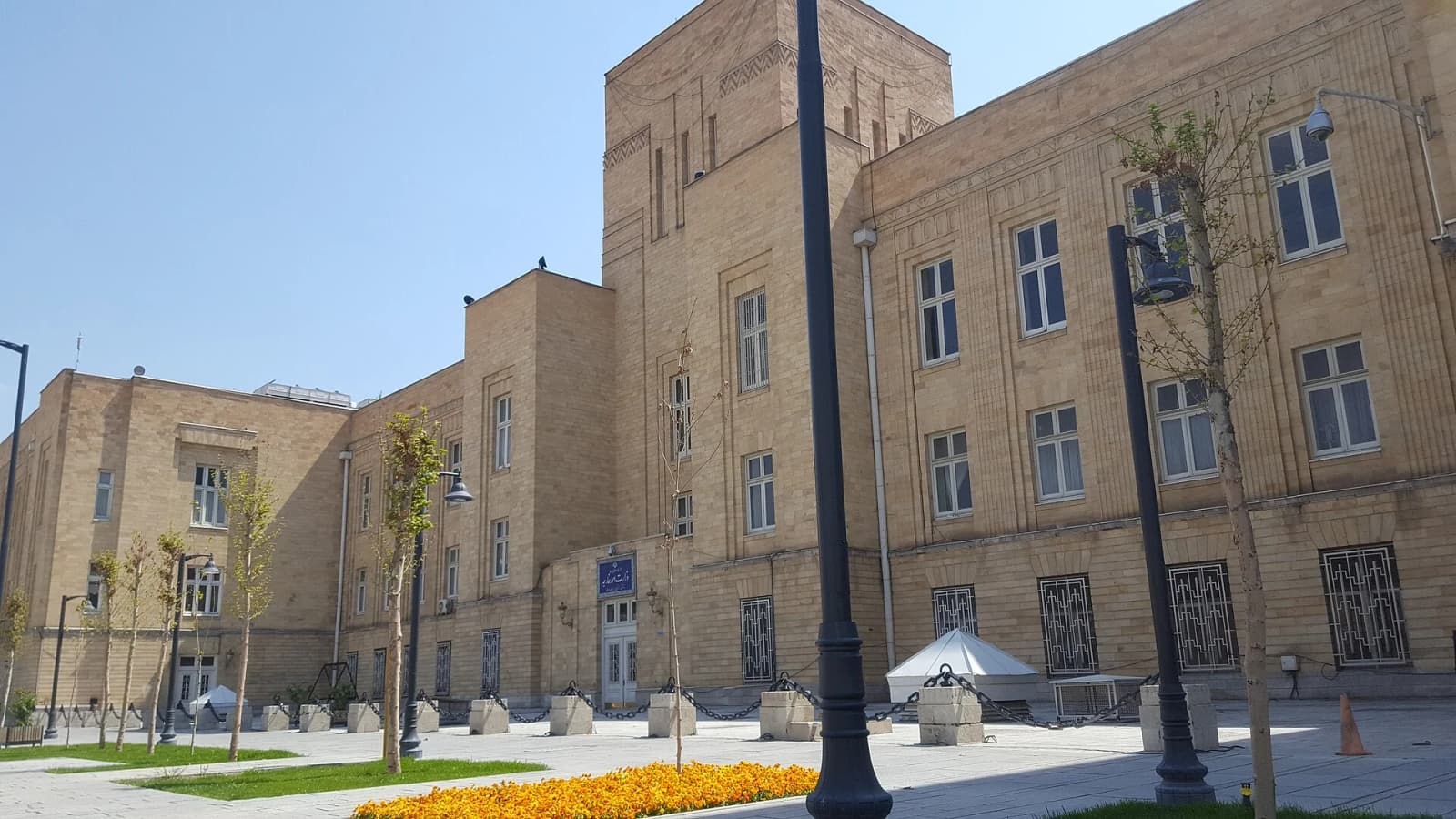
Photo source · GTVM92, CC BY-SA 4.0