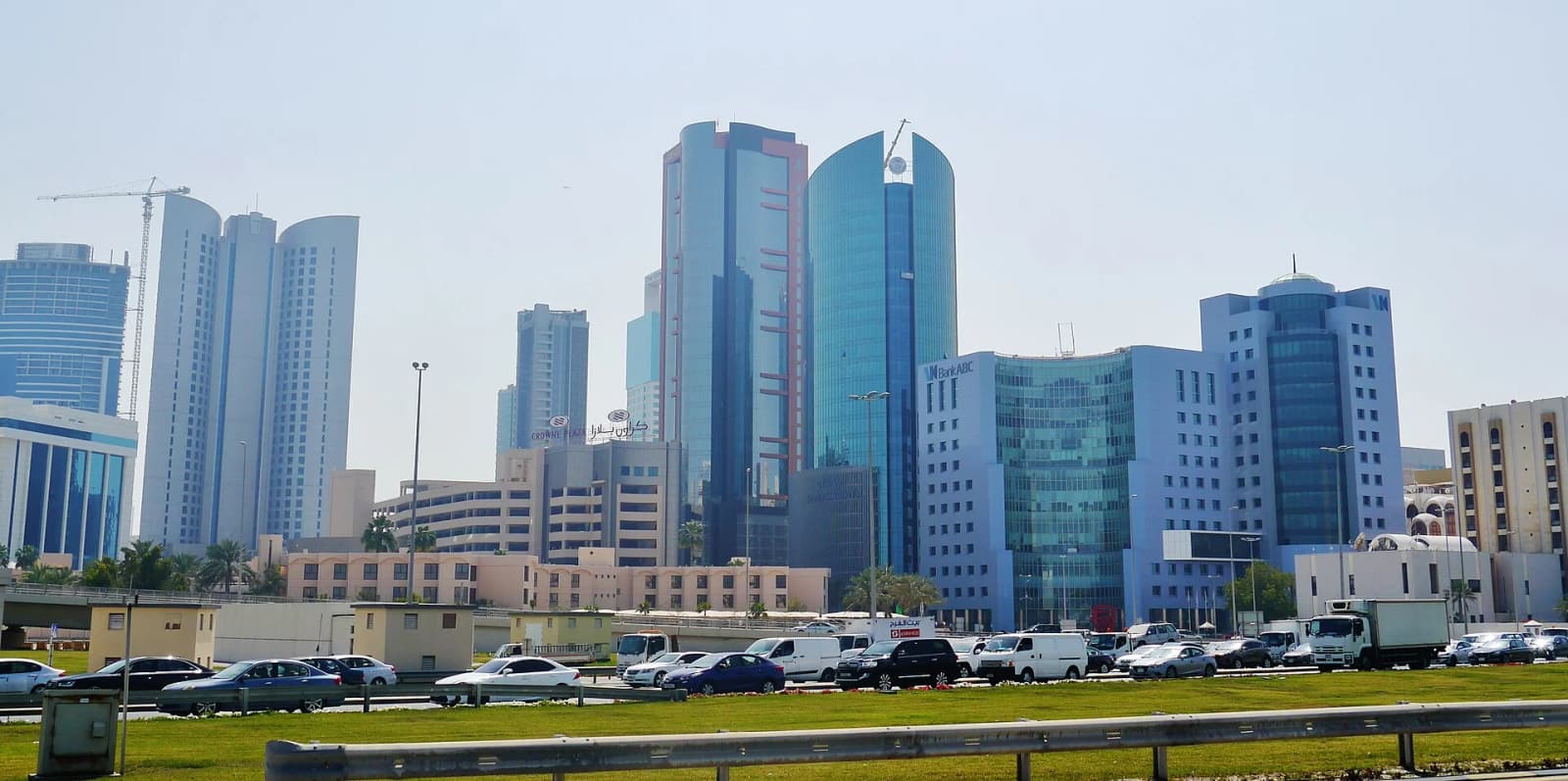
Bahrain said its air defences intercepted and destroyed several Iranian aerial attacks on Sunday, 15 November, hours after Iran's Islamic Revolutionary Guard Corps (IRGC) claimed it had sent six drones at a US radar installation on Bahraini soil. The exchange is the second such incident in three days and comes as Iran continues to say the Strait of Hormuz is closed to shipping.
What Bahrain and Iran said
In a post on X, the Bahrain Defence Force said Iran "continues its systematic hostile approach through attacks" against the kingdom. According to Anadolu Agency, the force said the attacks were destroyed before they reached their targets and that all of its units remained at the highest level of readiness. Bahrain TV had earlier reported that air defences shot down an Iranian drone.
Before the interceptions were announced, Bahrain's Interior Ministry sent out repeated alerts about a potential threat without saying what it was. Gulf News reported that the ministry asked residents to stay calm and move to the nearest safe location. Kurdistan24 described it as the first warning of this kind in Bahrain since September.
The IRGC's statement, carried by Iranian state broadcaster IRIB, said a US air-defence radar at the Al-Riffa helicopter base had been "targeted by six drones belonging to the IRGC Aerospace Force". Kurdistan24 reported that the Guards called the strike the "second phase of a decisive and crushing response" to what they described as US aggression. Neither Anadolu nor Investing.com found any claim or evidence that the drones caused damage, and Investing.com reported that US Central Command had not confirmed the claim.
Friday's attack and the drone claim
Sunday's incident followed an attack on Friday, 13 November. According to Kurdistan24, the IRGC said it had hit a US early-warning radar in Bahrain in retaliation for an alleged strike on a telecommunications tower in Iran's Hormozgan province. US Central Command said it had shot down two one-way attack drones heading towards Bahrain and that there was no damage and no one was hurt.
On Saturday the IRGC also said it had downed a US MQ-1 drone over Qeshm Island in the Strait of Hormuz. Kurdistan24 said the Guards described it as the 17th such aircraft they had destroyed. The United States has not confirmed any loss, and the claim has not been independently verified.
Hormuz still closed, says Tehran
The IRGC statement repeated that the Strait of Hormuz remains closed, blaming what it called Washington's "failure" to escort ships through the waterway. It warned that "any US aggression would be met with an even harsher and more devastating response," Anadolu reported.
The strait, one of the world's most important routes for energy and commodities, has become a central point of dispute between Washington and Tehran. Investing.com reported that, according to Iran's navy, two more tankers hit mines and caught fire in the eastern part of the strait, bringing the number of incidents reported within 24 hours to seven. Separately, Iran's Foreign Ministry spokesman Esmail Baghaei said Tehran had documented evidence that countries in the region had helped US operations, and he defended Iran's strikes as self-defence under Article 51 of the UN Charter, Gulf News reported.
Why it matters
Bahrain hosts the headquarters of the US Navy's Fifth Fleet, which makes any attack on its territory a direct test of US force protection in the Gulf. The conflict began with US and Israeli strikes on Iran on 28 February. A ceasefire was agreed in April, and a memorandum of understanding followed in June, but fighting resumed after negotiations stalled.
The wider region was also on alert on Sunday. A Saudi-led coalition spokesperson said two ballistic missiles fired by the Houthis towards Riyadh were intercepted, along with several drones over the Eastern Region, according to Gulf News.
What comes next
Iran's parliament speaker, Mohammad Bagher Ghalibaf, said Tehran was ready for either talks or renewed conflict and that a deal was still possible if Washington accepted Iran's seven conditions. Investing.com reported that President Donald Trump is expected to raise the Iran war with Chinese President Xi Jinping and Russian President Vladimir Putin at the APEC summit in Shenzhen on 18–19 November.
PS · Zairon, CC BY-SA 4.0