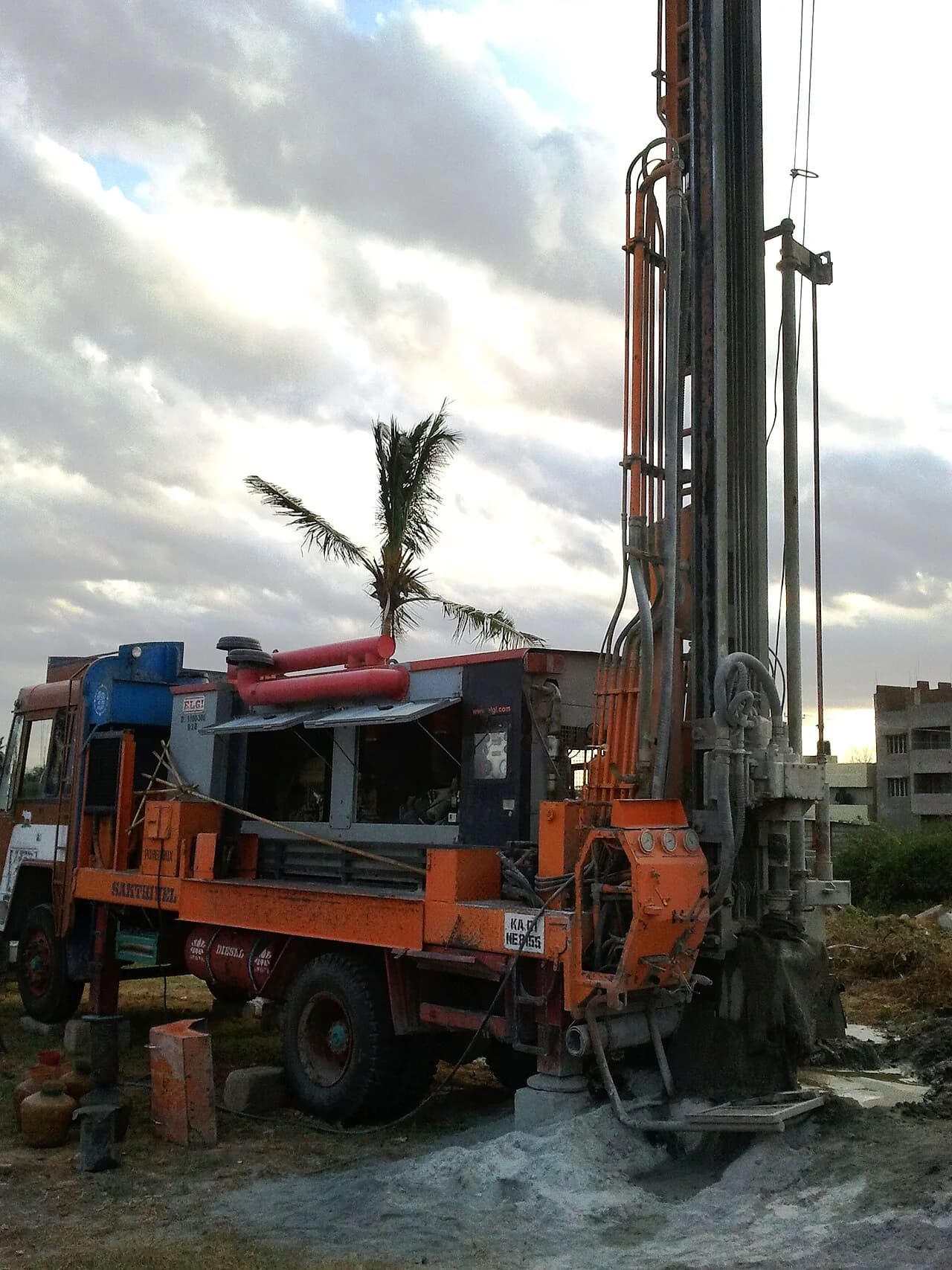
Borewells in several Indore colonies have begun running dry in mid-November, roughly three months before the city usually starts to feel a groundwater squeeze, the Free Press Journal reported on Tuesday. In some neighbourhoods, wells sunk 300 to 500 feet deep are giving water for only about 10 minutes at a stretch.
According to the report, the shortage normally shows up around February or March as the water table drops after winter. This year it has arrived while winter is only beginning.
Where the wells are failing
The newspaper listed eight localities, with borewell depths and current yield as reported by residents it named:
- Nipania: 350 feet deep, about 10 minutes of water
- Paricharika Nagar: 230 feet, about 10 minutes
- Mahalakshmi Nagar: 450 feet, about 10 minutes
- Kushwah Nagar: 320 feet, about 12 minutes
- Tejaji Nagar: 300 feet, about 15 minutes
- Patnipura: 450 feet, about 15 minutes
- Pipliyarao: 350 feet, about 20 minutes
- Bypass area: 550 feet, about 20 minutes
'An early warning'
Suresh MG, a water conservation activist who advises the Indore Municipal Corporation, attributed the early decline to inadequate rainfall, which he said left borewells without enough groundwater recharge. He told the Free Press Journal that the November shortages are "an early warning of the crisis ahead" and cautioned that the months from February, and March to May in particular, could be extremely difficult for the city.
He said an average Indore resident uses about 200 litres of water a day and should bring that down to about 70 litres, by using less for bathing, laundry and washing vehicles, and by reusing water and harvesting rain.
Groundwater scientist Sudhindra M. Sharma put individual use at about 135 litres a day, with nearly 40% of it going into toilet flushing. His suggestions, as quoted in the report, include smaller flush tanks, running washing machines only with full loads, neighbourhood committees to keep watch on local borewells, strict monitoring of unauthorised commercial extraction, and repair of leaks in the Narmada pipelines by the civic body.
Demand and Narmada supply
Indore needs around 650 million litres of water a day (MLD), of which about 450 MLD comes through the Narmada project, the report said. Areas that do not have Narmada pipelines rely on groundwater and other local sources.
What the civic body says
"We are working on a detailed plan to supply water to areas that depend completely on borewells," Abhishek Sharma, who heads the Municipal Corporation's Water Works Department, told the newspaper. The corporation plans to install new hydrants in affected localities and to revive the city's old water sources, the report added.
No timeline has been given for the plan.
PS · Amrith Raj, CC BY-SA 3.0