India has once again voted against a United Nations draft resolution that urges countries to halt executions, telling a General Assembly committee in New York that there is no worldwide agreement on ending capital punishment and that each country must be free to decide its own penalties.
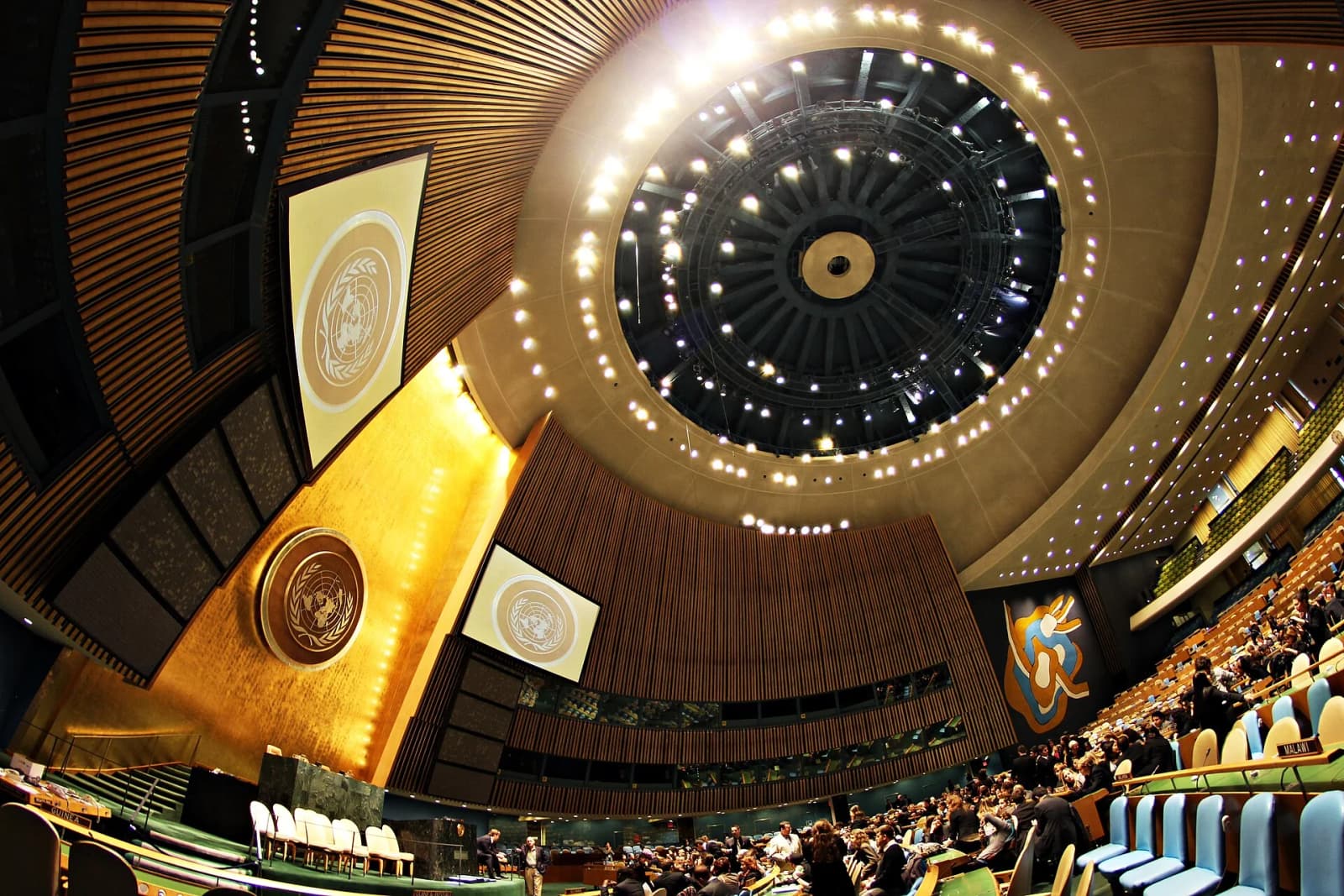
The vote took place on Friday, 13 November (New York time), at the 43rd meeting of the Third Committee of the 81st session of the UN General Assembly, according to ANI. The draft, numbered A/C.3/81/L.43 and titled "Moratorium on the use of the death penalty", was put forward by Mexico and passed by a recorded vote of 133 in favour, 33 against and 16 abstentions, PTI reported.
What the resolution asks for
According to PTI, the text calls on all states to introduce a moratorium on executions with a view to abolishing the death penalty, and asks countries that have already abolished it not to bring it back. It voices deep concern at what it describes as a significant surge in reported executions in 2025 despite a global trend towards limiting the practice.
The draft also urges governments to progressively restrict capital punishment, including for offences committed by people under 18, for pregnant women, for persons with mental or intellectual disabilities and for older persons, and to cut the number of crimes that carry a death sentence, including by ending mandatory death sentences. At the same time, PTI noted, it reaffirms the right of every state to develop its own legal system, including setting penalties in line with international law.
India's argument
India's position was set out by Bhavika Mangalanandan, First Secretary at the Permanent Mission of India to the UN. She told the committee there is "no international consensus against capital punishment", and, as reported by Outlook, pointed to Article 6 of the International Covenant on Civil and Political Rights, which she said permits the death penalty subject to restrictions.
"In India, the death penalty is a statutory provision exercised exclusively in the rarest of rare cases," she said, according to Outlook. ANI reported that she also referred to multi-tier safeguards in the Indian system.
Mangalanandan objected sharply to describing capital punishment as state-inflicted death, calling that characterisation a "travesty". She said bringing the death penalty into a resolution on extrajudicial killings was "disingenuous and mischievous".
Split vote on extrajudicial executions text
On a separate draft, A/C.3/81/L.37, on extrajudicial, summary or arbitrary executions, India supported the resolution as a whole but formally dissociated itself from operative paragraph 6, ANI reported. That paragraph refers to a report by a UN Special Rapporteur presented to the Human Rights Council at its 62nd session and urges states to consider its recommendations.
India rejected the report's view that the death penalty is inherently a form of torture or ill-treatment. "My delegation is constrained to disassociate from OP six of the resolution," Mangalanandan said, as quoted by Outlook.
Who else voted no
PTI listed Bahrain, China, Egypt, Iran, Iraq, Japan, Kuwait, the Maldives, Oman, Pakistan, Qatar, Saudi Arabia and the United States among the countries that voted against the text alongside India.
Explaining the US vote, Yaryna Ferencevych, US Deputy Representative to the UN Economic and Social Council, said Washington was largely disengaging from Third Committee resolutions this year, ANI reported. She said the US had backed an amendment by Singapore on national sovereignty, described parts of the resolution's language as problematic, and said the US "must vote 'no' on this resolution".
France, on the other hand, welcomed the outcome. In a post on X cited by ANI, its Permanent Mission to the UN called the result "an important step toward the universal abolition of the death penalty".
A consistent stance
The vote is in line with India's record on the issue. Both ANI and Outlook noted that India also voted against similar moratorium drafts in 2016, 2018 and 2024. The resolution is not binding on member states, and India's statement made clear that it regards decisions on capital punishment as a matter for each country's own legal system.
PS · Basil D Soufi, CC BY-SA 3.0