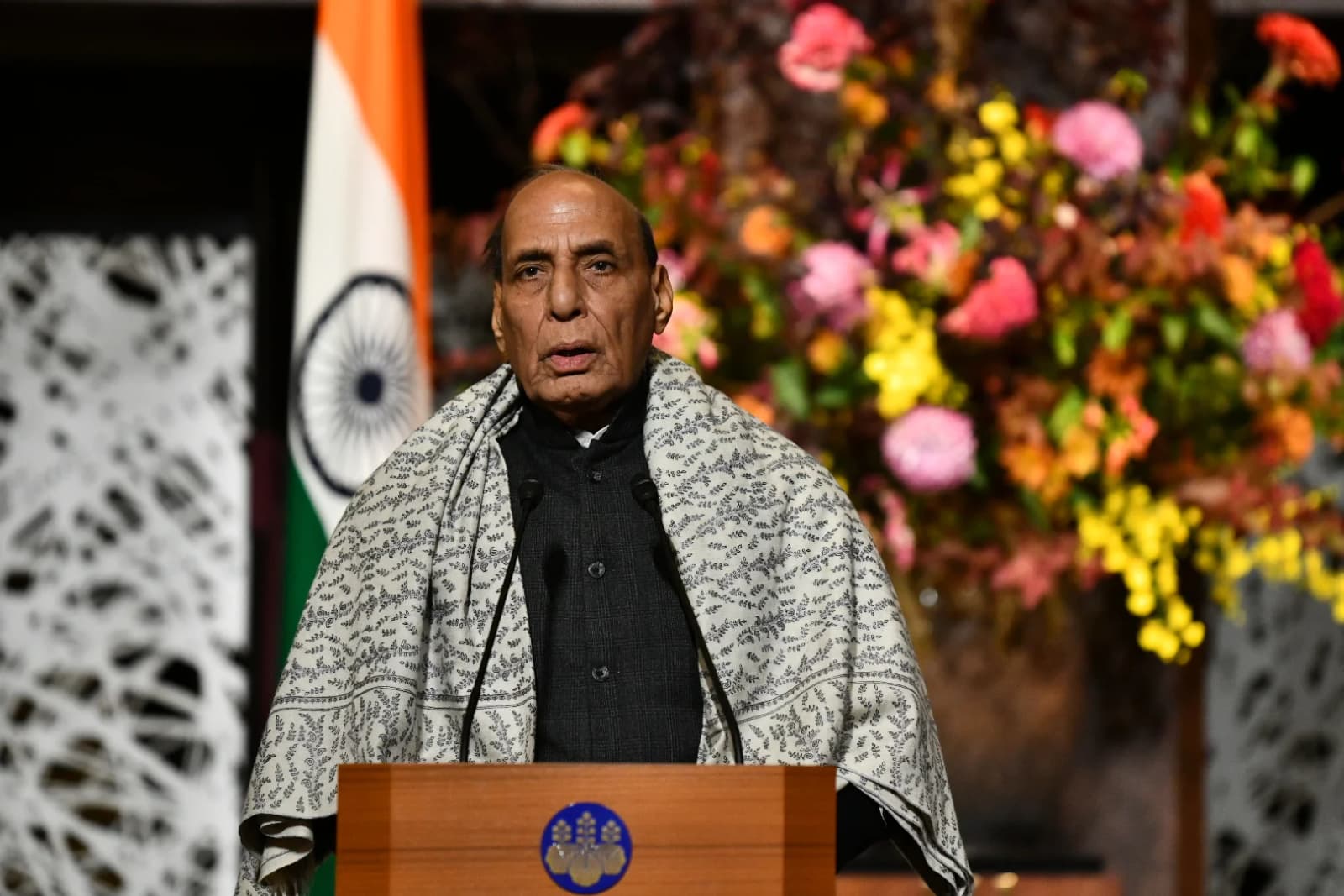
India and Japan agreed on 19 November 2026 that Japan Self-Defence Forces will, for the first time, conduct live-fire training at firing ranges in India, including drills involving surface-to-ship missiles. The decision came at the fourth India-Japan 2+2 Foreign and Defence Ministerial Meeting in Tokyo, attended by Defence Minister Rajnath Singh, External Affairs Minister S Jaishankar, Japanese Foreign Minister Motegi Toshimitsu and Japanese Defence Minister Koizumi Shinjiro.
According to the joint statement released by the Ministry of Defence, the two sides signed a Letter of Intent on the use of Indian firing ranges and agreed to speed up coordination between their defence establishments so that the training can begin early.
What did India and Japan agree on in Tokyo?
The headline outcome is the firing-range arrangement, but the joint statement covers a much wider agenda. The ministers said they would move quickly to turn the recently signed Memorandum of Arrangement on Maritime Security Cooperation into concrete results between the Indian Navy and the Japan Maritime Self-Defence Force, including maritime and air domain awareness, search and rescue, information sharing and disaster relief. They also committed to strengthening mine countermeasures and to explore joint development in naval shipbuilding and design.
On defence equipment, the ministers said they expected an early formulation of arrangements related to UNICORN and an Acceptance of Necessity by India by February 2027, under the banner of "Design with Japan, Make in India".
- Cooperation on secure undersea cable networks and cybersecurity, including the security of AI systems
- Expanding work on space situational awareness and the use of space for maritime domain awareness
- Project-based economic security cooperation in semiconductors, critical minerals, clean energy and pharmaceuticals
- A consular dialogue, including a tabletop exercise on helping each other's nationals abroad
What did the ministers say on terrorism and the UN?
The statement strongly condemned terrorism in all forms, including cross-border terrorism, and called for concerted action against UN-listed groups, naming Al Qaeda, ISIS/Daesh, Lashkar-e-Tayyiba and Jaish-e-Mohammad and their proxies. Both countries reiterated support for each other's bids for a permanent seat in a reformed UN Security Council and confirmed mutual support for non-permanent seat candidatures in 2028-29 and 2033-34.
Bilateral defence talks on the sidelines
Separately, Rajnath Singh held talks with Koizumi in Tokyo the same day. A Defence Ministry release on that meeting said it was their third defence ministers' meeting this year, after interactions in August and October. The two ministers referred to the Malabar 2026 naval exercise and the bilateral JAIMEX26 maritime exercise, both held in Japan this month, and said DRDO and Japan's Acquisition, Technology and Logistics Agency (ATLA) would pursue research cooperation on advanced missile and defence technologies.
Why it matters
Allowing a foreign military to carry out live-fire training, including with anti-ship missiles, on Indian soil is a significant step in operational trust between the two countries. The meeting also comes as Japan revises its National Security Strategy, National Defence Strategy and Defence Buildup Program, which its ministers said would contribute to greater cooperation with India.
What happens next?
The two governments plan to mark the 75th anniversary of diplomatic ties in 2027 as the "India-Japan Year of Shared Horizons". India will host the 5th Coast Guard Global Summit in February 2027, and the next 2+2 ministerial meeting will be held in India on a date yet to be fixed. No date has been announced for the first Japanese live-fire drills.