Meditation may act on some of the same brain-signalling pathways that brain-active medicines target, according to an exploratory study from the Indian Institute of Technology Jodhpur (IIT Jodhpur) in Rajasthan. The institute shared the findings on 18 November 2026 in a release issued through the Press Information Bureau, Jaipur, saying meditation-linked changes in gene activity overlapped with the molecular signatures of 438 pharmaceutical compounds.
The paper, "Meditation as a bioactive intervention: evidence of translational potential via Connectivity Mapping and TMS neurophysiology", was published in the peer-reviewed journal Frontiers in Human Neuroscience on 9 November 2026.
Who did the research and how?
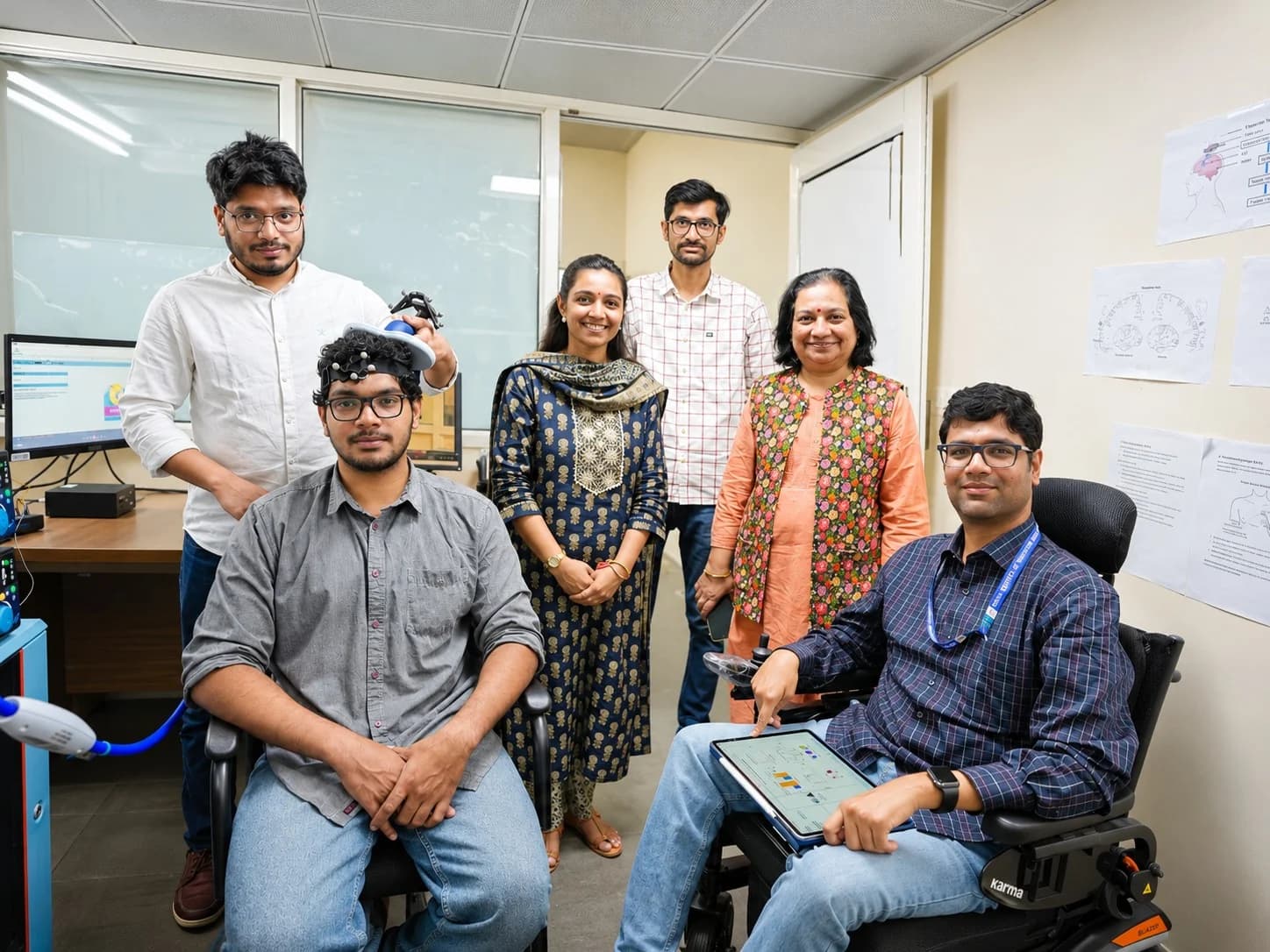
The study was led by Prof. Mitali Mukerji, who works on Ayurgenomics in IIT Jodhpur's Department of Bioscience and Bioengineering, with her PhD student Aditi Joshi, AI and cognitive neuroscience faculty member Dr. Vignesh Muralidharan, and Deep Patel, a former IIT Jodhpur BTech student now at Yale University.
The team did not recruit new volunteers. It reanalysed a publicly available gene expression dataset from 106 people who took part in an Inner Engineering meditation retreat. In all, 389 biological profiles were examined across four points: before the programme, after an eight-week preparatory phase, eight days after the retreat, and three months later.
Using a computational method called Connectivity Map (CMap), the researchers compared the meditation-linked gene activity with the signatures that thousands of drugs leave on cells. The matches pointed to 438 unique compounds, especially those acting on GABA (gamma-aminobutyric acid), glutamate, dopamine and serotonin, chemical messengers nerve cells use to communicate.
What did the study find?
The clearest signal involved the neuroactive ligand–receptor interaction pathway, which plays an important role in how nerve cells communicate. The researchers also linked their molecular results with published studies that used Transcranial Magnetic Stimulation (TMS), a non-invasive technique, to measure how drugs change brain activity, drawing on data covering 75 drugs, 55 drug classes and 21 measures of brain activity.
That analysis connected meditation to the brain's balance between excitation and inhibition, which underpins attention, emotional regulation, learning and movement. The pattern shifted over time: the preparatory phase showed links to GABA and dopamine pathways, the intensive retreat phase to GABA and calcium-channel mechanisms along with glutamate, dopamine and serotonin, and the follow-up phase to a different mix of GABA, dopamine and serotonin signatures.
Among the drug classes flagged was zolpidem, a medicine that acts on GABA-related receptors and is used for insomnia. Responses also varied from person to person.
Does this mean meditation can replace medicines?
No. The institute says the findings do not mean meditation works like these drugs or can replace medical treatment; they only suggest that meditation-linked biological changes may involve some of the same broad pathways. The authors add that guidance and supervision matter when meditation is used alongside clinical treatment.
"Meditation has traditionally been understood as a practice for mental wellbeing. Through this research, we wanted to explore whether its effects could also be understood through measurable biological changes," Prof. Mukerji said in the release.
What are the limits?
The researchers describe the work as exploratory. It relied on an existing dataset, had no non-meditating control group, and did not measure participants' brain activity with TMS directly. The gene data came from blood samples, which may not reflect changes inside the brain.
What happens next?
The team has proposed future studies that combine molecular analysis with TMS, electromyography (EMG) and electroencephalography (EEG) to measure brain activity before and after meditation. Such work could test whether the molecular changes are matched by measurable shifts in brain inhibition, excitation and plasticity.
Photo source · Press Information Bureau, PIB copyright policy