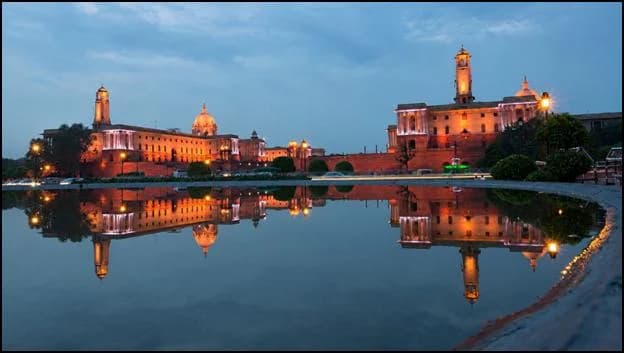
The Indian Institute of Advanced Study (IIAS) in Shimla opened a two-day international conference on Friday devoted to Buddhaghosa, one of the best-known scholars and philosophers of the Theravāda Buddhist tradition. Titled ‘Buddhaghosa: A Philosophical, Historical and Critical Enquiry’, the meeting is running on 13 and 14 November at the institute’s Rashtrapati Nivas campus, according to a release issued through PIB Shimla under the Ministry of Education.
The release said scholars from India and abroad are taking part, with faculty members, research scholars and senior academics from universities across the country presenting papers, and some participants joining online.
Who spoke at the opening
Prof. Balaganapathi Devarakonda, convener of the conference, gave the welcome address. He and Dr. Sudeep Raj Kumar, Assistant Professor in the Department of Philosophy at Hindu College, University of Delhi, then introduced the theme and outlined what the organisers hope the meeting will achieve.
The chief guest and keynote speaker was Prof. Bimalendu Kumar, Vice-Chancellor of the Sanchi University of Buddhist-Indic Studies (SUBIS). IIAS Director Prof. Himanshu Kumar Chaturvedi welcomed him with a traditional Himachali shawl and cap.
In his keynote, Prof. Kumar spoke about Buddhaghosa’s philosophical thought, the distinct place he occupies within Buddhism and the value of his writings for understanding India’s intellectual heritage. According to the release, he argued that Buddhaghosa’s contribution should be studied within a wider philosophical framework and that the many dimensions of his thinking deserve in-depth examination.
Prof. Chaturvedi, in his presidential address, spoke about the academic relevance of the theme and stressed the need for rigorous, critical study of Indian philosophical traditions. Dr. Akhilesh Pathak of IIAS moderated the inaugural session and delivered the vote of thanks.
More than a commentator
The organisers say the central aim is to look at Buddhaghosa not only as someone who wrote commentaries on Buddhist texts but as a thinker who interpreted, reinterpreted and systematised key ideas of Buddhist philosophy. Through his work, the conference also hopes to open up wider questions: how different schools of Indian philosophy have spoken to one another, and how classical texts are read and reconstructed.
What the two days cover
Sessions on the first day focused on questions of causality, time and continuity in Buddhaghosa’s Visuddhimagga and on what his writing says about the mind, emotions and well-being — an area the organisers describe as philosophical psychology.
On Saturday, 14 November, the second and final day, discussions are scheduled to turn to:
- Buddhaghosa as a commentator, and his life, language and intellectual legacy;
- comparative and cross-cultural philosophical perspectives on his work;
- literary, doctrinal and regional perspectives on how his legacy has travelled.
Why it matters
IIAS said the conference is meant to encourage fresh academic debate in Buddhist philosophy, Indian intellectual history and comparative philosophy, and to deepen understanding of Buddhaghosa’s ideas. The meeting comes as universities such as SUBIS, whose vice-chancellor delivered the keynote, focus specifically on Buddhist and Indic studies.
The release did not say whether the papers presented will be published as a volume.