
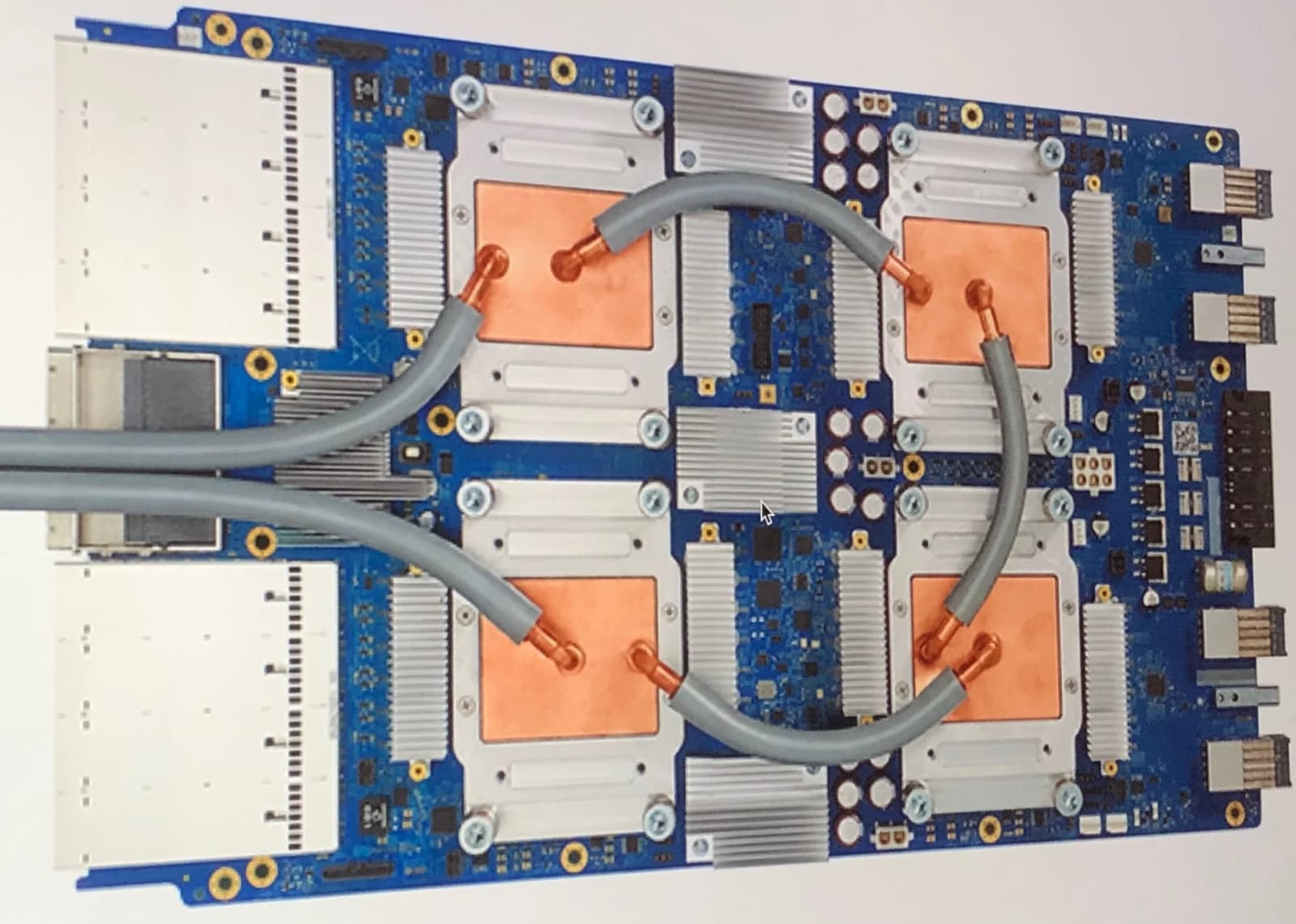
Google introduced two configurations of its eighth-generation Tensor Processing Unit family on November 9, expanding hardware choices for organisations running artificial intelligence models. TPU 8tx focuses on confidential processing, while TPU 8i Max targets applications handling large amounts of information at once.
Two systems for different AI workloads
Google describes the additions in its announcement as new system configurations using existing chips, with changes to memory, networking and security.
TPU 8tx pairs TPU 8t silicon with fifth-generation AMD EPYC processors. Google says it protects data during processing and supports model customisation and inference, when a trained model produces responses.
TPU 8i Max combines two TPU 8i chips in one package. Google says it doubles compute, SRAM and high-bandwidth memory bandwidth relative to TPU 8i. MapMyTimes has not independently tested these specifications.
What Indian cloud teams should check
For Indian developers and cloud buyers, this is a technology update rather than confirmation of a local rollout. The announcement reviewed does not give India-specific availability dates or prices.
Google's deployment documentation explains that TPU models are available only in particular regions and zones. It also warns that availability can differ between Compute Engine and other services, including Google Kubernetes Engine and Vertex AI. Its guidance also says access to specialised AI zones requires pre-reserved capacity. A general cloud-region presence therefore does not establish access to every accelerator, and capacity is a separate question from a product announcement.
Teams evaluating the hardware should confirm the exact model, service, hosting location and capacity offered before planning a deployment. Testing their own workloads will also matter: a specification about memory bandwidth alone does not establish the response time or total cost of a complete application.