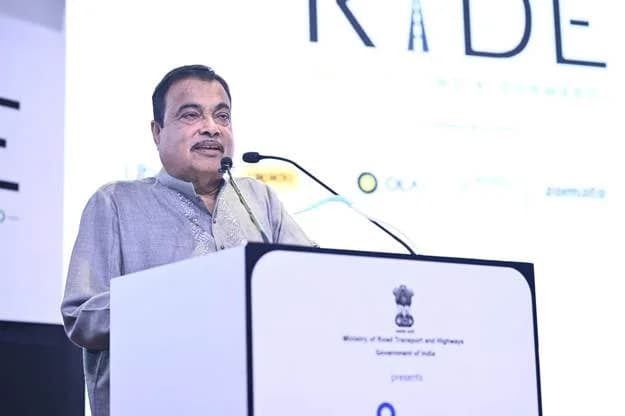
Union Road Transport and Highways Minister Nitin Gadkari on 18 November 2026 urged state governments to adopt the Motor Vehicle Aggregator Guidelines, 2025, the Centre's rulebook for app-based cab, bike and delivery platforms, saying wider adoption would expand jobs and improve services for passengers. He was speaking at 'RIDE – Moving India Forward' at Bharat Mandapam in New Delhi, according to a Ministry of Road Transport and Highways release issued through the Press Information Bureau.
The programme was organised with Uber, Ola, Rapido, Bharat Taxi, Zomato, Swiggy and Porter, and brought together company representatives, drivers, gig workers and beneficiaries of the platforms.
What do the aggregator guidelines promise drivers and riders?
The guidelines set a floor for driver earnings and require round-the-clock complaint handling for both drivers and passengers. C. N. Singh, Joint Secretary in the ministry, outlined the key provisions at the event, noting that the framework had been revised after consultations with state governments, aggregators and other stakeholders. According to the ministry, they include:
- At least 80 per cent of the applicable fare for drivers who use their own vehicles
- Health insurance cover of ₹5 lakh and term insurance of at least ₹10 lakh for drivers
- Freedom for drivers to work on more than one aggregator platform
- 40 hours of induction training for drivers
- A 24x7 grievance officer, reachable through the aggregator's call centre, to handle complaints from drivers and passengers
Why is the Centre asking states to act?
The guidelines are a central framework that state governments are being asked to adopt, which is why the minister directed his appeal at them. Gadkari called on state governments to create an enabling environment for app-based services and said wider adoption of the framework would open up jobs, particularly for people from socially, economically and educationally disadvantaged sections.
He said the aim of the policy was to let the sector grow while protecting the interests of both drivers and consumers, and invited the industry to work with the government and send suggestions to improve the rules further. The release did not list which states have adopted the guidelines so far.
What else did the minister say about mobility?
Gadkari said app-based services had moved beyond carrying passengers into goods and food delivery, creating new livelihoods. He pointed to e-rickshaws and e-carts as examples of technology that had made traditional occupations less physically demanding, and called for stronger last-mile connectivity in rural areas so that people can reach schools, jobs and markets and send farm produce to cities.
Women who have achieved financial independence through the platforms shared their experiences, as did drivers and other platform workers.
Road safety and the Rah-Veer scheme
A presentation at the event covered road safety and the government's Rah-Veer Scheme, which encourages people to help road accident victims quickly. Gadkari felicitated gig workers and drivers who had taken injured accident victims to hospital in the critical hours after crashes. Road safety has been a recurring theme for the minister this week; a day later he raised accident black spots and construction quality at the Indian Roads Congress session in Hyderabad.
Executives from Rapido, Uber India, Porter, Ola, Swiggy and Zomato attended the event, along with actor Sharad Kelkar.
What it means for travellers
For people who book cabs and bike taxis through apps, the most direct benefit in the guidelines is the requirement of a 24x7 grievance officer. Whether riders in a particular city can rely on these protections depends on whether their state has adopted the framework.
Photo source · Press Information Bureau, PIB copyright policy