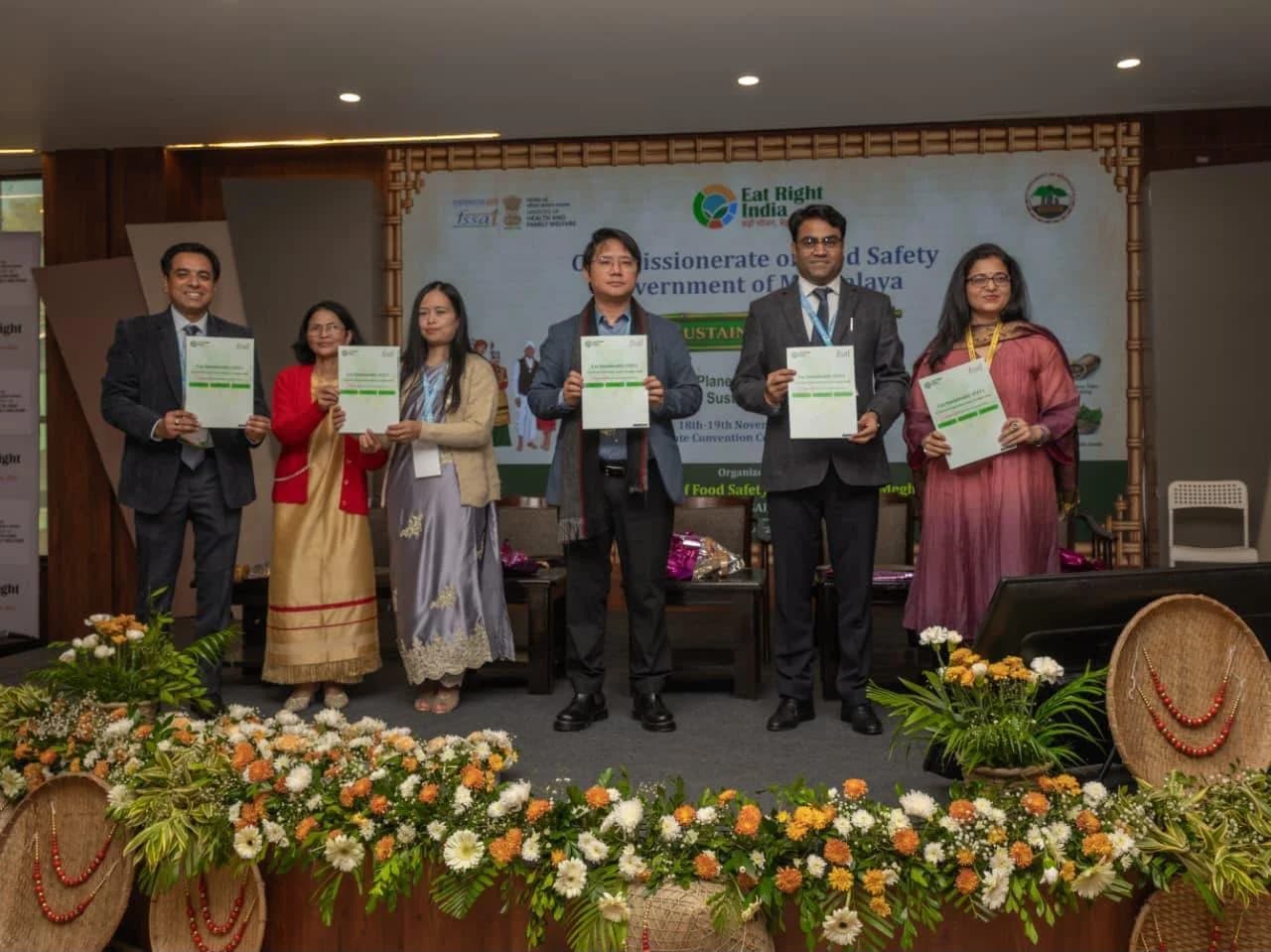
The Food Safety and Standards Authority of India (FSSAI) and the Government of Meghalaya held the first 'Eat Sustainable Summit' in Shillong, Meghalaya, on 18 and 19 November 2026, and adopted a seven-pillar framework that the food regulator plans to take to other states and Union Territories. Details of the two-day meet were released by the Press Information Bureau (PIB) on 21 November 2026.
The summit was organised with Meghalaya's Commissionerate of Food Safety under FSSAI's Eat Right India initiative. Its theme was 'Plate and Planet – Evoking Traditional Wisdom for a Sustainable Future'. Policymakers, food safety officials, institutions and entrepreneurs attended.
What is the 'Eat Sustainable' framework?
It is a document, titled the 'Eat Sustainable – Thematic Pillar Document', that sets out seven pillars to guide how the initiative is carried out and widened. It was launched and adopted at the inaugural session at the State Convention Centre in Shillong. The PIB release did not list the seven pillars.
FSSAI said that through the initiative it wants to go beyond awareness campaigns and bring about lasting changes in behaviour, nudging citizens, institutions and food businesses towards informed and responsible food choices.
What did officials say?
Rajit Punhani, Chief Executive Officer of FSSAI, said sustainability needs to be built into India's food system with the participation of governments, businesses, institutions and citizens. He stressed the value of traditional food knowledge and called for responsible production and consumption, along with changes in everyday habits.
Meghalaya's Health Minister Wailadmiki Shylla pointed to the state's living root bridges, made by training the roots of living trees across streams and valleys, as an example of how earlier generations worked with nature. He said such indigenous knowledge should shape sustainable practices for the future.
Why Meghalaya's food traditions were in focus
The summit drew on Meghalaya's own food heritage. Red Khasi rice, finger millet, bamboo tube cooking, hill honey, wild greens and perilla seeds were showcased as examples of how food diversity, local knowledge and biodiversity are linked to sustainable living.
Local self-help groups and entrepreneurs led three workshops on sustainable food practices, eco-friendly alternatives and waste management. School students took part in an 'Eat Right Yuva Quiz' on sustainable diets, local food systems, food safety, hygiene and nutrition.
The programme began with a walkathon flagged off by Dr. Joram Beda, Commissioner and Secretary of Meghalaya's Health and Family Welfare Department and the state's Commissioner of Food Safety, along with A. Singh, Regional Director of FSSAI's Kolkata regional office.
What happens next?
According to PIB, the summit laid out a roadmap to take the Eat Sustainable initiative nationwide, with a proposed expansion across states and Union Territories. No timeline or list of states was given in the release.
In the same week, FSSAI also issued a standard operating procedure on clearing imported food consignments referred manually by Customs, which MapMyTimes reported earlier.
Photo source · Press Information Bureau (PIB), PIB copyright policy