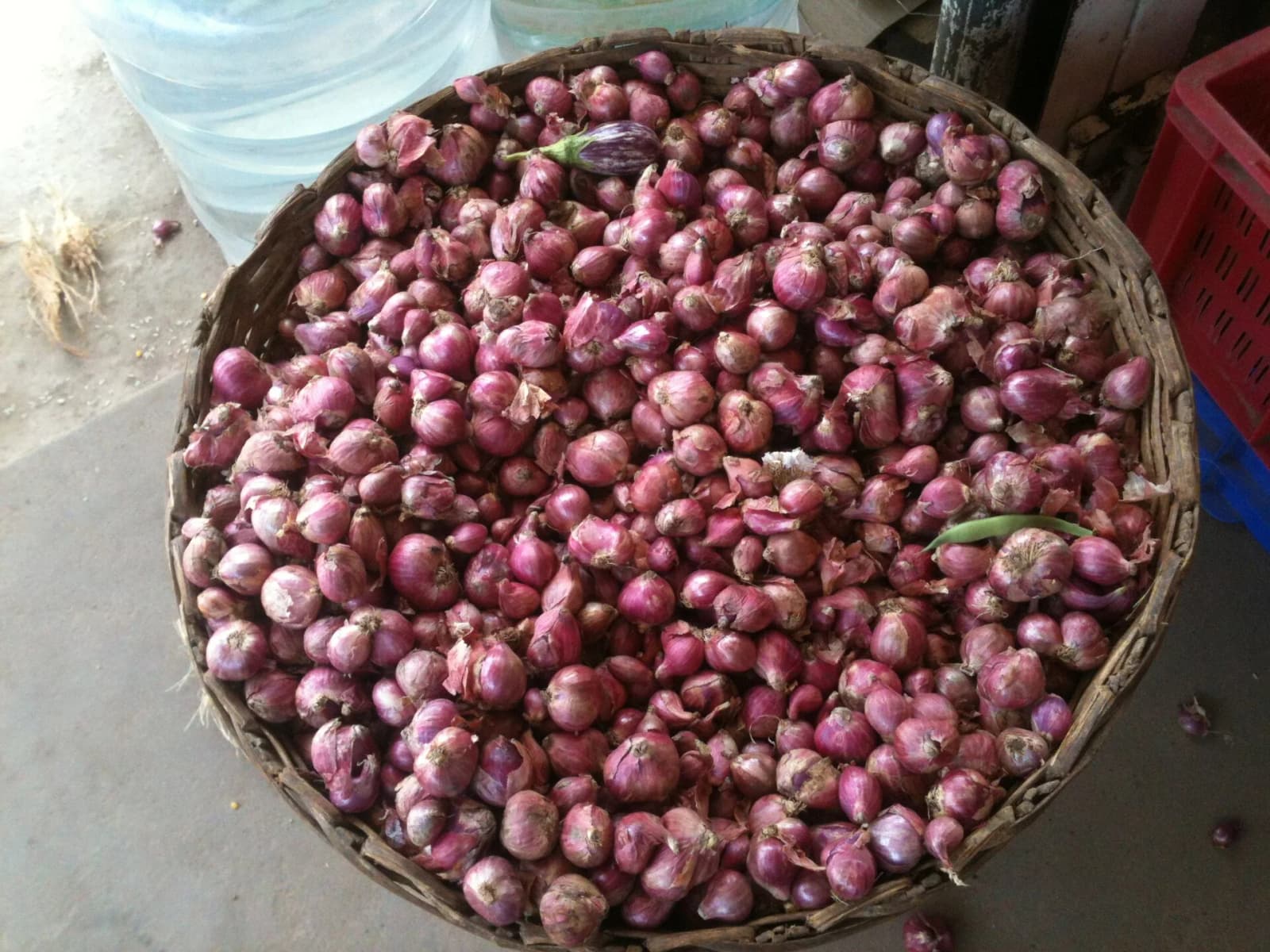
Shallots, the small "sambar onions" that go into South Indian sambar and Chettinad-style curries, have been selling above Rs 200 a kilogram in Bengaluru, Karnataka, for the past two weeks, The New Indian Express reported on 21 November 2026. Traders blame heavy rain in neighbouring Tamil Nadu, which washed away crops in the main growing areas, and say this is the highest shallot price in about 18 years.
How expensive are shallots right now?
In Bengaluru, shallots have stayed above Rs 200 a kilogram for two weeks and briefly touched Rs 250 a kilogram around Deepavali. Regular onions, by comparison, are retailing at about Rs 65 to Rs 70 a kilogram, with wholesale rates between Rs 40 and Rs 60.
The squeeze is just as sharp in Chennai. DT Next reported on 16 November, citing a Maalaimalar report, that shallots had crossed Rs 200 a kilogram in the city's retail markets, with wholesale rates at Koyambedu reaching Rs 180 a kilogram depending on variety, and some supermarkets charging as much as Rs 250.
Why has supply dried up?
Ravi Balakrishna, an onion trader at the Agricultural Produce Market Committee yard in Bengaluru, told the newspaper that prices have stayed high because of short supply from the growing regions, after rain in Tamil Nadu destroyed the crop. Bengaluru's shallots come mainly from growers in Namakkal and Perambalur in Tamil Nadu, routed through Hosur. The city handles only a few tonnes of sambar onions a day, compared with roughly 1,000 tonnes of regular onions, and most of it is sold from City Market.
In Chennai, a Koyambedu wholesale trader quoted by DT Next said the market usually receives about 100 tonnes of shallots a day on eight to ten lorries from Tiruchy, Perambalur, Coimbatore and Salem. Widespread rain cut that to around 20 tonnes a day on two lorries, he said.
How are restaurants and households coping?
Restaurants that specialise in South Indian food have sharply reduced how much shallot they use, cutting it to 100-250 grams where they would earlier use a kilogram, and are substituting regular onions, according to The New Indian Express. Subramanya Holla of the Restaurant Owners' Association said eateries raise menu rates when the cost of key ingredients goes up. In Chennai, several hotels have also cut back on shallots, DT Next reported, adding to the pressure on household kitchen budgets already facing higher prices for other vegetables. Rising food costs are showing up elsewhere too, with Kolhapur dairies Gokul and Warana raising milk prices this week.
When will prices come down?
Bengaluru traders expect shallot prices to remain high until the next crop arrives in about four weeks, around the end of December and early January. If output is normal after January, they project prices could fall by at least Rs 100 to Rs 130 a kilogram. In Chennai, traders said prices are likely to ease only once the new harvest, expected in the Tamil month of Thai, reaches the market, provided there is no further rain damage.
Photo source · Ask27, CC BY-SA 3.0