The United States, Mexico, Costa Rica and Jamaica will jointly host the 2031 FIFA Women's World Cup, while England, Northern Ireland, Scotland and Wales will stage the 2035 edition. The hosts were appointed on 23 November 2026 at an Extraordinary Congress of the Fédération Internationale de Football Association (FIFA), held by videoconference with world football's governing body based in Zurich, Switzerland.
Both decisions were taken by acclamation, meaning member associations endorsed the single bid for each edition without a contested vote, according to FIFA's official announcement.
What did the FIFA Congress decide?
The Congress confirmed two joint bids. The 2031 tournament will be shared by four member associations from North and Central America and the Caribbean: the United States Soccer Federation, the Mexican Football Association, the Costa Rican Football Federation and the Jamaica Football Federation. The 2035 edition will go to the four British associations: The Football Association (England), the Irish Football Association (Northern Ireland), the Scottish Football Association and the Football Association of Wales.
FIFA said the 2031 edition will be the first Women's World Cup to feature 48 teams and the first to be spread across four member associations. The governing body noted that the appointments came almost exactly 35 years after the opening match of the first Women's World Cup in 1991, a tournament contested by just 12 teams.
How were the hosts chosen?
The selection followed bidding processes that the FIFA Council opened in March 2025. On 11 November 2026, FIFA published evaluation reports on both bids, concluding that each met the minimum hosting requirements. The evaluation model looked at event vision and key metrics, infrastructure, services, commercial aspects, sustainability and human rights. The reports were then put to the member associations at the Extraordinary Congress.
Because only one bid was submitted for each edition, the Congress session served largely as a formal confirmation rather than a competitive contest.
What did FIFA say?
FIFA President Gianni Infantino framed the decisions around growing the women's game worldwide. "Our objective, of course, is making women's football truly global," he said, according to the FIFA release.
Infantino also said the priority was to widen the sport's reach and narrow existing disparities. "We have to expand the game globally, we have to close the gaps that still, of course, exist," he said. In closing remarks, he added: "Football belongs to everyone, everywhere in the world, and we have to create opportunities."
Why does the 2031 tournament matter?
The 2031 edition matters because it is the biggest expansion in the tournament's history, taking the field to 48 teams. A larger field opens the door for more national teams to qualify, which can unlock investment in women's football programmes in countries that have rarely or never reached the finals.
The four-nation format also spreads the event across a wide region. Costa Rica and Jamaica will share hosting duties for a senior Women's World Cup with the United States and Mexico. Reports by established outlets on 23 November noted that the United States last hosted the tournament in 2003.
For the 2035 hosts, the decision brings the Women's World Cup to the United Kingdom's four football associations, which had submitted a joint bid.
What happens next?
With the hosts confirmed, attention will shift to detailed planning, including final venue lists, match schedules and qualifying pathways for the expanded 48-team format. FIFA has not yet set out the full match calendar for 2031 in its announcement. The full bid evaluation reports, published by FIFA earlier in November, contain further detail on the proposals submitted by both groups of hosts.
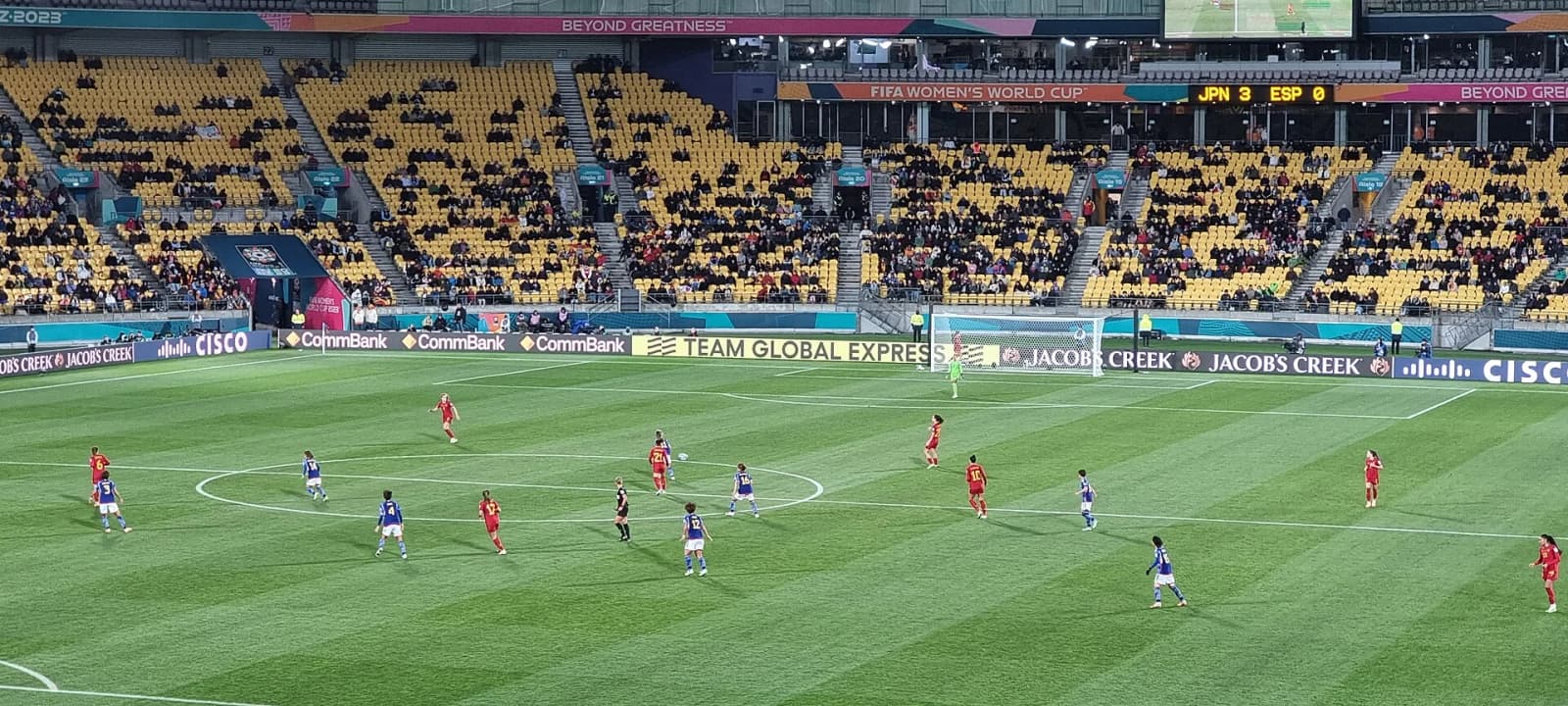
Photo source · JaumeBG, CC BY-SA 4.0