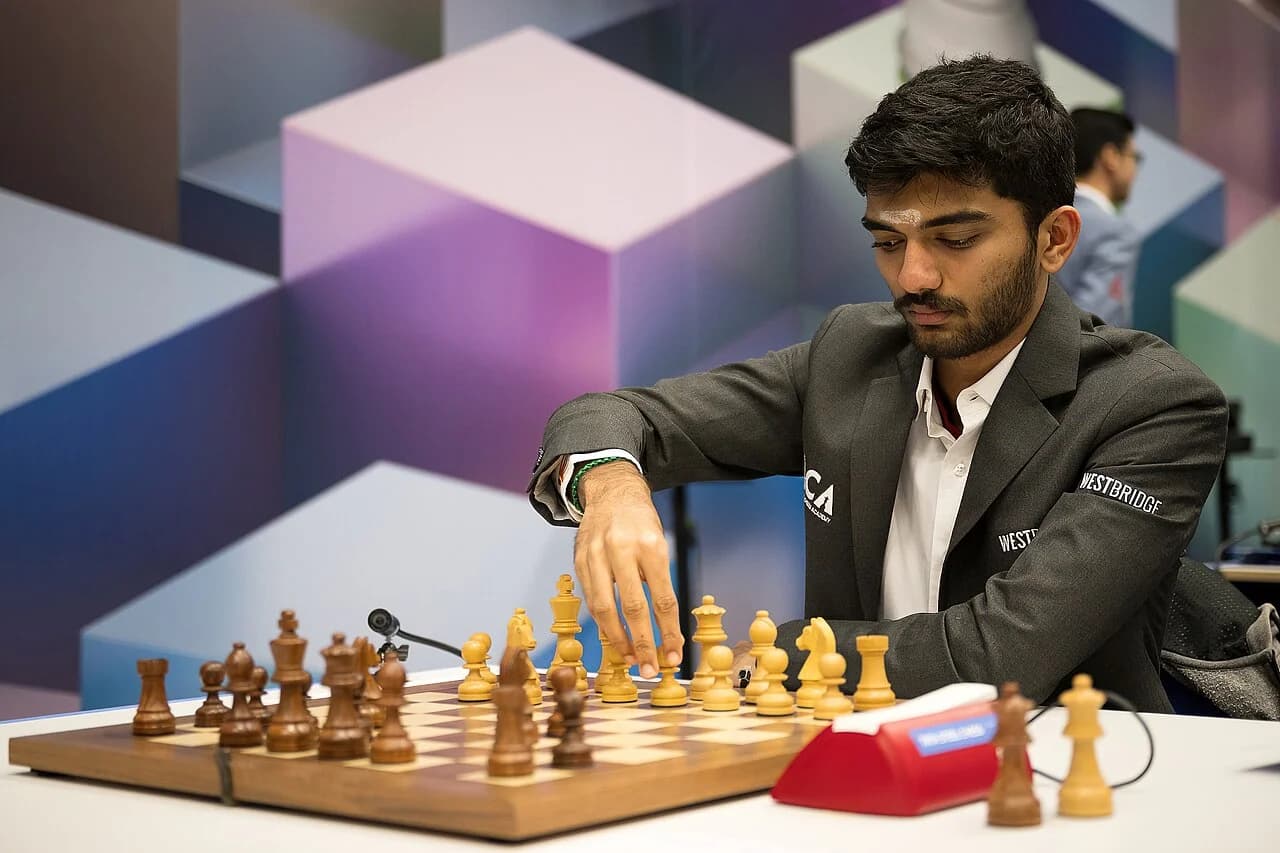
India's D Gukesh begins the defence of his world chess title on 24 November 2026, when he faces Uzbekistan's Javokhir Sindarov in Game 1 of the Salesforce FIDE World Championship Match at the Fondation Martin Bodmer in Cologny, near Geneva, Switzerland. The game starts at 3 pm local time, which is 7:30 pm in India. Here is what the match is, how it works, and why many observers see the 20-year-old champion as the underdog. (MapMyTimes reported on the opening ceremony here.)
What is the World Chess Championship match?
The World Chess Championship match is a one-on-one contest, run by the International Chess Federation (FIDE), between the reigning world champion and a challenger who earns the right to play through the Candidates Tournament. The winner holds the classical world title, the most prestigious crown in the game. This year's match runs from 22 November, when the opening ceremony was held at the Palais des Nations in Geneva, to 12 December 2026, according to FIDE's official match preview.
Who are the two players?
Gukesh Dommaraju, from Chennai, won the 2024 Candidates Tournament and then beat China's Ding Liren, clinching the title with a win in the decisive final game. At 18, he became the youngest undisputed classical world champion, FIDE says.
Javokhir Sindarov won the Candidates Tournament in Cyprus in April 2026, becoming the first player from Uzbekistan to qualify for a classical world championship match. He had already made his name in India: in November 2025 he won the FIDE World Cup in Goa, beating China's Wei Yi in tiebreaks to become the youngest player ever to win that event, as FIDE reported at the time. He turns 21 on 8 December, the day of Game 12. FIDE describes the contest as the youngest encounter ever for the classical world title.
Why is Gukesh seen as the underdog?
Gukesh is seen as the underdog mainly because of ratings and recent form. According to FIDE, Gukesh is rated 2710 and stands 26th in the world after a dip in results, while Sindarov is ranked fourth in the world with a career-high rating of 2782. Sindarov also leads their classical head-to-head 2.5–0.5, FIDE says, and many observers regard him as the favourite.
Gukesh, however, is the only one of the two with world championship match experience, and he has played down the "defending champion" label. At the opening ceremony on 22 November he said, according to Chess.com: "I don't think I'm here to defend anything—I'm here to win it all over again!" Sindarov put his own chances at 50:50 and said anything could happen.
How does the match work?
The match is played over a maximum of 14 classical games, and the first player to reach 7.5 points wins the title. A win earns one point and a draw half a point. Key rules, as set out by FIDE and summarised by ChessBase India:
- Time control: 120 minutes for the first 40 moves, then 30 minutes for the rest of the game, with 30 seconds added per move from move 41.
- Schedule: three games, then a rest day. Game 14, if needed, is on 11 December.
- Colours: Sindarov has the white pieces in Game 1 and in every odd-numbered game; Gukesh has White in the even-numbered games.
- No quick draws: players cannot agree a draw before Black's 40th move. Before that, a game can be drawn only by threefold repetition or stalemate, claimed through the arbiter.
What happens if the score is tied 7–7?
If the score is tied 7–7, the title is decided by faster games on 12 December. First come four rapid games at 15 minutes each plus 10 seconds per move. If still level, two games at 10 minutes plus 5 seconds follow, then two blitz games at 3 minutes plus 2 seconds. If the players are still tied, they play single 3+2 blitz games, swapping colours each time, until one of them wins a game.
How much prize money is at stake?
The prize fund is 2.5 million US dollars, net of local taxes. Each player receives 200,000 dollars for every game he wins, and the rest of the fund is split equally, according to ChessBase India's summary of the regulations. There is an exception: if the match goes to tiebreaks, or ends very closely with almost every game decisive, the winner gets 1.3 million dollars and the loser 1.2 million dollars.
How does it affect you?
For Indian fans, the match is a chance to see whether India keeps the classical crown that Gukesh won in 2024. All games start at 7:30 pm IST, which makes them easy to follow live in the evening. FIDE runs an official broadcast with grandmaster commentary, and several chess platforms and Indian chess channels are streaming the games.
What is established, and what is not?
The format, dates, venue, prize fund and colours for Game 1 are fixed and confirmed by FIDE. What remains open is everything on the board: the players' opening choices, how Gukesh responds to his weaker form this year, and whether Sindarov's strong record against him in classical chess holds up over 14 games. Ratings point to Sindarov, but world championship matches have often been decided by preparation and nerves rather than numbers.
What happens next?
Game 1 is on Tuesday, 24 November. Games 2 and 3 follow before the first rest day. The match can end early if either player reaches 7.5 points before Game 14; otherwise it runs until 11 December, with tiebreaks, if needed, on 12 December. MapMyTimes will report the results as the match goes on.
Photo source · Frans Peeters, CC BY-SA 2.0