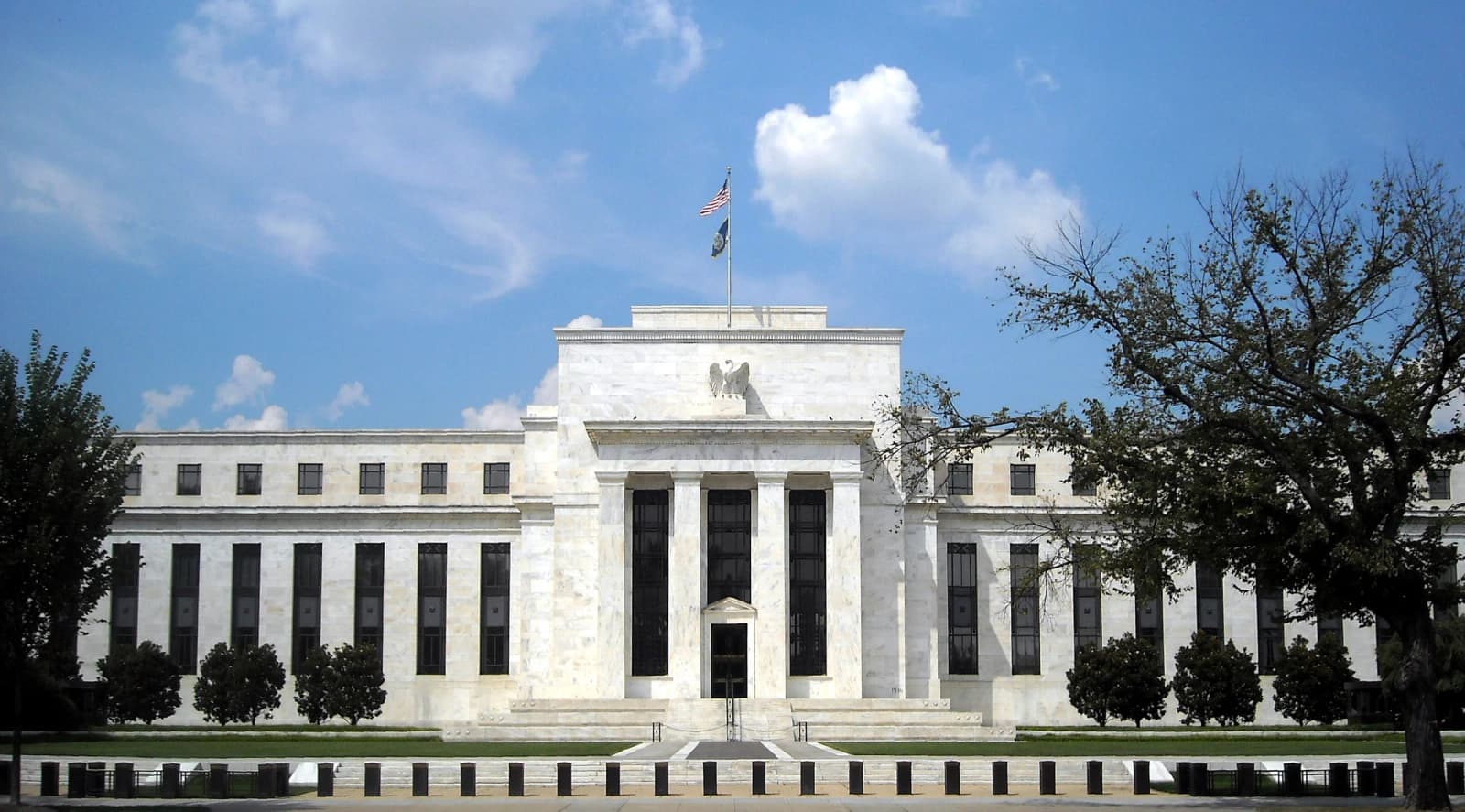
Almost all US Federal Reserve policymakers expect to raise interest rates again, and a couple are open to a move larger than a quarter point in December, according to minutes of the Federal Open Market Committee (FOMC) meeting of 27-28 October, published by the Fed in Washington on 18 November 2026. The minutes also show officials increasingly see the artificial intelligence (AI) investment boom as a source of inflation.
What did the Fed decide in October?
The committee, chaired by Kevin Warsh, kept the federal funds rate target range at 3.75% to 4% by a 10-2 vote. Lisa D. Cook and Beth M. Hammack voted against, preferring a 25 basis point increase. The minutes refer to a rate increase at the September meeting, whose effects officials said they wanted to assess.
A few officials who backed the pause described it as "a close call". Many stressed that holding rates "did not reflect a weakening of the Committee's commitment" to bringing inflation back to its 2% goal.
What do the minutes say about December?
The record states that "almost all participants" judged that, under their baseline outlooks, further action to raise the target range "would likely be appropriate". It adds that "a couple of participants noted that an increase of more than 25 basis points could warrant consideration at the next meeting if incoming inflation data were unfavorable." The minutes record that the next meeting is scheduled for 8-9 December.
The minutes also record what markets were pricing at the time: futures implied high odds of a 25 basis point hike by year-end and two more by summer 2027, while the median respondent in the New York Fed's survey of market expectations expected one hike in December and another in March 2027.
Why is AI part of the inflation debate?
"Many participants viewed the AI buildout as a material source of inflation risk," the minutes say, noting that demand linked to data centre construction was straining supply and pushing up prices of technology-related consumer goods. Several officials judged that price pressures were spreading beyond industries directly tied to data centres. At the same time, some warned that the investment surge could prove excessive, and a number said closer scrutiny of AI returns and financing could slow spending and ease inflation pressure.
Fed staff saw risks to their inflation forecast as tilted upwards and flagged the possibility that longer-run inflation expectations could become unanchored "after five years' worth of elevated inflation". The staff expected inflation to reach about 2% in 2028.
Why it matters for India
The minutes note that the dollar appreciated over the intermeeting period and that several foreign central banks, including the Bank of Japan, the Reserve Bank of Australia and central banks in several emerging market economies, raised rates in response to elevated inflation. MapMyTimes has previously explained why gold and silver prices have fallen in India, and reported on Cook's dispute with the White House over her removal.
What happens next?
The FOMC meets on 8-9 December. The minutes say future decisions will depend on incoming data, the evolving outlook and the balance of risks, and a few officials noted that a more restrictive stance could become necessary if inflation proves more persistent than expected.
Photo source · AgnosticPreachersKid, CC BY-SA 3.0