The Union government is preparing a second attempt to pass a Constitution amendment that ties one-third reservation for women in legislatures to a fresh delimitation and a much larger Lok Sabha, according to agency reports published between 15 and 16 November. PTI, quoting unnamed sources, reported that Parliament's winter session is likely to begin in the first week of December and that this bill is the government's priority. No dates have been officially announced, and the government does not have the numbers on its own. Here is what is known, what the parties say and what remains open.
What happened
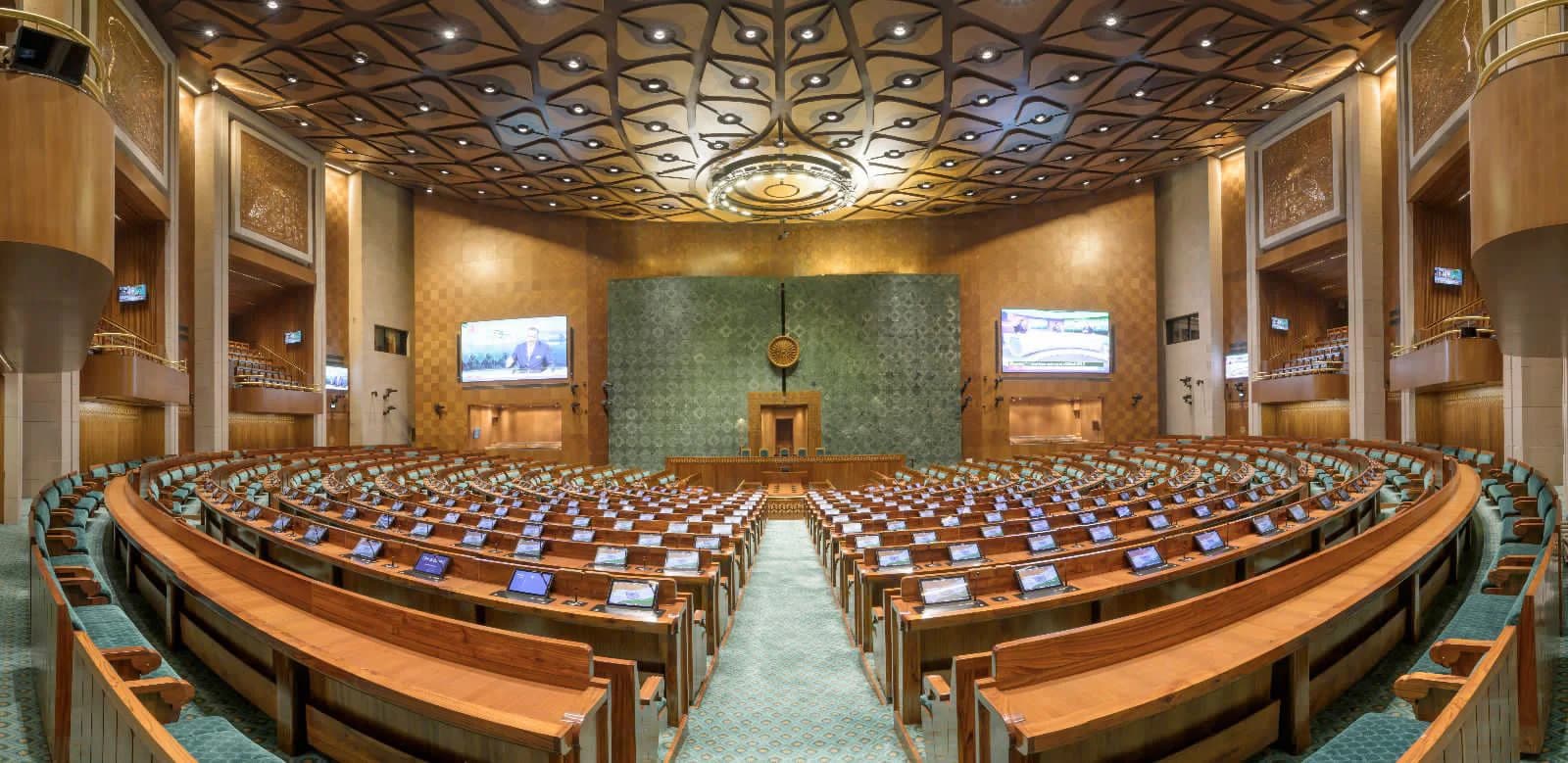
PTI reported from New Delhi on 15 November that top-level discussions on the session dates were under way and that the first week of December was emerging as the likely window. The agency said the government wants to push a Constitution amendment bill that would raise the strength of the Lok Sabha from 543 to a maximum of 850 seats through delimitation, clearing the way for 33 per cent reservation for women in Parliament and state legislatures before the 2029 general election.
An IANS report carried on 16 November said the government had also weighed reconvening the monsoon session, which has not been formally closed, instead of calling a separate session. Both agencies attributed the timing to unnamed sources.
Background and timeline
- 2023: Parliament passed a law reserving one-third of seats for women. Outlook reported that the law remains in place but has not taken effect; Congress leaders say it "awaits implementation".
- April 2026: The government brought a package of three bills, which Outlook listed as the Constitution (131st Amendment) Bill, the Delimitation Bill and the Union Territories Laws (Amendment) Bill.
- 17 April 2026: At a special sitting, the Constitution amendment fell short of the special majority in the Lok Sabha. Outlook put the count at 298 votes in favour and 230 against.
- 13 August 2026: The monsoon session was adjourned sine die but not prorogued. PTI said it had stayed unprorogued for 94 days as of 15 November, passing the earlier record of 87 days set in 2008.
- 13 November 2026: Leaders of the ruling alliance and the opposition traded statements over talk of a special session on the bill, IANS reported.
- 15–16 November 2026: PTI and IANS reported the likely December window.
The unprorogued session matters for procedure. According to PTI, an extended sitting of an existing session can be called with two days' notice, while a fresh session needs at least 14 days.
The numbers
- Votes needed: A Constitution amendment requires two-thirds of members present and voting. PTI put that at 361 votes if all 540 sitting members vote; three seats are vacant.
- NDA strength: 320 members, according to PTI, which leaves the ruling alliance about 41 short of that mark if the House is full.
- House size: 543 seats now; a ceiling of 850 under the amendment.
- The "50 per cent" illustration: During the April debate, Home Minister Amit Shah set out a model in which every state's tally rises by about half, taking the Lok Sabha to 816. Under it, as reported by Outlook, the five southern states together would go from 129 to 195 seats, keeping a share of about 24 per cent.
- State examples under that model: Uttar Pradesh 80 to about 120, Maharashtra 48 to about 72, West Bengal 42 to about 63, Bihar 40 to about 60, Tamil Nadu 39 to 59, Madhya Pradesh 29 to about 44, Karnataka 28 to 42, Gujarat 26 to about 39, Rajasthan and Andhra Pradesh 25 to about 38 each, Kerala 20 to 30 and Telangana 17 to 26.
These state figures are illustrative. PTI reported that a formula raising seats by 50 per cent across states while keeping the inter-state share based on the 1971 Census is under consideration, and that no final decision has been taken.
What the parties say
Government and NDA
Amit Shah has said the delimitation plan will not harm southern states. On timing, Outlook quoted him as saying: "All elections to be held up to 2029 will be conducted on the existing seats and under the present practice."
Union Minister Chirag Paswan told IANS the government wants to bring delimitation and women's reservation together, and used Bihar as an example: its 40 seats would become 60, with a third reserved for women. BJP MP Praveen Khandelwal said a growing population and electorate mean "delimitation becomes necessary". JD(U) national general secretary Shyam Rajak said the decision on a session rests with the government and that he hoped the women's reservation measure would pass.
Opposition
Congress leader Rahul Gandhi, as quoted by Outlook, called the package "an attempt to change the electoral map of India". Samajwadi Party MP Dimple Yadav said the opposition is not against women's reservation, adding: "SP believes that this is because the government wants to use the delimitation exercise as a weapon."
AAP MP Sanjay Singh told IANS that the NDA lacks the two-thirds majority the bill needs and that the women's reservation law has already been passed. Andhra Pradesh Congress vice-president Valiboyina Gurunadham called the linking of the quota to delimitation "nothing but bogus". CPI(M) MP V. Sivadasan alleged: "The government is planning to bring Delimitation to capture power."
What it means for Indian readers
- Women candidates: If the amendment passes, the stated aim is to have one-third of seats in the Lok Sabha and state assemblies reserved for women by the 2029 general election.
- Your state's voice in Delhi: The number of MPs each state sends would change. Under the model Shah described, every state gains seats and relative shares stay roughly where they are; opposition parties argue the exercise could reduce the weight of southern, north-eastern and smaller states.
- Constituency boundaries: Delimitation means redrawing constituencies, so voters could find themselves in a different seat once the exercise is carried out.
- Nothing changes immediately: The bill has not been reintroduced, and Shah has said elections up to 2029 will be held on existing seats.
What is established and what is uncertain
Established
- A law reserving one-third of seats for women was passed in 2023 and has not yet come into operation. Government and opposition leaders both say so.
- The Constitution amendment did not get the required majority on 17 April. Opposition spokespersons say the BJP lacked the numbers, and the reported government plan is to bring the measure back.
- The amendment needs a two-thirds majority, and the NDA cannot reach it without votes from outside the alliance. Agency reports and opposition MPs agree on this.
Uncertain or disputed
- The dates. The first-week-of-December window comes from unnamed sources. No official announcement had been reported, and a reconvened monsoon session has also been mentioned.
- Whether the votes exist. An unnamed senior government functionary told PTI the bill would pass by 15 to 18 votes. Opposition leaders say the alliance does not have the numbers. Neither claim can be tested until a vote is held.
- The final formula. The 816-seat model is an illustration; the bill's ceiling is 850, and PTI said no final decision has been taken.
- The effect on states. The government says southern states will not lose out; opposition parties say the electoral map will be altered to their disadvantage. Both rest on a formula not yet finalised.
- Whether the House will function. Opposition parties are demanding the resignation of Chief Election Commissioner Gyanesh Kumar over the special intensive revision of electoral rolls. A ruling-alliance MP told PTI that a Constitution amendment cannot be debated and voted on unless the House runs in an orderly way.
What happens next
The first thing to watch is a formal announcement: either a notice summoning a new session, which needs 14 days, or a shorter-notice sitting of the still-open monsoon session. After that come the text of the bill, which will show the seat formula the government has settled on, and the positions of parties outside the NDA, whose votes will decide whether the amendment crosses the two-thirds mark.
PS · Ministry of Parliamentary Affairs, GODL-India