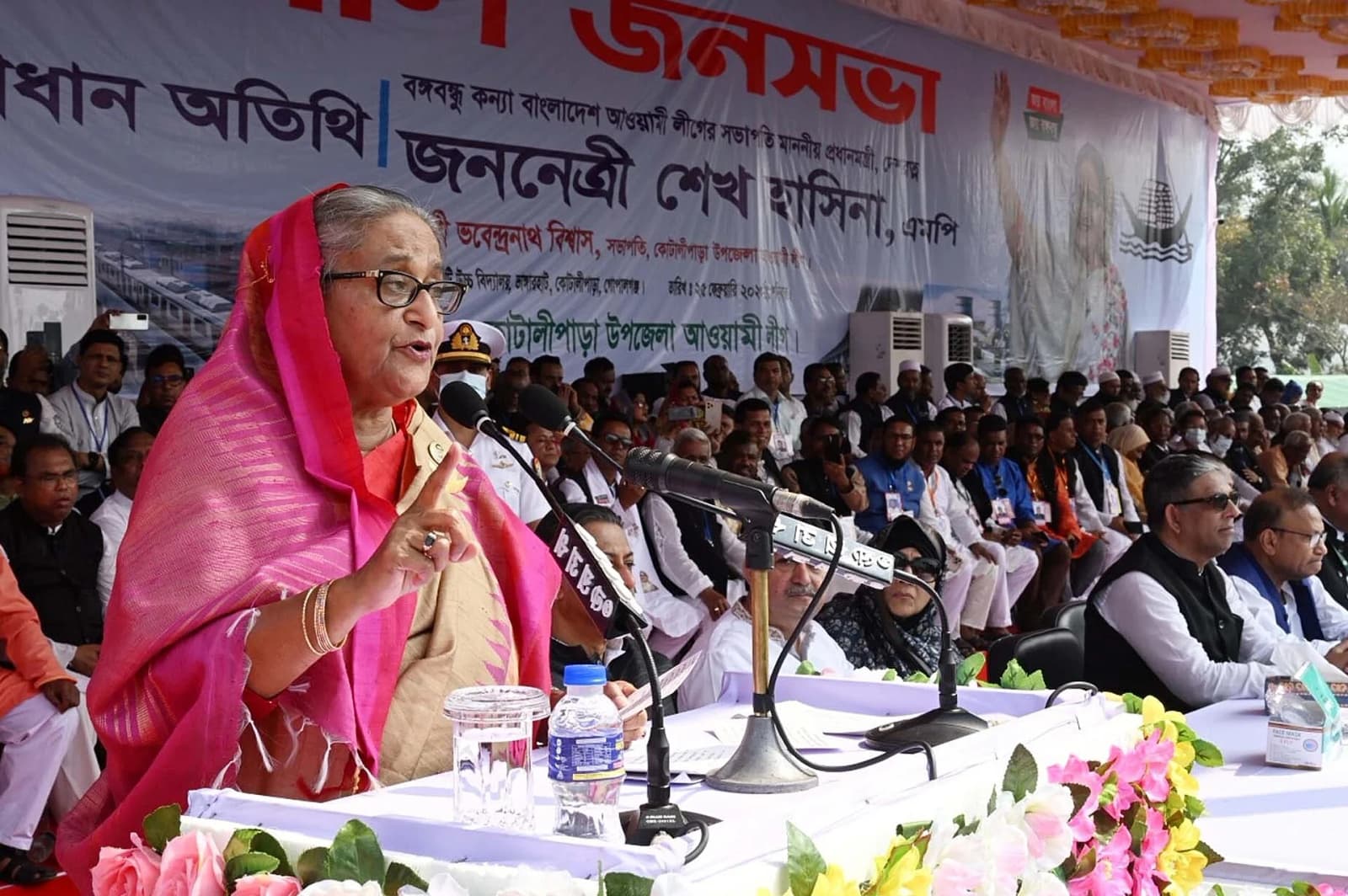
Bangladesh has again asked India to hand over former Prime Minister Sheikh Hasina, who has lived in India since fleeing Dhaka in August 2024. In an interview with Reuters on 22 November 2026, published on 23 November, Bangladesh's State Minister for Foreign Affairs, Shama Obaed Islam, said Hasina would be arrested "as soon as she tries to enter Bangladesh", and that Dhaka wants India "to honour the extradition treaty and return her as a convict". As MapMyTimes reported, India's Ministry of External Affairs (MEA) did not respond to Reuters. Here is what the treaty says, what India can do, and what to watch.
Why is it in the news?
It is in the news because Hasina has said she plans to return to Bangladesh in December, and Dhaka has made clear she would go straight to jail. According to Reuters, Bangladesh has rejected her requests for a new passport and national identity card. Her party, the Awami League, has been banned since the 2024 uprising. It held a week of protests backing her return that ended in a nationwide lockdown on 19 November, and police recorded dozens of crude bomb blasts and arson attacks on vehicles in at least 28 districts over 10 days, according to local media cited by Reuters. Obaed Islam called the violence a survival tactic of a "politically bankrupt" party; Awami League leader Khalid Mahmud Chowdhury blamed the current political establishment.
What is Hasina convicted of?
Hasina was sentenced to death in absentia by Bangladesh's International Crimes Tribunal on 17 November 2025 for crimes against humanity linked to the crackdown on the July–August 2024 uprising. She was found guilty on all five counts, according to Bangladeshi media. Former home minister Asaduzzaman Khan Kamal was also convicted. The United Nations has said as many as 1,400 people may have been killed during the unrest. Hasina, in a statement shared by the Awami League, called the verdict the work of "a rigged tribunal established and presided over by an unelected government" and denied the charges.
On the day of the verdict, the MEA said India "has noted the verdict" and that, "as a close neighbour, India remains committed to the best interests of the people of Bangladesh, including in peace, democracy, inclusion and stability in that country."
What is the India-Bangladesh extradition treaty?
The India-Bangladesh extradition treaty is a 2013 agreement under which each country promises to hand over people wanted for, or convicted of, serious crimes in the other. It was signed in Dhaka on 28 January 2013. Under Article 2, an offence qualifies only if it is punishable by at least one year in prison in both countries. Under Article 10, requests go through diplomatic channels; for a convicted person, the request must include a certificate of the conviction and sentence.
The treaty is not automatic. Several articles let the requested country say no:
- Article 6 (political offence): extradition "may be refused" if the offence is "of a political character". But the treaty lists crimes that cannot be treated as political, including murder, culpable homicide, kidnapping and incitement to murder.
- Article 7: a request may be refused if the person can be tried for the same offence in the requested country's own courts, in which case it must refer the case to its own authorities.
- Article 8: extradition may be refused if it would be unjust or oppressive because of the trivial nature of the offence, the passage of time, or because the accusation was not made in good faith in the interests of justice. Military offences that are not ordinary crimes are also excluded.
Can India refuse to send Hasina back?
Yes, India can legally refuse, but it would have to justify the decision under the treaty and its own law. Because the charges involve killings, Article 6's exclusion list makes a simple "political offence" refusal harder. Legal commentators have pointed instead to Article 8's good-faith test. Indian law adds a separate power: Section 29 of the Extradition Act, 1962, as reproduced in a Delhi High Court judgment, lets the central government stop proceedings and discharge a person if it finds the request was not made in good faith, or that surrender would be "unjust or inexpedient" for "political reasons or otherwise".
India has not said which way it is leaning. According to Reuters, the MEA said in April that it was examining Bangladesh's request. In August 2026, MEA spokesperson Randhir Jaiswal said "India is examining the matter under its established procedures", according to bdnews24.com, after the Indian High Commissioner met Bangladesh's Prime Minister Tarique Rahman in Dhaka.
How does it affect you?
For most readers in India, the case has no direct, immediate effect on daily life, but it bears on India's relations with an important neighbour. Dhaka has tied closer cooperation to the issue: Bangladeshi officials told bdnews24.com in August that deeper ties depend on a "conducive environment", and listed unresolved judicial matters as an obstacle. Obaed Islam told Reuters that Bangladesh wants balanced ties that do not compromise its "dignity, self-respect and interests". Any decision on Hasina is therefore likely to weigh on the wider relationship.
What is confirmed and what is not?
Confirmed: Hasina has a death sentence in Bangladesh; Dhaka has formally sought her extradition; India says it is examining the request; and Bangladesh's government says she will be arrested if she returns. Not confirmed: when, or whether, Hasina will actually travel; whether India has reached any view; and whether any talks have taken place on her return. Obaed Islam said there had been no official discussion with India about sending an aircraft to bring her back.
What happens next?
The next step lies with the Indian government, which has given no timeline. If Hasina tries to leave India on her own in December, the extradition question may become moot, because Bangladesh says it will arrest her on arrival. If she stays, India can keep the request under examination, refuse it on treaty or statutory grounds, or begin proceedings under the Extradition Act. Each path carries diplomatic costs, and MapMyTimes will follow any statement from the MEA or Dhaka.
Photo source · DelwarHossain, CC BY-SA 4.0