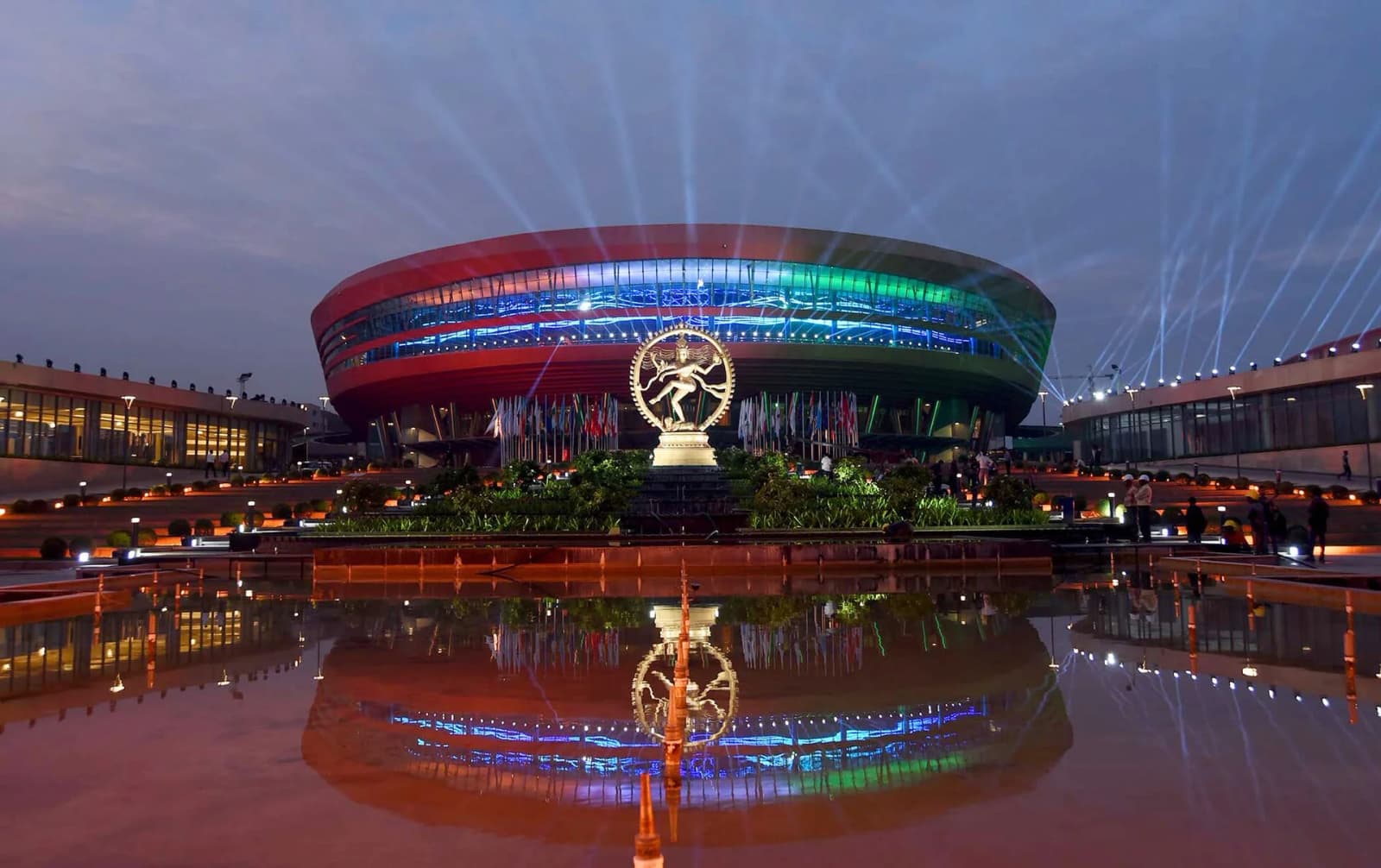
Prime Minister Narendra Modi on 19 November 2026 used the stage of the Federation of Indian Chambers of Commerce and Industry (FICCI), which is entering its centenary year, to put a pointed set of questions to Indian business. Speaking at the chamber's Annual General Meeting and Annual Convention at Bharat Mandapam in New Delhi, he asked companies whether they had hired more people or raised salaries after the government cut corporate tax, told them not to take Indian consumers for granted, and urged them to make "India First" the basis of investment decisions for the next 20 years.
Our news report on the speech is here: Modi tells FICCI to make "India First" the basis of investment. This explainer looks at the questions he raised and the context behind them.
The speech was widely reported within hours, partly because of its unusually blunt tone towards an audience of industry leaders, and partly because it came a day after Congress leader Rahul Gandhi described the economy as being on the brink of disaster. Here is what he said, the background, and what the official data show.
What happened at the FICCI convention?
Mr Modi inaugurated and addressed FICCI's annual convention, themed "Bharat 2047", on Thursday morning. According to the Prime Minister's Office (PMO) announcement of 18 November, the event was expected to bring together more than 2,500 delegates, including chief executives, ambassadors, diplomats and policymakers.
Reports of the speech by Business Today, Upstox, The Hans India, AajTak and the news agency ANI agree on its main threads:
- Quality for Indian buyers: He criticised the habit of selling goods at home by calling them "export quality", and said 140 crore Indians should not be treated as an assured market where anything will sell. "This mindset must change; my countrymen deserve top quality," he was quoted as saying.
- Tax cuts and jobs: Recalling that the basic corporate tax rate had come down from 30% to 22%, he asked the audience: "Did you increase your employees' salaries or hire more staff?" Remarking that industry does not applaud when he mentions tax cuts, he said, "You people want more and more."
- Trade agreements: He pointed out that India has signed free trade agreements (FTAs) with several major economies and asked whether companies had planned to use them. "If you do not take advantage of all my hard work, who will?" he said.
- Self-reliance: He invoked a 1930 message of Mahatma Gandhi on self-reliance and indigenous goods, noting that nearly a century later he was having to make the same appeal. He asked the pharmaceutical industry to identify which active pharmaceutical ingredients and intermediates, now imported, could be made in India, and urged more investment in agriculture and allied sectors.
- Relationship with government: He said industry's experience with earlier governments had been so "bitter" that he was bearing the consequences, described his own as "a government of friends", and invited FICCI to write to him openly about reforms still needed.
Why is FICCI's centenary significant?
FICCI was established in 1927, and the PMO says the organisation completes 100 years on 7 April 2027, making 2026-27 its centenary year. The PMO describes it as representing more than 2.5 lakh companies across the public, private and multinational sectors, directly and through over 300 regional and state-level associations, with partnership agreements with 250 national business associations in more than 100 countries. The Prime Minister told the gathering that it was now time to decide what Indian industry could achieve in the next 20 years, a horizon that runs up to the government's 2047 "Viksit Bharat" target.
Background and timeline
- 20 September 2019: The Finance Ministry announced the Taxation Laws (Amendment) Ordinance, 2019, letting domestic companies pay income tax at 22% if they gave up exemptions and incentives, for an effective rate of 25.17% including surcharge and cess. New manufacturing companies incorporated on or after 1 October 2019 got a 15% option. The government estimated the revenue foregone from the corporate tax cut and related relief at Rs 1,45,000 crore.
- 27 January 2026: Industry bodies, including FICCI, welcomed the announced conclusion of the India-European Union FTA. FICCI president Anant Goenka called the EU the most expansive market covered by India's recent FTAs, according to All India Radio's news service.
- 13 November 2026: The Commerce Ministry reported record monthly merchandise exports for October 2026.
- 18 November 2026: Rahul Gandhi said India stood at the doorstep of an economic disaster that the Prime Minister had created, citing job worries among young people and fear of paper leaks among students, as reported by AajTak. On the same day, the PMO announced the FICCI address.
- 19 November 2026: Mr Modi addressed the FICCI convention.
What do the official numbers show?
The Prime Minister referred to record exports of about $50 billion in October. The Commerce Ministry's release dated 13 November 2026 puts merchandise exports for October 2026 at $49.47 billion, compared with $34.11 billion in October 2025. Merchandise imports were $89.35 billion. Including services, total exports were estimated at $89.99 billion, up 29.90%, and the combined trade deficit at $20.09 billion. Petroleum products were the fastest-growing major item, rising 140.21% to $8.89 billion, while engineering goods rose 36.01% to $12.74 billion. For April to October 2026-27, merchandise exports totalled $309.06 billion, up 21.96%.
On taxes, he said individual income up to Rs 12 lakh a year is now tax-free and that income tax refunds are generally processed within about a week, compared with around eight months earlier, according to the reports. He also said agencies including Moody's, S&P Global Ratings, Fitch, the World Bank and the Asian Development Bank had raised their growth forecasts for India, which he put at around 7%.
His poverty claim, that about 50 crore people had moved out of poverty in 12 to 13 years, was attributed by him to a World Bank report. MapMyTimes has not independently checked that figure against the report.
The different perspectives
The government's view: In Mr Modi's telling, policy has already delivered for business through lower taxes, faster refunds and new trade agreements, and it is now industry's turn to respond with investment, jobs, better wages and higher-quality products. He contrasted this with earlier eras, citing the licence-quota raj, the "Garibi Hatao" period when, he said, poverty could have been tackled but policies and intent fell short, and India's inclusion among the so-called "Fragile Five" economies. Without naming anyone, he said that "abusing day in and day out" would not help the country develop.
The opposition's view: Mr Gandhi's statement a day earlier painted a sharply different picture, saying employment opportunities were shrinking and inequality was rising. The Hindi daily Deshbandhu presented the Prime Minister's remarks as a counter to Mr Gandhi, though the reports of the speech do not show Mr Modi naming him.
Industry's view: By the time of writing, MapMyTimes had not found any reported reply from FICCI or individual companies to the Prime Minister's question on wages and hiring.
What does it mean for Indian readers?
For salaried workers, the most direct question raised is whether the 2019 tax relief, which the government estimated at the time would cost Rs 1.45 lakh crore in revenue, has translated into more jobs and better pay. The Prime Minister posed it publicly; he did not cite data answering it. For consumers, his remarks put pressure on companies to sell the same quality at home as abroad. For exporters and small businesses, his message was that FTAs and record export months only matter if firms actively pursue the markets that have opened.
What is established
- Mr Modi addressed FICCI's AGM and Annual Convention at Bharat Mandapam on 19 November 2026; the theme was "Bharat 2047" (PMO).
- FICCI was founded in 1927 and completes 100 years on 7 April 2027 (PMO).
- The 22% optional corporate tax rate, with a 25.17% effective rate, was introduced through the September 2019 ordinance (Finance Ministry).
- India's merchandise exports in October 2026 were $49.47 billion, against $34.11 billion a year earlier (Commerce Ministry).
What remains uncertain
- Whether the 2019 corporate tax cut led to higher hiring or wages: the question was raised but no data were presented in the reported remarks.
- The exact wording of the speech: at the time of writing, the official transcript had not appeared on the PMO website, so quotes rely on media reports.
- The poverty figure, which the Prime Minister attributed to a World Bank report not reviewed here.
- How FICCI and its members will respond to the call for reform suggestions and "India First" investment plans.
What happens next?
The convention's discussions cover economic growth, global competitiveness, manufacturing and artificial intelligence, according to ANI-based reports. Mr Modi asked FICCI to send him its suggestions for further reforms, so any formal submission from the chamber will be the next marker. The PMO is expected to publish the full text of the speech, which will allow his remarks to be checked word for word.
Earlier this week, Chief Economic Adviser V Anantha Nageswaran also spoke at a FICCI event: CEA Nageswaran says India may have to manage a strong rupee in FY28. On trade, see also why India-US trade deal signing must wait.
Photo source · Ministry of Culture, Government of India, GODL-India