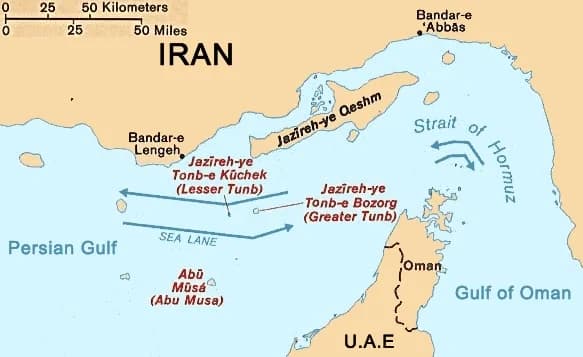
Iran fired drones and missiles at Kuwait and Bahrain on 18 November 2026, targeting the Ali Al Salem air base in Kuwait and sites in Bahrain, home to the United States Navy's Fifth Fleet, in what it presented as retaliation for a US air strike a day earlier on Qeshm Island in the Strait of Hormuz. The strikes came as attacks on merchant ships in the strait continued, including one on the Panama-flagged liquefied petroleum gas (LPG) tanker MT Tara Gas, which had 24 Indians aboard. India's Ministry of External Affairs (MEA) says one Indian seafarer from that ship is still missing and two are in hospital.
The flare-up ends a lull of roughly two months in Iranian strikes on Gulf states, according to The Associated Press (AP), and has put the Gulf back on alert at a time when diplomacy between Washington and Tehran has stalled.
What happened on 17 and 18 November?
Iran struck two Gulf neighbours that host US forces, and its state broadcaster said the targets were air-defence systems and drone and missile launch platforms at Ali Al Salem. Kuwait's military said its air defences intercepted the drones and did not immediately report any damage. Al Jazeera reported that it was the first drone attack on Kuwait since early September. Kuwait's Foreign Ministry called the attacks "criminal", AP reported.
In Bahrain, the Interior Ministry issued two shelter alerts early on Wednesday, each followed by an all-clear, and the military said it had intercepted a number of Iranian attacks without giving details of damage or casualties. Al Jazeera counted four Iranian attacks on Bahrain in six days.
The sequence began on Tuesday, 17 November. AP reported that Iran attacked a US radar installation in Bahrain, after which a US fighter jet struck a missile launch site of Iran's Islamic Revolutionary Guard Corps (IRGC) on Qeshm Island. The same evening, a vessel of Abu Dhabi National Oil Company's shipping arm, ADNOC Logistics and Services, was attacked while crossing the strait. The company said on 18 November that one crew member was unaccounted for, 11 were injured and the rest had been evacuated, adding that search and rescue efforts were "ongoing in co-ordination with the relevant authorities", The National reported. The company did not name the vessel or say who attacked it.
What happened to the Indian crew of MT Tara Gas?
One Indian is missing, two are in hospital and 21 have been brought ashore at Khasab in Oman, according to the MEA's statement on the attack on a commercial vessel off the coast of Oman, as reported by several Indian news outlets. The ministry dated the attack to 16 November, condemned it, called the continuing attacks on commercial shipping "deeply worrisome" and said free and unimpeded navigation through international waterways must be restored. It did not say who carried out the attack. The ministry and the Indian Embassy in Muscat thanked Omani authorities for help with the rescue.
The Wire reported that Union Ports, Shipping and Waterways Minister Sarbananda Sonowal had first said the ship was hit by a missile and that all crew were safe, and that a second strike on Tuesday afternoon forced the crew to abandon ship. Sonowal said the government was working with the ship's management company and regional rescue authorities to trace the missing seafarer.
How did we get here? A short timeline
- 28 February 2026: The United States and Israel attacked Iran, starting the war. Iran then repeatedly fired at US facilities and energy infrastructure in Gulf countries, AP reported.
- During the war: Ali Al Salem has been hit at least 30 times, by AP's count.
- Autumn 2026: A lull of about two months in Iranian strikes on Gulf states.
- 13 and 15 November (Friday and Sunday): Iran attacked US facilities in Bahrain, saying it was responding to US drone surveillance and an attack on Iranian communications towers.
- Since 13 November: The United Kingdom Maritime Trade Operations centre counted at least four vessels struck in the area, Investing.com reported.
- 16–17 November: MT Tara Gas and the ADNOC L&S vessel are attacked; Iran hits a US radar site in Bahrain; the US strikes Qeshm Island.
- 18 November: Iran targets Kuwait and Bahrain.
What are the parties saying?
Iran: Tehran has framed its strikes as responses to US actions. Its army chief, Major General Amir Hatami, was quoted by the Fars news agency as saying the armed forces were "monitoring the enemy's movements" after a third US aircraft carrier reached the region, and that any US misstep would meet an "even more crushing" response, according to Al Jazeera. Iran's navy separately claimed that three oil tankers were on fire after hitting naval mines, a claim not independently confirmed.
Gulf states: Saudi Arabia's Foreign Ministry condemned the attacks on Kuwait and Bahrain "in the strongest terms". Gulf Cooperation Council Secretary-General Jasem Mohamed Albudaiwi held Iran "responsible for this escalation". Qatar, which has been mediating, called it "a dangerous escalation" that risks undermining diplomacy.
United States: The US military did not immediately comment on the 18 November strikes, AP said. President Donald Trump has sent mixed signals, saying new strikes are highly unlikely while also sending a third aircraft carrier and thousands more troops to the region. At a Senate hearing on 17 November, Acting Navy Secretary Hung Cao said he could not give a full damage assessment for Bahrain because it is "a nonpermissive area for us to go".
Analysts: Hamidreza Azizi of the International Crisis Group told AP that "the accumulation of military incidents across multiple fronts increases the risk of miscalculation and escalation". Danny Citrinowicz of Israel's Institute for National Security Studies said Iran appeared to be pursuing "deliberate, calibrated escalation", and that the two routes to de-escalation were a negotiated deal or a US decision to lift its naval blockade of Iran.
Why does this matter to Indian readers?
The most direct impact is on Indian seafarers. Beyond the Tara Gas crew, The Wire reported that 14 Indian mariners have died because of the war and 22 Indians in total have been killed by the hostilities.
The Gulf is also home to a large Indian workforce, and Indian missions in the region have previously asked nationals to follow local authorities' instructions during Iranian strikes. Disruption is already reaching travellers: IndiGo has cancelled its Saudi Arabia flights amid the separate conflict in which Saudi-led forces intercepted Houthi missiles over Riyadh.
Energy is the third channel. Much of the oil and LPG shipped out of the Gulf passes through Hormuz. For now, markets appear calm: Investing.com reported that oil prices fell on 18 November as projections pointed to supply soon exceeding demand, and that flows out of the Gulf were recovering, partly because of US naval escorts. A wider war could change that quickly.
What is established and what is uncertain
Established:
- Iran's state media said Iran targeted Ali Al Salem air base, and Kuwait's military said it intercepted drones on 18 November; Bahrain's military said it intercepted Iranian attacks the same day.
- The US struck an IRGC missile launch site on Qeshm Island on 17 November; both sides describe their actions as responses to the other.
- ADNOC L&S says one of its vessels was attacked in the strait on 17 November, with one crew member unaccounted for and 11 injured.
- The MEA says MT Tara Gas, with 24 Indians aboard, was attacked; 21 were evacuated to Khasab, two are in hospital and one is missing.
Uncertain:
- Who attacked MT Tara Gas and the ADNOC L&S vessel. Neither the MEA nor ADNOC has named an attacker.
- Iran's claim that three tankers caught fire after hitting mines has not been independently confirmed.
- The extent of any damage in Kuwait and Bahrain; neither country reported damage or casualties immediately.
- Exact timings of the Tara Gas attacks: the MEA gives 16 November, while ministerial comments reported by The Wire describe a second strike on 17 November.
- What Iran says prompted the earlier Bahrain strikes, including alleged US drone surveillance and an attack on communications towers, has not been independently verified.
What happens next?
The immediate question is whether the tit-for-tat exchange settles back into a lull or widens. Diplomacy is stuck: Investing.com reported that Tehran wants the US blockade lifted and some overseas assets unfrozen before peace talks, while Washington insists Iran must halt all nuclear activity. Mr Trump is also meeting Chinese President Xi Jinping and Russian President Vladimir Putin in Shenzhen (see our explainer on the Shenzhen talks). For Indian families, the search for the missing Tara Gas seafarer, which the Indian Embassy in Muscat is coordinating with Omani authorities, remains the most urgent thread.