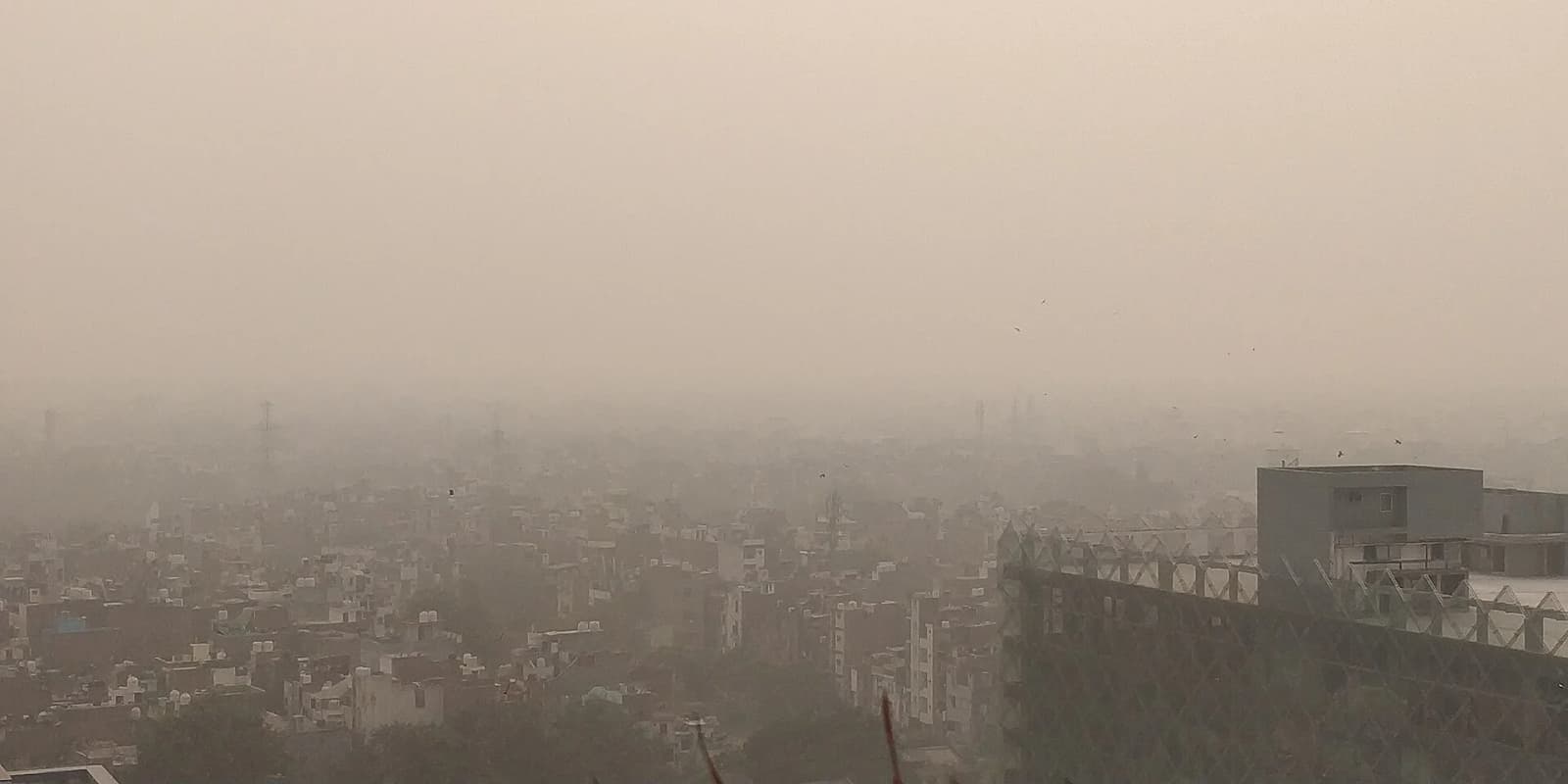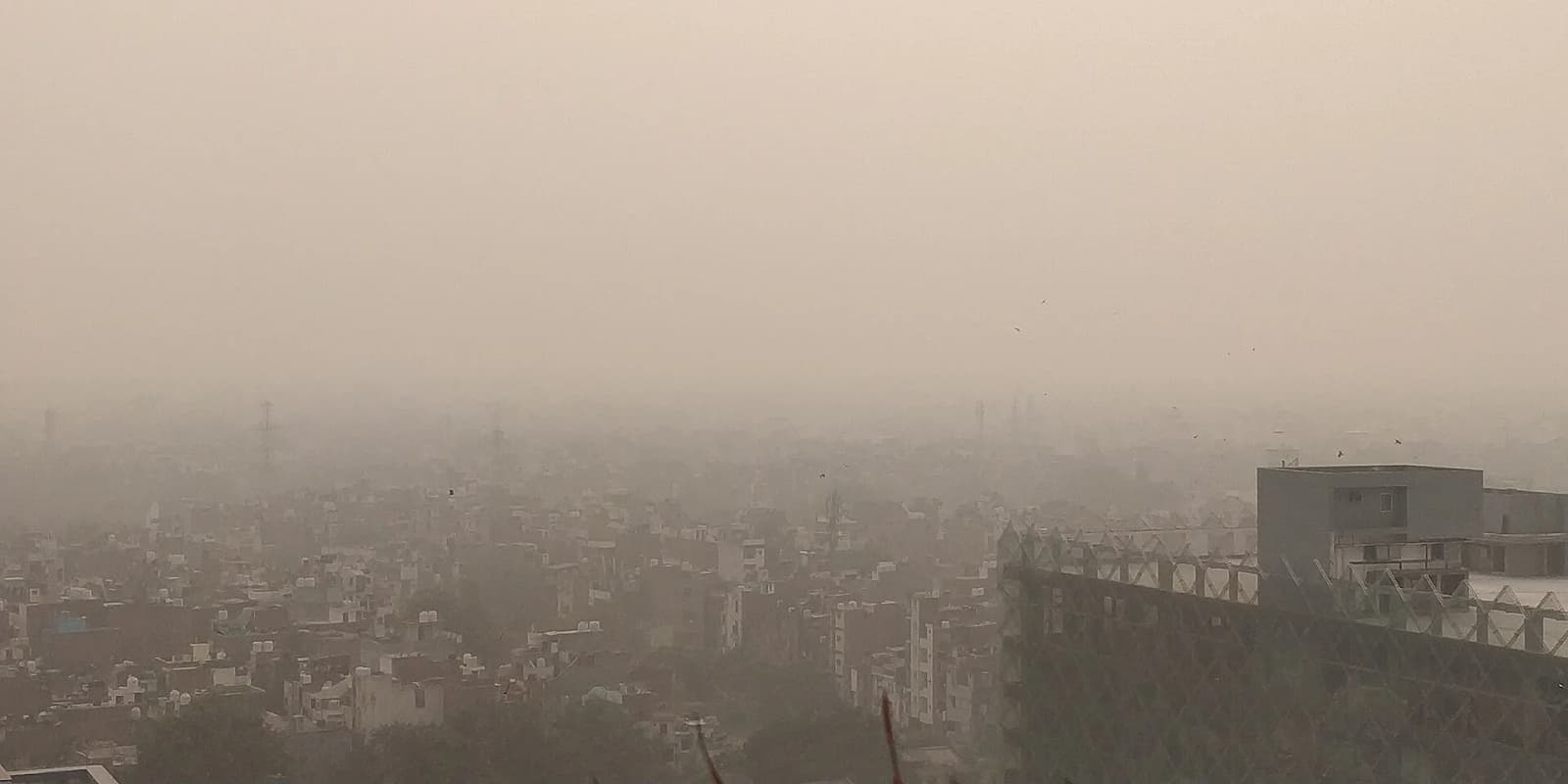
Delhi's air stayed in the 'poor' band on Sunday, 22 November 2026, with some monitoring stations in the capital slipping into 'very poor' during the morning, and Stage II of the Graded Response Action Plan (GRAP) remains in force across the National Capital Region (NCR). As MapMyTimes reported on Sunday, the curbs have now been in place for three weeks. Many residents are asking the same questions: what exactly is Stage II, why is it still on when the city-wide reading is below 300, and what does it change in daily life? Here is what the official orders say.
What is GRAP?
GRAP is a pre-set list of anti-pollution actions that the Commission for Air Quality Management in NCR and Adjoining Areas (CAQM) switches on in stages as Delhi's Air Quality Index (AQI) worsens. The commission's revised schedule, dated 29 September 2026, links each stage to an AQI band: Stage I for 'poor' air (201–300), Stage II for 'very poor' air (301–400), Stage III for 'severe' air (401–450), and Stage IV for the 'severe+' category above that. Each stage adds to the ones below it, so when Stage II is invoked, every Stage I measure also continues.
The decisions are taken by a CAQM sub-committee on GRAP, which reviews Delhi's AQI along with forecasts from the India Meteorological Department (IMD) and the Indian Institute of Tropical Meteorology (IITM).
Why is it in the news?
It is in the news because Stage II has stayed in force even as Delhi's average AQI has hovered in the 'poor' range rather than 'very poor'. The sub-committee invoked Stage II on 2 November 2026, after the AQI rose from 117 on 31 October to 261 on 1 November and 324 on 2 November, which its order attributed to unfavourable weather. Stage I had already been in force since 21 October.
Conditions then got worse, and Stage III was added on 6 November. On 17 November, with the AQI recorded at 204, the sub-committee revoked Stage III, but its order said actions under Stages I and II "shall, however, remain invoked". The Ministry of Environment, Forest and Climate Change release on that decision said IMD and IITM expected air quality to stay 'poor' or 'very poor' in the coming days, and asked agencies to intensify Stage I and II measures to avoid having to reimpose Stage III.
What does Stage II actually require?
Stage II mostly puts obligations on government agencies, not on individual households. Under the schedule attached to the 2 November order, the main actions are:
- Daily mechanical or vacuum sweeping and water sprinkling of identified roads, preferably at night or early morning, with more shifts for the machines.
- Daily water sprinkling with dust suppressants on heavy-traffic corridors and congestion points before peak hours.
- Targeted action at identified pollution hotspots, aimed at the main source in each one.
- More inspections to enforce dust-control rules at construction and demolition sites.
- Higher parking fees to discourage private vehicles.
- Resident Welfare Associations to provide electric heaters to security, sanitation and other staff, so they do not burn biomass or garbage to keep warm.
- Staggered timings for public offices and municipal bodies in Delhi, Gurugram, Faridabad, Ghaziabad and Gautam Buddha Nagar, with other NCR states and the Centre able to decide on staggering for their own offices.
These sit on top of Stage I measures such as enforcing pollution-under-control (PUC) norms, acting against visibly polluting vehicles, banning open burning of waste, enforcing court orders on firecrackers, and regulating the use of diesel generator sets.
How does it affect you?
For most residents, Stage II brings indirect changes rather than outright bans. You may see more road sweeping and sprinkling, stricter checks on construction sites, possibly higher parking charges, and staggered office hours in some departments. Stage II does not, on its own, stop private vehicles or shut schools.
Separately, CAQM said in its 17 November order that a commission order of 30 October restricting dust-generating demolition and outdoor construction across the NCR, barring exempted projects, would continue. That same order had asked government and private offices in Delhi and nearby districts to work with up to 50% of staff physically present for 5 to 20 November, a window that has now passed.
The commission has also urged citizens to follow the Stage I and II "citizen charter". It asks people to check the AQI on the SAMEER app and the GRAP stage on the CAQM website, keep vehicle PUC certificates up to date, switch off engines at red lights, prefer public transport or car-pooling, avoid burning waste or biomass, and work from home where their jobs allow.
Why does Stage II stay on when the AQI is below 300?
Stage II stays on because CAQM's practice is to keep the lower stages active as a buffer while forecasts show a risk of deterioration. The sub-committee's 17 November order said Stages I and II must be implemented "to ensure that the AQI levels do not slip further" into the 'severe' or 'severe+' categories, noting that winter weather is "not so favorable". In other words, the stage in force reflects both current readings and the forecast, not a single day's number.
What happens next?
The sub-committee will keep reviewing the data and can tighten or relax the curbs at short notice. The IITM early warning system's bulletin issued on 22 November forecast 'poor' air for Delhi on 23, 24 and 25 November, and flagged the last two days as unfavourable for the dispersal of pollutants. If the AQI climbs back into the 'severe' range, Stage III could be reimposed; if it improves steadily, the commission could step down to Stage I. Residents can check the current stage on the CAQM website before planning construction work or travel.
Photo source · Prami.ap90, CC BY-SA 4.0