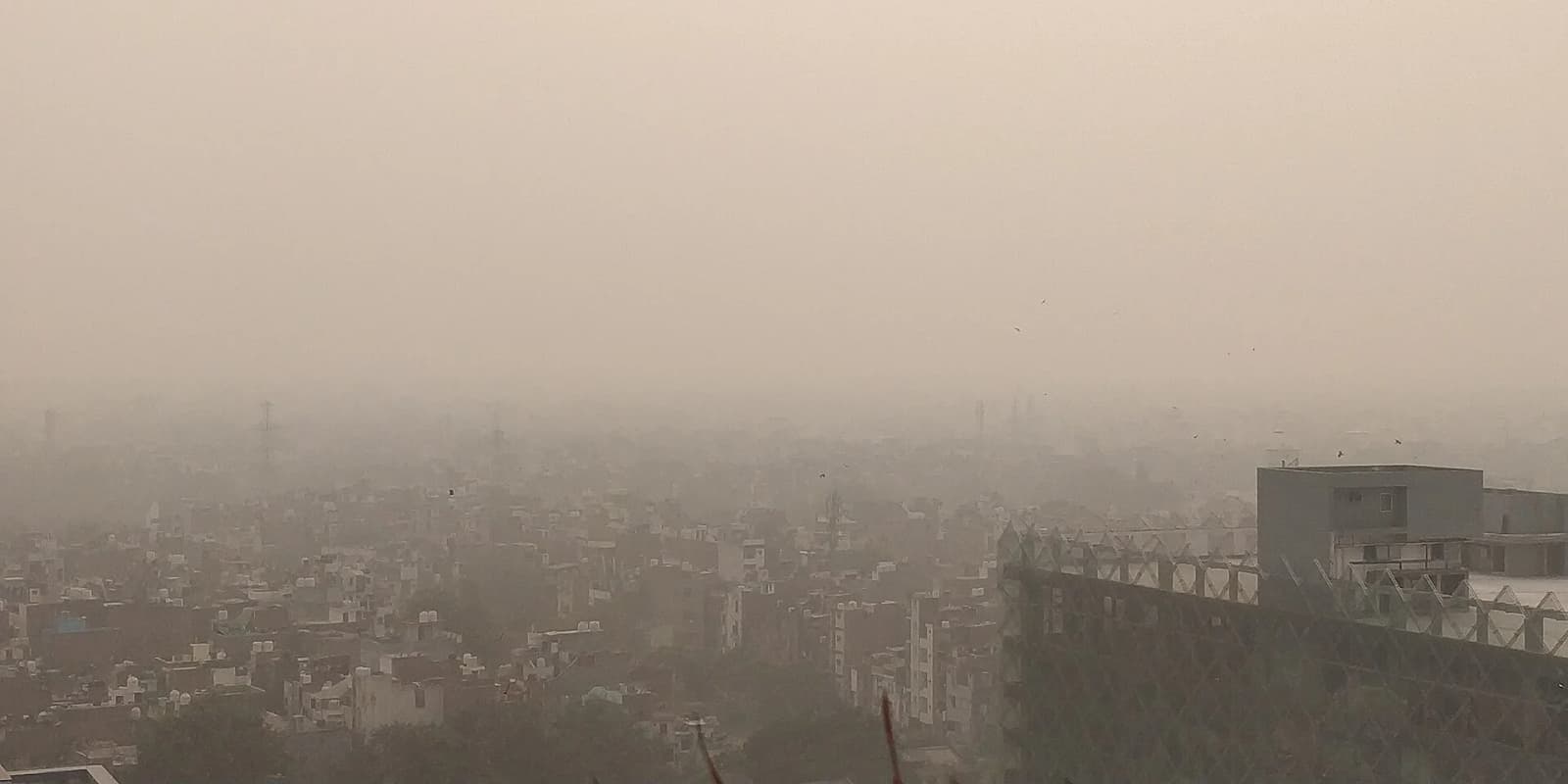
Delhi's air remained in the "poor" category on Sunday, 22 November 2026, with the city-wide Air Quality Index (AQI) hovering around 240 in the early hours, while several monitoring stations across the national capital slipped into the "very poor" band. Restrictions under Stage II of the Graded Response Action Plan (GRAP) stayed in force across Delhi-NCR.
According to Central Pollution Control Board (CPCB) data cited by news agency IANS, Delhi's average AQI stood at 239 on Sunday morning. A reading attributed to the Commission for Air Quality Management in Delhi-NCR (CAQM) put the figure at 243 at 6 am, as reported by Outlook India. Both values fall in the 201–300 range that the national AQI scale classifies as "poor".
Which parts of Delhi had the worst air on Sunday?
Pockets of south, north and outer Delhi recorded the worst readings, with at least eight stations above 300. Reported early-morning CPCB values included:
- Sirifort: 326
- AIIMS: 326 (as per an ANI report around 6.50 am)
- Delhi Technological University (DTU): 314
- NSUT Jaffarpur: 309
- Chandni Chowk: 307
- North Campus: 303
- CRRI Mathura Road: 302
- Punjabi Bagh: 301
Other busy locations such as ITO (295), Burari Crossing (290), Wazirpur (278), Jahangirpuri (270) and Anand Vihar (252) were in the "poor" band. The cleaner end of the spectrum included India Gate and Kartavya Path and the Major Dhyan Chand National Stadium, both at 143, which is "moderate".
What restrictions are in place under GRAP Stage II?
Stage II of GRAP, which applies to "very poor" air quality (AQI 301–400), remains in effect across the National Capital Region. The Delhi government's official AQI health advisory page also lists the current stage as Stage II. Measures reported on the ground include intensified mechanised road sweeping, water sprinkling on roads and stricter dust-control enforcement at construction and demolition sites. Residents have been urged to use public transport and avoid open burning of waste and biomass.
The CAQM, the statutory body that decides when each GRAP stage is invoked or revoked, had earlier this month invoked Stage III actions on 6 November when air quality turned "severe". Stage II is the level currently shown on its website.
Will the air get better this week?
No major improvement is expected immediately. The Air Quality Early Warning System run by the Indian Institute of Tropical Meteorology (IITM) classified Delhi's air as "poor" at 5 am on Sunday, and forecasts cited in reports suggest the AQI is likely to stay in the "poor" range at least until Tuesday, 24 November. A meteorological official said easterly winds of 10–15 km per hour over the previous 24 hours had helped disperse some pollutants, which kept the city-wide average below the "very poor" mark.
How should residents protect themselves?
For days when air quality is "very poor", the Delhi government's advisory recommends that people avoid outdoor activity, wear an N95 mask if they must go out, keep doors and windows shut, use air purifiers and work from home where possible. It advises children, older adults and people with heart or lung conditions to stay indoors and to consult a doctor if symptoms worsen.
The advisory notes that prolonged exposure at these levels can cause respiratory illness. Residents of neighbourhoods such as Sirifort, AIIMS, DTU or Chandni Chowk, where Sunday's readings crossed 300, may find it useful to check the live station data before planning morning walks, outdoor exercise or school-time travel.
Why it matters
Late November is typically a difficult stretch for air quality in the National Capital Region, as calm winds and falling temperatures trap pollutants near the ground. Sunday's readings show that even when the city-wide average stays in the "poor" category, conditions in individual neighbourhoods can be markedly worse, which is why the authorities continue to keep GRAP Stage II curbs in place.
The CAQM reviews air quality data and forecasts regularly and can tighten or relax GRAP stages at short notice depending on how the AQI moves over the coming days.
Photo source · Prami.ap90, CC BY-SA 4.0