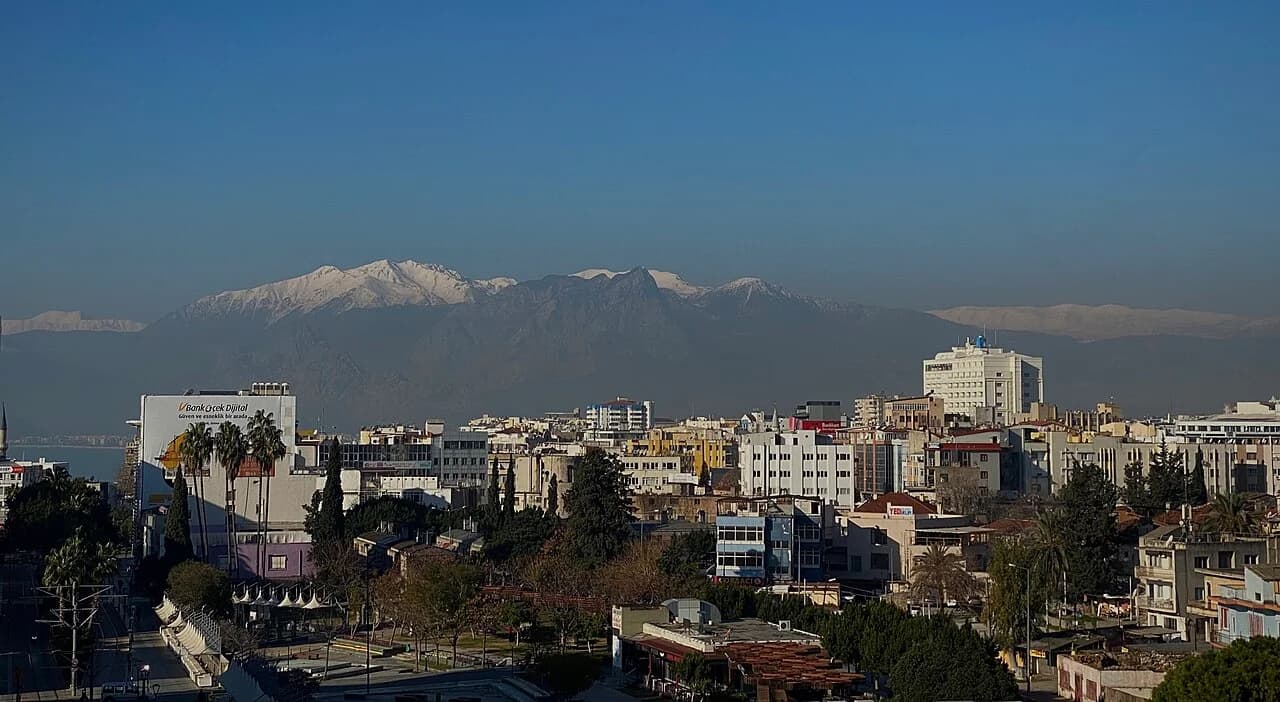
The 31st UN climate summit, COP31, ended in Antalya, Türkiye, on Sunday 22 November 2026 without its main political decision, after the European Union (EU), Panama and others refused a final text that did not mention fossil fuels. MapMyTimes reported the collapse of the talks; this explainer sets out what was at stake, why it failed and what it means for countries such as India.
What is COP31?
COP31 is the 31st Conference of the Parties to the United Nations Framework Convention on Climate Change (UNFCCC), the yearly meeting where nearly 200 countries negotiate how to tackle global warming. It was scheduled for 9 to 20 November 2026 at the Antalya Expo Center under an unusual shared arrangement: Türkiye hosted the summit with its environment minister, Murat Kurum, as COP President, while Australia's climate and energy minister, Chris Bowen, served as President of Negotiations. That compromise was reached in November 2025 after both countries bid to host.
Why is it in the news?
It is in the news because the summit failed to adopt its "cover decision", the headline political text, after running almost two days past its scheduled close. According to UN News, Mr Kurum told the closing plenary: "I understand that there is no agreement on this text. For that reason, these decisions have not been adopted." The Independent reported that he also said there would be no new draft, and that COP31 had by Sunday afternoon become the longest COP on record, overtaking COP25 in Madrid in 2019.
The last time UN climate talks ended without a deal backed by all parties was COP15 in Copenhagen in 2009.
What did the rejected text say?
The final draft acknowledged, for the first time in such a text, that global warming is on course to overshoot the 1.5°C limit, and called for faster development of carbon-removal technologies to bring temperatures back down later, according to UN News and The Independent. It did not name oil, gas or coal. Greenpeace International said the draft also added language on carbon capture, utilisation and storage, which the group argued would extend the fossil fuel industry's lifeline.
Who objected, and why?
The EU, Panama, the Marshall Islands and Norway formally rejected the cover decision at the closing plenary, according to Greenpeace International. Darragh O'Brien, Ireland's climate minister speaking for the EU, called the omission of fossil fuels "unconscionable", The Independent reported. UN News said Panama argued that governments should "act" rather than "negotiate the minimum threshold", and that the Marshall Islands called the deal a betrayal of front-line communities.
Other groups took different lines. Saudi Arabia, speaking for the League of Arab States, defended the text's references to carbon capture and storage and rejected claims of greenwashing, UN News reported. Ghana, for the African Group, said finance, loss and damage and a just transition had received only "a single generic sentence", but that the group would not block consensus. The Independent reported that China and India raised objections but accepted the cover text to keep the process moving.
Money was the second fault line. Mr Bowen described the outcome as "very disappointing" and named fossil fuels and climate finance as the dealbreakers, The Independent said. Greenpeace said the goal agreed at COP30 to triple adaptation finance still has no number attached, and that talks on a Just Transition Mechanism did not conclude.
What was India's position?
India went into the talks stressing fairness rather than new targets. In India's national statement on 18 November 2026, Union Environment Minister Bhupender Yadav said "Equitable access to the remaining, depleted, carbon budget is non-negotiable" and that "The developed world must honestly and expeditiously discharge their climate-finance obligations", according to Down To Earth. He added that "Success at Antalya must be measured by implementation".
How does it affect you?
In the short term, nothing in Indian law or policy changes, because a failed COP decision does not cancel earlier agreements. The 2015 Paris Agreement, and the commitment made at COP28 in Dubai in 2023 to transition away from fossil fuels, remain in place. The Independent noted that the failure does not erase obligations from previous summits.
The longer-term effect is about pace and money. UN Secretary-General António Guterres said he was "deeply disappointed" and warned the world is on course to exceed 1.5°C. "There may be no consensus in the negotiating room. There is no ambiguity in the science," he said, according to UN News. For Indian readers, the stakes show up in heatwaves, erratic monsoons and the cost of adapting to them; without an agreed number for adaptation finance, developing countries have less certainty about outside support.
What is established and what is still uncertain?
Established: the cover decision was not adopted; the EU, Panama, the Marshall Islands and Norway rejected it; the text did not mention fossil fuels. Uncertain: whether any technical decisions taken separately at Antalya will be carried forward, and how countries that launched their own fossil-fuel transition roadmaps at COP31 will build on them. Greenpeace said Pacific nations will also look to parallel routes such as the International Court of Justice advisory opinion and the Santa Marta process.
What happens next?
Negotiations move to COP32. Ethiopia was endorsed by the African Group during COP30 in Belém in November 2025 to host it in Addis Ababa in 2027. The unresolved questions on fossil fuels and finance will carry over to the next rounds of talks. "The take-home message from COP31 is clear: the world must do much more to confront the climate crisis," Mr Guterres said.