The European Space Agency (ESA) and the Japan Aerospace Exploration Agency (JAXA) have put their joint BepiColombo spacecraft into orbit around Mercury, the planet closest to the Sun. ESA confirmed the capture on Saturday, 21 November 2026, after mission controllers at the European Space Operations Centre (ESOC) in Darmstadt, Germany, received signals from the spacecraft and checked its first telemetry. The arrival ends a journey of nearly eight years, but the mission team has also reported that the main braking burn ran shorter than planned because of a software issue, and it has promised a fuller update on Monday, 23 November.
MapMyTimes reported the orbit arrival in its news story, BepiColombo enters Mercury orbit after an eight-year journey. This explainer answers the main questions readers are asking.
What is BepiColombo?
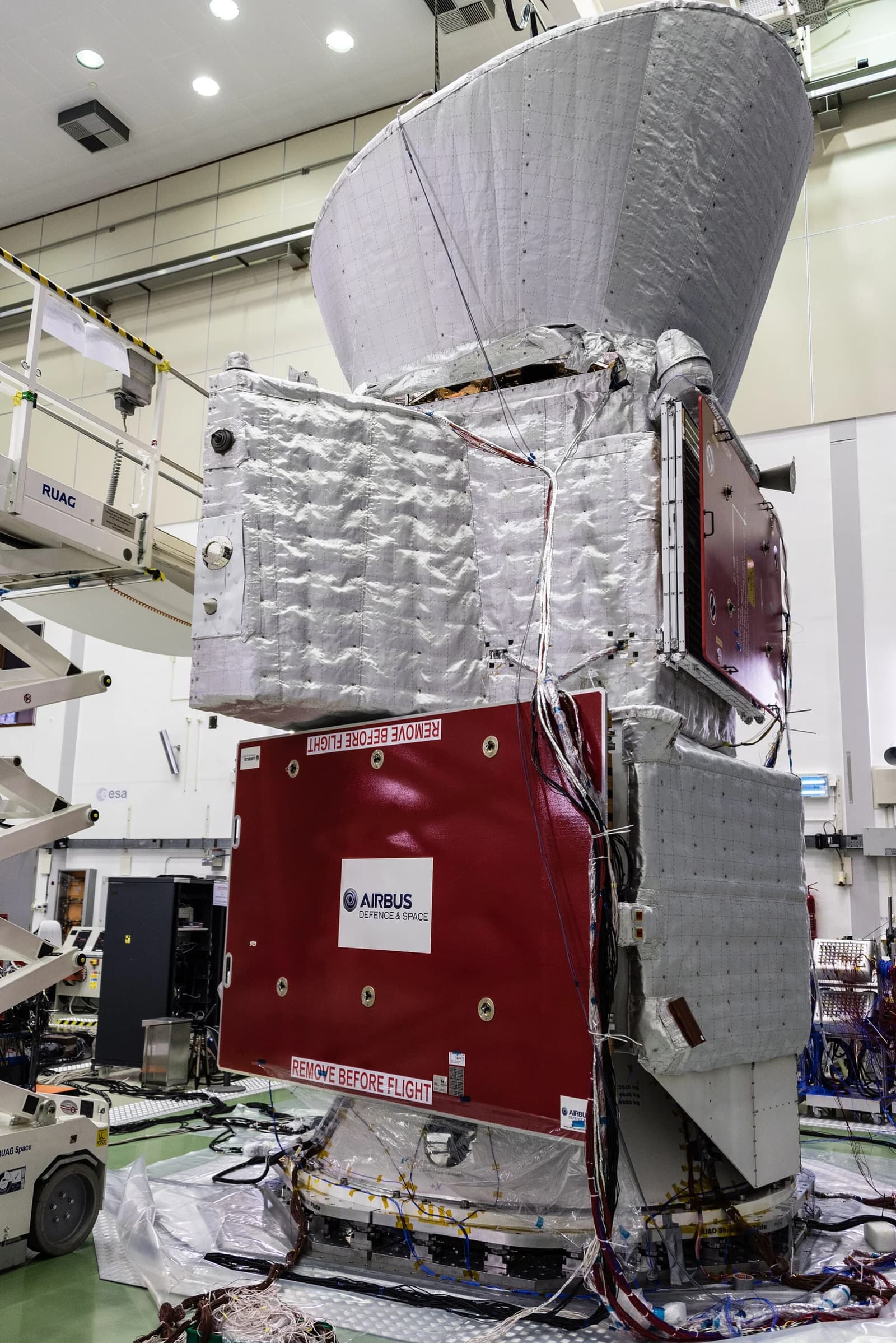
BepiColombo is a two-spacecraft science mission to Mercury, led by ESA in close collaboration with JAXA. It carries ESA's Mercury Planetary Orbiter (MPO), which will study the planet's surface, composition and internal structure, and JAXA's Mercury Magnetospheric Orbiter, known as Mio, which will study Mercury's magnetic field, its magnetosphere and how they interact with the solar wind streaming from the Sun.
The two orbiters travelled to Mercury stacked on top of each other, along with a propulsion stage called the Mercury Transfer Module. They launched in October 2018 on an Ariane 5 rocket from French Guiana. The mission is named after Giuseppe "Bepi" Colombo, the late Italian scientist and mathematician.
Why is it in the news?
BepiColombo is in the news because it has just become only the second mission ever to orbit Mercury, after NASA's MESSENGER spacecraft, which operated there from 2011 to 2015. According to reports by Space.com and AeroTime, the orbit-insertion engine burn began at 18:24 GMT (11:54 pm IST) on 21 November, with four thrusters on ESA's MPO firing to slow the spacecraft stack enough for Mercury's gravity to capture it.
The initial orbit is an elongated path over Mercury's poles, measuring roughly 590 km at its closest point and 11,640 km at its farthest, according to the Qatar News Agency and AeroTime reports on ESA's announcement. To get there, the spacecraft travelled nearly 10 billion km and made nine planetary flybys: one of Earth, two of Venus and six of Mercury itself.
What went wrong during the burn?
The thruster burn was shorter than planned, the BepiColombo mission team said in an update reported by Space.com on 22 November, blaming a software issue. The team said the spacecraft is safe and that teams at ESOC are investigating. It has not yet said how much shorter the burn was or whether the orbit it reached differs from the one planned.
This is not the mission's first hitch. In 2024, ESA reported that the transfer module was not delivering enough electrical power to the spacecraft's electric thrusters. Engineers restored most of the thrust, but the trajectory was redesigned and the arrival at Mercury was pushed back by about a year, to November 2026.
What is established and what is still uncertain?
Established:
- ESA has confirmed that the BepiColombo stack was captured into orbit around Mercury on 21 November 2026.
- The mission team has said the spacecraft is safe.
- Earlier this year, between September and October, ESA reported that the MPO's science instruments had been switched on together for the first time since the transfer module separated on 3 September, and that early checks showed them in good health.
Uncertain:
- The cause and full effect of the software issue that cut the burn short.
- Whether the schedule for the coming months, including the separation of the two orbiters, will need to change.
Why does Mercury matter to scientists?
Mercury matters because it is the least explored of the rocky planets, and it holds clues to how planets close to their stars form and change. ESA says the mission will study the planet's large iron core, its internal structure, the origin of its magnetic field and the way that field interacts with the solar wind. Once the two orbiters separate, BepiColombo will be the first mission to observe Mercury from two spacecraft in orbit at the same time, letting scientists compare measurements taken at different points around the planet.
Reaching Mercury is difficult because a spacecraft falling towards the Sun speeds up and has to shed a great deal of energy to be captured by a small planet. That is why BepiColombo needed so many flybys to slow down, and why a successful capture burn is a key milestone.
How does it affect you?
BepiColombo has no direct effect on daily life, but the data it gathers will feed into the wider scientific understanding of the inner solar system and of how the Sun's activity affects the planets around it. For students and readers following space science, this week is a rare chance to watch a deep-space mission's arrival unfold in real time. Readers interested in other missions this week can also read our explainer on China's Shenzhou-24 crewed flight.
What happens next?
The next step is an update from ESA on the software issue, which the mission team said would come on Monday, 23 November. According to ESA's published timeline, the two orbiters are due to separate on 9–10 December 2026, after which Mio will settle into its own orbit. A sunshield structure that protected Mio during the cruise is scheduled to be released from the MPO on 16 December. The MPO will then make a series of engine burns to reach its final science orbit on 10 March 2027, and routine science operations are planned to begin in April 2027. ESA posts mission progress on its BepiColombo arrival updates page and its BepiColombo mission page.
Photo source · ESA–C. Carreau, CC BY-SA 3.0 IGO