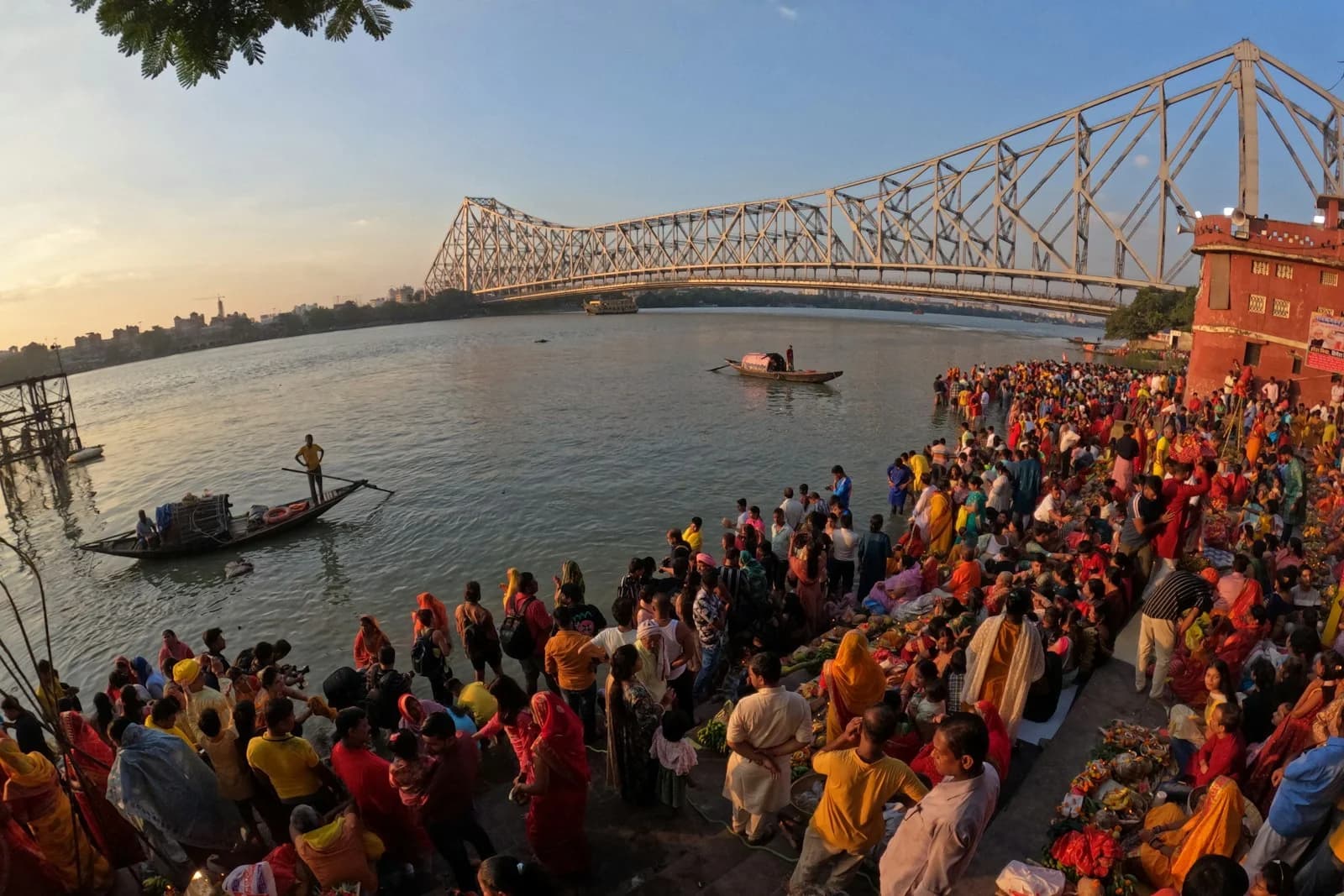
New Delhi: Devotees across Bihar, Jharkhand, eastern Uttar Pradesh and Delhi observed Kharna on Saturday, 14 November, the second day of Chhath Puja, as the four-day festival moved towards its most demanding phase. In the capital, more than 1,400 ghats have been readied for the evening and morning prayers to the Sun that will follow on Sunday and Monday.
What Kharna involves
On Kharna, devotees keep a fast through the day and break it only in the evening with prasad, typically jaggery kheer and wheat rotis, which is first offered to the Sun God and Chhathi Maiya, All India Radio News reported. The ritual opens the strict 36-hour nirjala fast, observed without food or water, that continues until the festival ends.
The festival began a day earlier with Nahay-Khay. According to the broadcaster, devotees will gather at riverbanks, ponds and other water bodies on Sunday, 15 November, to offer arghya to the setting Sun. The observance concludes on the morning of Monday, 16 November, with prayers to the rising Sun, after which the fast is broken.
Delhi's preparations
Delhi is preparing more than 1,400 ghats this year, up from 1,326 last year, All India Radio News reported after Chief Minister Rekha Gupta chaired a review meeting with Chhath committees and department officials at Janseva Sadan earlier this week. Work was under way at the Yamuna ghat in the ITO area, and district administrations and departments were told to inspect ghats regularly and fix any shortcomings immediately.
The most ambitious addition is a new 11-km ghat along the Munak Canal, stretching from the Outer Ring Road to Inderlok. It has steps on both sides and a concrete approach road, the broadcaster said. Open magazine described it as likely to be the city's longest Chhath ghat. The chief minister had announced that BJP national president Nitin Nabin would inaugurate it at an event near Singalpur village.
According to Open, the government's plans include covered tents at larger sites, toilets and changing rooms for women, CCTV cameras at major ghats, better lighting and improved approach roads, with additional sanitation teams on duty during the busiest hours. The chief minister had asked departments to finish major work at least two days before the festival, the magazine reported. It also said the Delhi government has declared 16 November a public holiday.
Why it matters
Chhath holds special importance for families with roots in Bihar, Jharkhand and eastern Uttar Pradesh, and in cities such as Delhi it draws very large crowds to a limited number of water bodies within a few hours at sunset and sunrise. That concentration is why the number of ghats, crowd management, sanitation and lighting become the main civic tests of the festival each year.
What happens next
The evening arghya on Sunday is expected to bring the largest gatherings to the ghats. Since the offering is tied to the exact moment of sunset and sunrise, timings differ from city to city, and devotees generally follow local ghat committees or panchang listings. The festival ends after the dawn prayers on Monday.