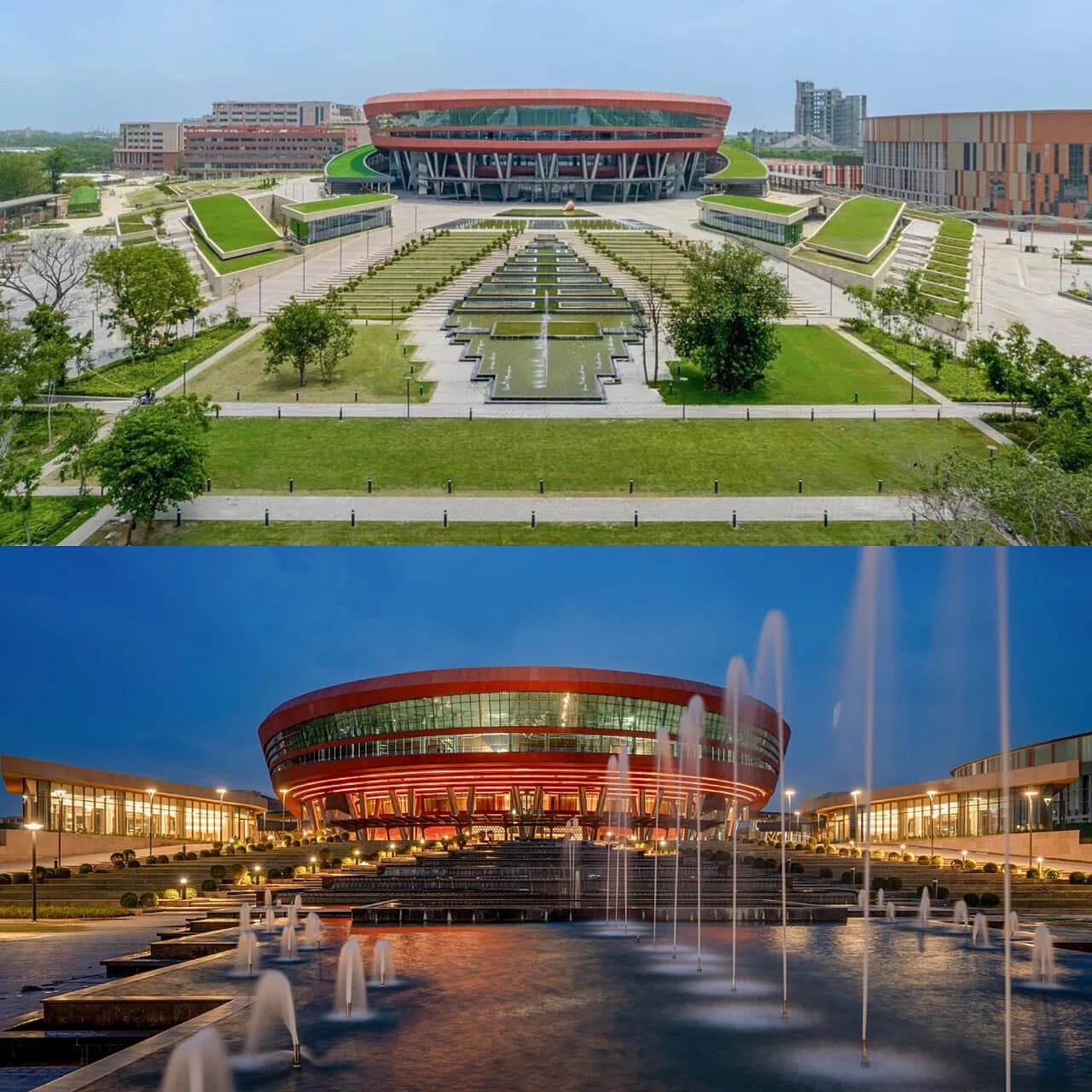
The Union Ministry of Culture has opened its doors to private investors, philanthropists, technology firms and state governments, asking them to help turn India's heritage into jobs, enterprise and global reach. The call came at "Creative India: Collective Possibilities", a one-day conference on India's creative economy held at Bharat Mandapam in New Delhi on 13 November 2026, the ministry said.
Union Culture Minister Gajendra Singh Shekhawat inaugurated the conclave, which brought together officials from the Centre and states, the ministry's own institutions, industry, the creative community and international partners.
"Creative power is India's real power"
Shekhawat described India as a living civilisation whose creativity belongs to every region and generation. As the world moves towards an economy driven by ideas, he said, the task is to link this talent with opportunity so that culture becomes a base for prosperity and for India's voice abroad.
Culture Secretary Vivek Aggarwal framed the government's role as that of a catalyst. When the ministry opens the door and partners carry the work forward, heritage becomes a living resource for communities, artists and businesses, he said, adding that the ministry's new Creative Economy Division was set up to build such partnerships.
The ministry's assets on the table
Joint Secretary (Creative Economy) Inderjeet Singh presented the ministry's 43 organisations as the public infrastructure of the creative economy. That network spans more than 3,600 protected monuments along with museums, archives, Akademis and Zonal Cultural Centres, he said, citing initiatives from the Kashi Culture Pathway to the Viksit Bharat vision.
Partnerships already under way
The ministry listed collaborations it says are already working:
- The National Culture Fund has completed 66 projects with 39 partners since 1996.
- The Adopt a Heritage programme has partners at 66 monuments.
- The Piprahwa relics of the Buddha were brought back to India through a partnership with the Godrej Industries Group.
- The Sabhyata Foundation has staged cultural evenings at Purana Qila in Delhi.
- The India Pavilion at Venice in 2026 was delivered with the Nita Mukesh Ambani Cultural Centre and the Serendipity Arts Foundation.
- A new memorandum of understanding with Google Arts & Culture is meant to take Indian heritage to audiences worldwide.
Four conversations
The day was organised around four sessions: Investing in Culture, Culture-Led Spaces, Culturepreneurs, and Technology and Communication. Patrons, investors, heritage practitioners, designers, entrepreneurs and technology leaders discussed trusted channels for philanthropy and private capital, how monuments, museums and festivals can work as living destinations, routes for artisans and designers to grow from livelihoods into enterprises, and new ways to present India's knowledge and stories to the world on its own terms, the ministry said.
Why it matters
The conclave marks a shift in how the ministry describes itself: less as a sole funder and custodian, more as a convener that sets rules and opens access while others invest. For artisans, cultural start-ups and heritage sites, that could mean new sources of money and visitors beyond government grants. It also links culture to tourism, since monuments, museums and festivals were discussed as destinations rather than only as protected sites.
What comes next
The ministry said it envisages a common, evolving framework for the creative economy built on measurable outcomes, simpler facilitation and structured routes for capital to flow into culture. Takeaways from the conference will shape its continuing engagement with states, institutions and partners in India and abroad. It invited state governments, cultural bodies, industry, philanthropists, creators and the international community to help design that framework and to work with its institutions in turning heritage and living traditions into lasting livelihoods and a stronger global presence.
PS · Ministry of Information and Broadcasting, GODL-India