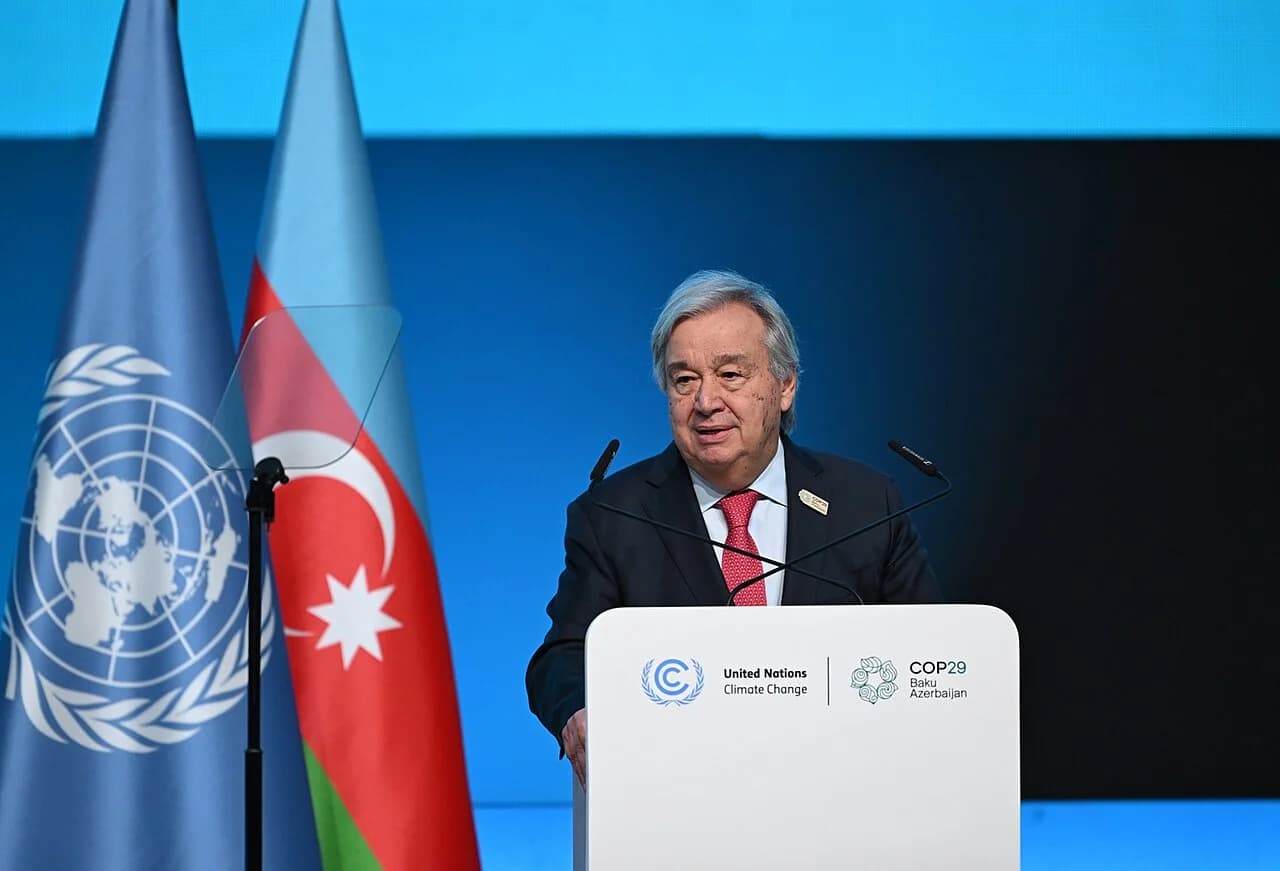
Money for the countries hit hardest by climate change took centre stage at the COP31 climate conference in Antalya, Türkiye, on Friday, 13 November, as UN Secretary-General António Guterres cautioned that even a threefold increase in adaptation funding would cover less than a third of what vulnerable nations need.
"Even tripling adaptation finance would meet less than 30 per cent of what is needed," Guterres told reporters, according to UN News. It was his last press conference at a COP as Secretary-General; he leaves office at the end of the year.
Guterres targets fossil fuel profits and an outdated financial system
The UN chief linked climate action directly to peace and poverty. "You cannot build peace on a burning planet," he said. "You cannot eradicate poverty when climate disasters keep throwing people back into it." He called for a quicker shift away from fossil fuels and said "the future of our planet cannot be negotiated on the terms of those profiting from its destruction."
Guterres said he had met the heads of international climate funds earlier on Friday and pressed them to reduce the red tape that makes their money hard to reach, especially for countries with limited capacity. He also questioned the fairness of a global financial architecture designed after the Second World War, when many developing countries had little say. Reforming it could unlock more money, he argued: one dollar put into a development bank's capital could generate eight to ten dollars of lending, and wider use of guarantees could draw in private investors.
Later, at a farewell gathering organised by civil society groups — where he received a "Make Polluters Pay" award and a standing ovation — Guterres repeated his call for fossil fuel companies to be taxed on their extraordinary profits to support people suffering from a crisis they did little to cause. "We face lobbies. We face powers that are putting pressure on governments," he said.
An $840 billion shortfall in sight
UN climate chief Simon Stiell told a ministerial meeting that "many developing countries are trapped in a downward loop of debt, disaster, and devastating capital costs," adding that climate finance must help them break free.
Under existing agreements, developed countries are expected to lead in mobilising at least $300 billion a year for developing nations by 2035, as part of a wider goal of $1.3 trillion. An assessment highlighted at COP31 suggests that, on current trends, annual climate finance could fall $840 billion short of that larger figure.
Some new money was announced on the day. Development finance institutions from Britain, Norway and Canada said they plan to mobilise $10 billion for climate projects in emerging markets by 2030.
Kaveh Zahedi of the UN Food and Agriculture Organization told UN News that only around five per cent of climate-related development finance goes to agriculture, a share that is shrinking. "The biggest risk is not investing in agriculture," he said, warning of rising food insecurity and hunger. UN University expert Sinja Buri highlighted parametric insurance, which pays out automatically when set thresholds such as wind speed or rainfall are crossed; a programme of this kind operates in eight Pacific countries and has helped tens of thousands of people so far.
Why it matters and what comes next
Finance is the issue on which the interests of rich and poor countries diverge most sharply. Protesters at the venue, including a Nigerian activist who spoke about drought around Lake Chad, asked why countries that contributed little to global emissions face far higher borrowing costs than wealthier nations when coping with climate impacts.
According to UN News, negotiators remain divided on how to measure progress towards tripling adaptation finance by 2035 — including which baseline to use — on who should pay, and on predictable funding for loss and damage. Developing countries are seeking firmer commitments from wealthy nations. Both finance and fossil fuels are still unresolved in the COP31 Presidency's draft political declaration, and the conference is scheduled to end on 20 November.
PS · Press Service of the President of the Republic of Azerbaijan, CC BY 4.0