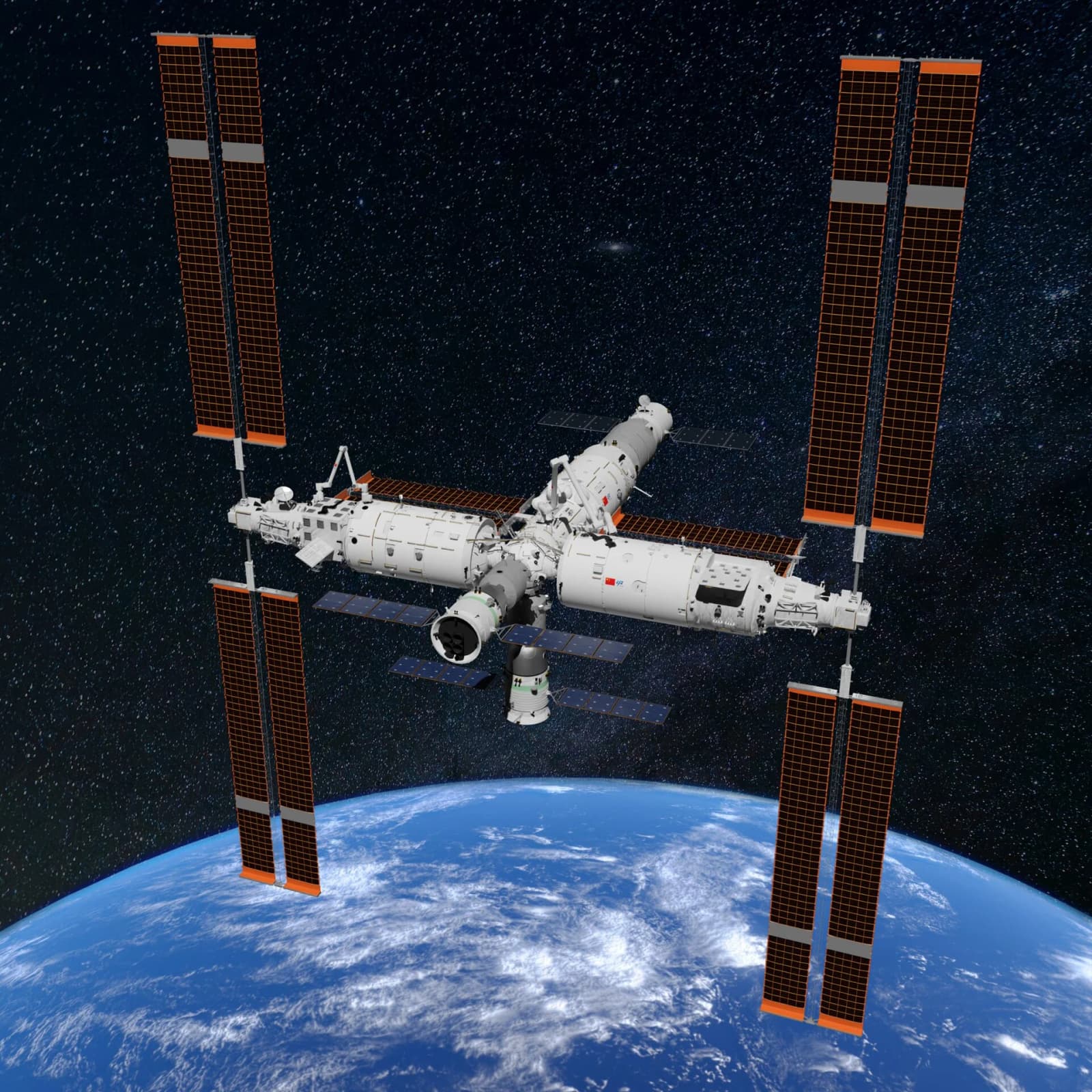
China has launched its Shenzhou-24 crewed spacecraft and docked it at the Tiangong space station, marking the first time a foreign astronaut—Pakistan's Muhammad Zeeshan Ali—has entered orbit aboard a Chinese mission.
Carried aloft by a Long March-2F rocket from the Jiuquan Satellite Launch Centre in northwest China at 8:18 am local time (0018 GMT) on Wednesday, November 25, 2026, Shenzhou-24 is commanded by Tang Hongbo with flight engineer Wu Yi and payload specialist Ali. Officials confirmed successful orbital insertion and docking at Tiangong hours after liftoff.
Short-Stay Research and Crew Handover
Ali, 40, a former Pakistan Air Force pilot, trained for months in China—including Mandarin instruction—under a bilateral space-cooperation agreement signed between Beijing and Islamabad in February 2025. Unlike Chinese crewmates who typically serve six-month rotations aboard Tiangong, Ali is scheduled for a roughly week-long stay before returning to Earth aboard the outgoing Shenzhou-23 capsule.
During the mission, astronauts plan to conduct more than 90 scientific experiments and technology trials covering space life sciences, microgravity fluid physics, materials science, combustion, and space medicine, including tests involving microalgae and quinoa seeds.
Tiangong's International Pivot Ahead of ISS Retirement
Operational since 2022, Tiangong is currently the only permanently crewed space station operated by a single country after China was excluded from the International Space Station (ISS). With NASA planning to retire the ISS in early 2031, Beijing is positioning Tiangong as an international research platform.
Pakistani Prime Minister Shehbaz Sharif hailed the flight on X as a milestone for Pakistani youth and scientists, while Chinese President Xi Jinping described the joint crew as a reflection of close China–Pakistan cooperation.