The All India Institute of Medical Sciences (AIIMS), New Delhi, is rolling out a voice-based prescription tool across the institute after a pilot in which doctors dictated prescriptions instead of typing them, the government's language-technology mission BHASHINI said on 21 November 2026. The update came at the Global Digital Health Summit (GDHS) 2026 at Bharat Mandapam in New Delhi, where BHASHINI showed how its Indian-language artificial intelligence (AI) is being used in hospitals.
The Digital India BHASHINI Division, part of the Digital India Corporation under the Ministry of Electronics and Information Technology (MeitY), set out the details in a release issued through the Press Information Bureau. Its exhibition at the two-day summit, held on 20 and 21 November, featured AIIMS, the Jawaharlal Institute of Postgraduate Medical Education and Research (JIPMER) and the Indian Army's Directorate General of Medical Services.
What are hospitals actually using it for?
Mainly for paperwork that doctors would otherwise type by hand. Each of the three institutions showed a different use:
- AIIMS New Delhi has linked BHASHINI's speech-to-text service with the prescription module of the National Informatics Centre's eHospital system, so doctors can dictate prescriptions in busy outpatient departments. Prof Dr Vivek Tandon, professor in charge of the computer facility at AIIMS, said a pilot in the Neurology and Neurosurgery departments drew positive feedback from doctors, and the application is now being extended across the institute.
- JIPMER has integrated e-BHASHINI with e-Sushrut, its hospital management information system. Doctors can record case histories, inpatient notes and discharge instructions by voice, in English or supported Indian languages.
- The Army's medical services use the technology in Dhanwantri, where doctors' spoken clinical notes are converted into typed text.
BHASHINI also demonstrated Shrutlekh, its speech-to-text tool for real-time multilingual transcription and translation, along with its mobile app, the Data Daan platform for crowd-sourced language data and Granthika, a platform for collecting and digitising written and oral language resources.
Why does language matter in a hospital?
Because patients often arrive speaking different languages, and record-keeping eats into doctors' time. Major General Sandeep Bhalla, Additional Director General of Medical Services, said the Army's hospitals serve serving personnel, ex-servicemen and their families from across the country who speak many languages. "This will not only save valuable time for doctors but also make patients more comfortable by allowing them to communicate in the language of their choice," he said.
Amitabh Nag, chief executive of the Digital India BHASHINI Division, said that "language must not become a barrier in the delivery of essential services", and that the hospital projects showed how voice tools could fit into work "from patient documentation to prescriptions".
Dr Anand A, deputy officer in charge of JIPMER's IT wing, said the institute aimed to cut the documentation burden on its doctors.
How big is BHASHINI?
According to the release, BHASHINI supports 36 Indian languages for text, 23 Indian languages for voice and 35 international languages. Its systems have handled more than 11 billion inferences, or individual AI requests, and process about 24 million a day.
The release did not give figures for how many prescriptions or notes have been created by voice so far, or a timeline for the AIIMS rollout. This week BHASHINI also signed an agreement with the National Institute of Electronics and Information Technology, as MapMyTimes reported in its story on the BHASHINI–NIELIT pact on Indian-language AI tools for skilling.
The summit, organised around the theme "Implementing Artificial Intelligence – AI in Action", brought together government, hospital, industry and academic participants to discuss putting AI to work in healthcare.
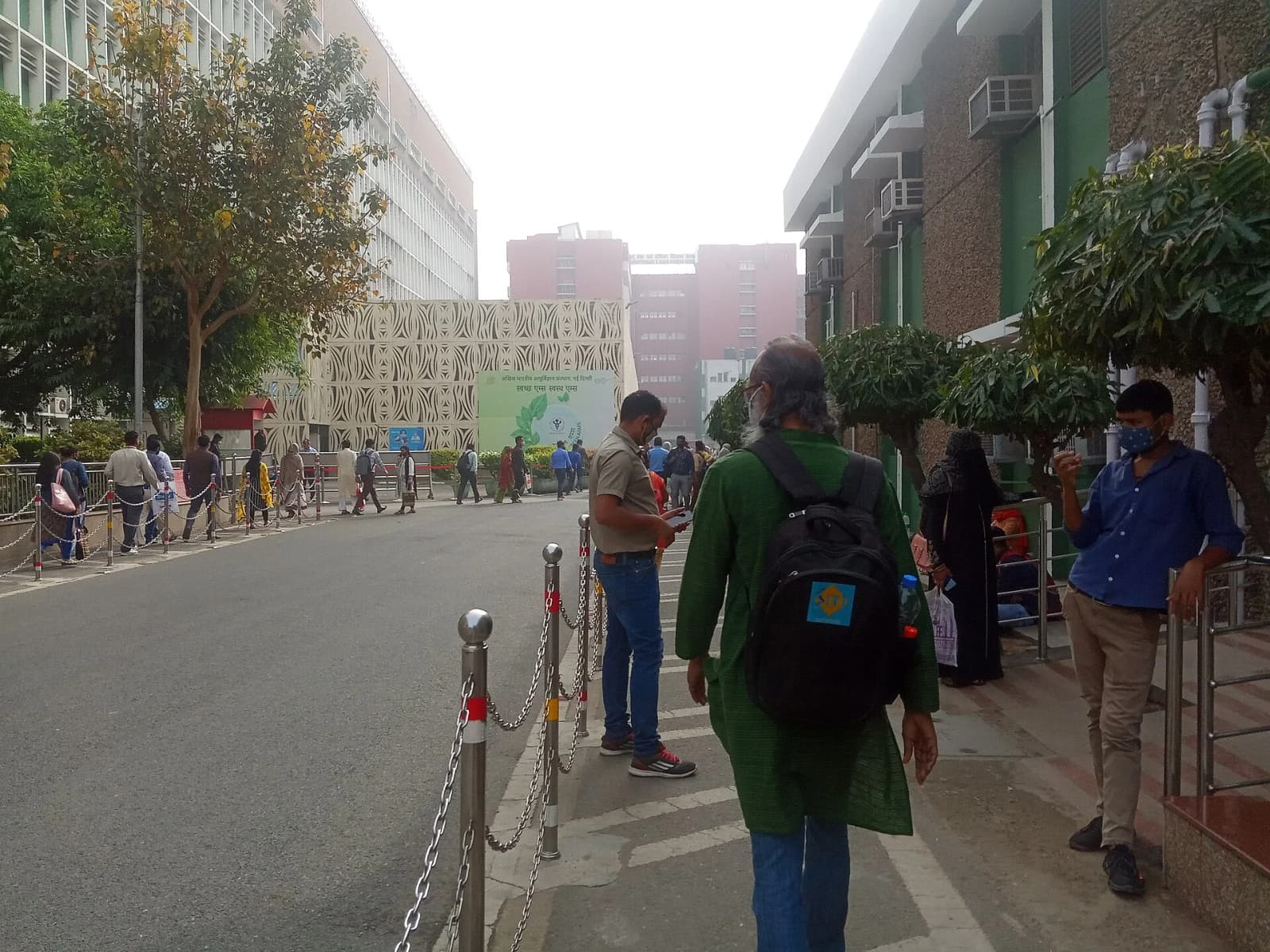
Photo source · Sumita Roy Dutta, CC BY-SA 4.0