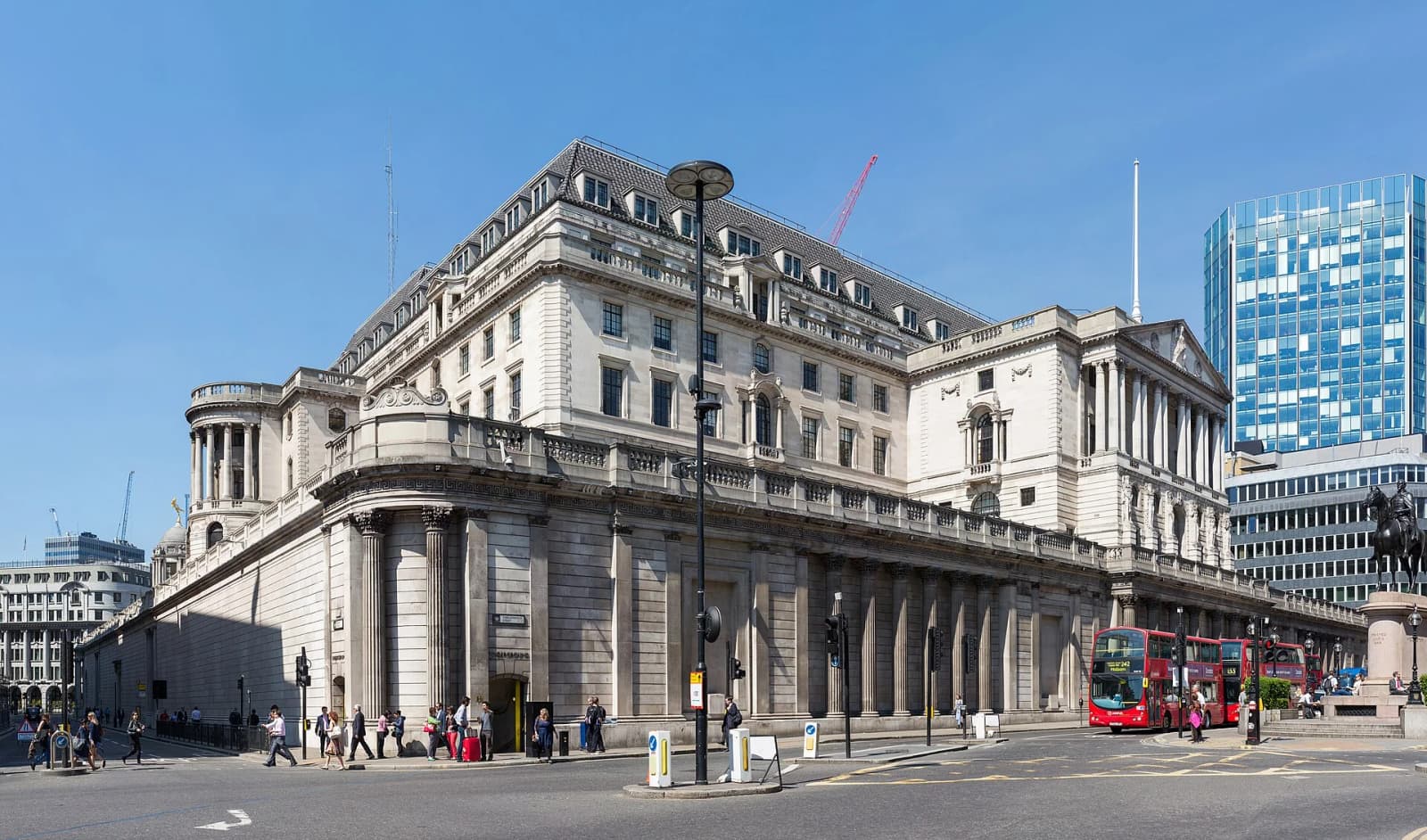
The Bank of England's Financial Policy Committee (FPC) said in its November 2026 Financial Stability Report, published in London on 26 November 2026, that the Middle East conflict has caused "a protracted negative supply shock to the global economy". The report also says UK banks remain well capitalised and that the committee has finished its review of how much capital they must hold.
What risks does the Bank of England see?
The Bank of England sees energy prices, rising government debt and stretched technology valuations as the main risks. According to the report, Brent crude stood at $92 a barrel, compared with $75 at the time of the July report, while European spot gas reached €81 per megawatt-hour, up from about €46. The December 2027 European gas contract has roughly doubled, from about €32 to €60 per megawatt-hour.
The report notes that government debt-to-GDP ratios are rising worldwide and that bond yields in several advanced economies are close to two-decade highs. In the UK, it says, the rise in yields mainly reflects expectations of higher policy rates rather than higher term premia, and gilt and gilt repo markets have functioned well.
Why does artificial intelligence feature in the report?
Artificial intelligence features because the committee considers equity valuations stretched on some measures, with AI and technology stocks pricing in strong future earnings. The report says AI-related equities fell sharply after the US midterm elections and that bond issuance by hyperscalers, the largest cloud-computing firms, is set to exceed $305 billion in 2026, about 8% of global investment-grade issuance.
It also points to sharply wider spreads on US CCC-rated debt and on some lower-quality AI-related borrowers, and to some signs of stress in parts of private credit, though it says stress is more contained among UK borrowers.
What changes for UK banks?
The FPC kept the UK countercyclical capital buffer at its neutral rate of 2%. It said it had completed its review of the bank capital framework. Taking the risk-weighted and leverage proposals together, Tier 1 requirements for major UK banks would fall by about 50 basis points of risk-weighted assets in normal times, and system-wide requirements would be consistent with a benchmark of around 13%.
The Prudential Regulation Authority will consult on lower minimum requirements related to domestic lending, according to the report. The committee also set out its aim of a single releasable buffer that banks could use without automatic restrictions on distributions, and said it would assess progress in the fourth quarter of 2027.
How are households and businesses placed?
The report says household and corporate balance sheets are strong in aggregate, but headroom is being eroded and some households are more affected than others. It adds that UK banks have high liquidity and that impairments remain low.
Why does it matter beyond the UK?
London is a major global financial centre, and the report's warnings about energy prices, sovereign debt and AI-linked financing echo concerns facing other economies, including India, that import energy and rely on global capital flows. Separately, Governor Andrew Bailey has warned that a higher bank surcharge could raise costs for borrowers and savers, as MapMyTimes reported earlier.
What happens next?
The Prudential Regulation Authority's consultation on lower domestic-lending requirements is the next step, and the FPC has said it will review progress on its buffer plan in late 2027.
Photo source · Diliff, CC BY-SA 3.0