The 49th ASEAN Summit opened in Manila on Sunday, 15 November, with Philippine President Ferdinand Marcos Jr. using the opening plenary to press for an "effective and substantive" Code of Conduct in the South China Sea. Over the next three days the Philippine capital will host one of the busiest diplomatic weeks of the year, and Prime Minister Narendra Modi is due to arrive on Monday for the 23rd ASEAN-India Summit and the 21st East Asia Summit, both scheduled for 17 November.
The gathering has drawn heavy coverage across Indian, Southeast Asian and international outlets because of the line-up it brings together: ASEAN's 11 member states, the leaders of Australia, Japan, South Korea, New Zealand, Canada and Brazil, China's Premier Li Qiang, UN Secretary-General António Guterres and, according to reports, US President Donald Trump, who is travelling on to the APEC summit in Shenzhen.
What happened on Sunday
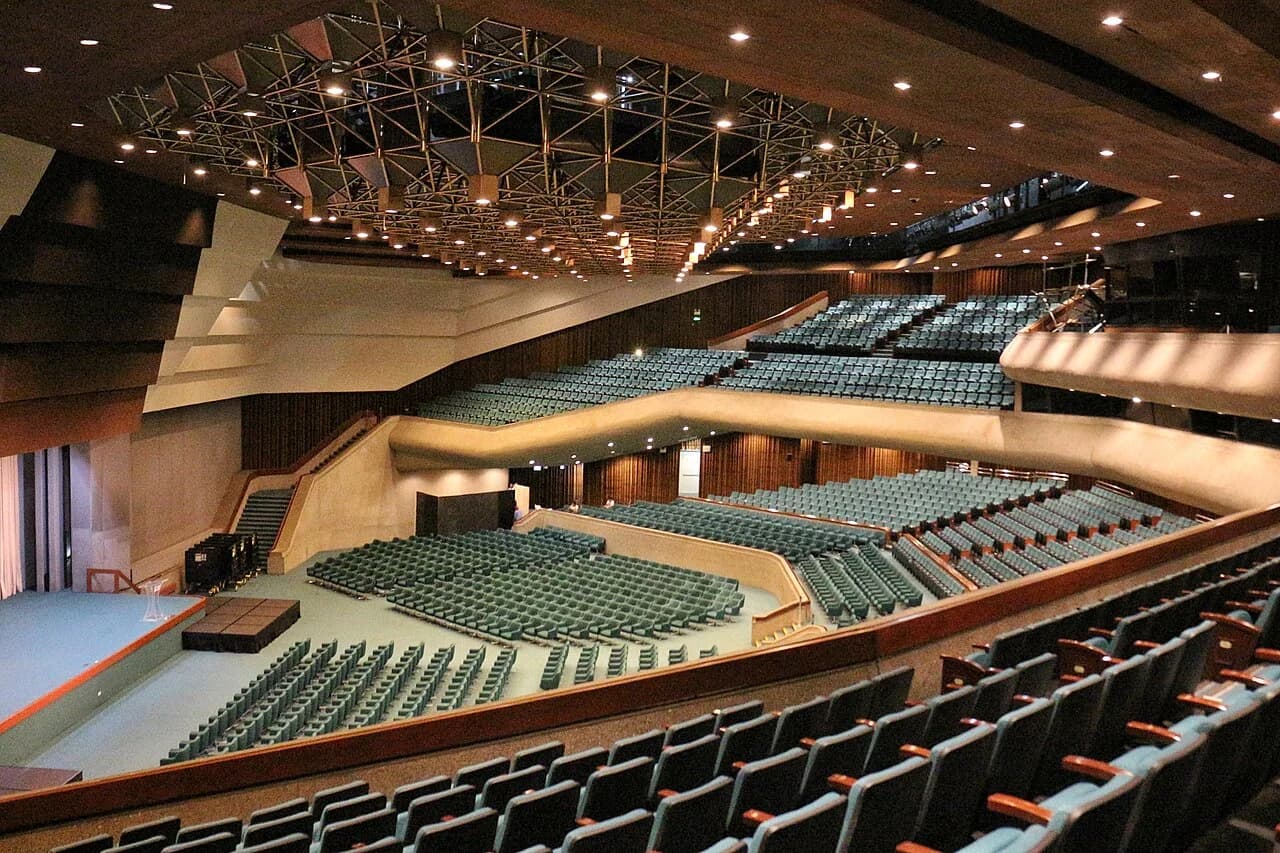
Marcos formally opened the leaders' plenary at the Philippine International Convention Center (PICC) in Pasay City, according to reports carried by ANI and the Philippine press. In his speech he said ASEAN should advance a South China Sea code "in accordance with international law, including the 1982 UNCLOS", the UN Convention on the Law of the Sea.
He listed maritime cooperation and regional security as key priorities of the Philippines' year as chair, and said more than 100 outcome documents had been brought forward across the summit and related meetings. He also said all 19 priority economic deliverables were expected to be completed by the end of 2026, including the signing of the ASEAN Digital Economy Framework Agreement, and noted that Türkiye had joined as ASEAN's 12th Dialogue Partner.
A day earlier, opening the foreign ministers' meeting, Philippine Foreign Affairs Secretary Ma. Theresa Lazaro spoke of "unprecedented headwinds" and "uncertainties that tested the norms of multilateralism", pointing to the Middle East crisis and natural disasters, Open magazine reported, citing ANI.
Background and timeline
- 2026: The Philippines took the rotating ASEAN chair after Myanmar gave up its turn amid its internal crisis, according to the Philippine Daily Inquirer. The theme is "Navigating Our Future, Together".
- May 2026: At the Cebu summit, leaders adopted the Cebu Protocol, formally making Timor-Leste ASEAN's 11th member, the Inquirer reported.
- 12 November: The Prime Minister's Office announced Modi's visit to Manila from 16 to 17 November at Marcos's invitation.
- 13 November: The Ministry of External Affairs (MEA) briefed on the trip; Commerce Secretary Rajesh Agrawal spoke on the stalled ASEAN-India goods trade review.
- 15–17 November: 49th ASEAN Summit and related summits in Manila. On 17 November, Marcos is due to hand the chair to Singapore Prime Minister Lawrence Wong.
- 18–19 November: APEC leaders' meetings in Shenzhen, China.
India's agenda in Manila
The official PMO announcement said India-ASEAN relations are "a central pillar" of India's Act East Policy and its Indo-Pacific vision. It noted that 2026 is being marked as the ASEAN-India Year of Maritime Cooperation, and that 2027 will mark 35 years of dialogue relations and five years of the Comprehensive Strategic Partnership. The ASEAN-India Summit, the release said, will review that partnership, including the ASEAN-India Plan of Action 2026–2030.
At a special briefing in New Delhi, Rudrendra Tandon, Secretary (East) in the MEA, described engagement with the ASEAN platform as "a key element or building block of our Act East Policy". He said the Prime Minister would attend a dinner hosted by Marcos and that "there will be bilateral meetings scheduled with other leaders" on the sidelines. The ministry has not named those leaders.
The trade question
The issue with the most direct bearing on Indian businesses is the long-running review of the ASEAN-India Trade in Goods Agreement (AITIGA). According to ETV Bharat, Commerce Secretary Rajesh Agrawal said there had been "positive movement in the negotiations over the past six months or so" and that "the effort is to see if we can close it within this financial year".
The same report put India's trade with ASEAN at about $128 billion in 2025–26 and India's deficit with the bloc at more than $44 billion. India wants wider market access and deeper tariff cuts, and wants to close routes through which Chinese goods, particularly steel, reach India via Southeast Asia. ASEAN, for its part, wants India to ease sanitary and phytosanitary procedures. Tandon said India wanted the review completed "as soon as possible", while noting that a negotiation with many parties is "far more difficult to execute".
Perspectives from the region
- Manila: Marcos has said "ASEAN needs to act as one" and that unity is needed to find solutions, The Nation (Thailand) reported.
- On Myanmar: Philippine foreign ministry spokesperson Dominic Xavier Imperial said leaders are assessing the bloc's Five-Point Consensus and that their decision will appear in a post-summit document. Myanmar is represented at official level rather than by its military leadership, according to reports.
- On the sea code: Imperial put overall negotiation progress at about 70 per cent, stressing this measured how far the process had moved rather than how much text was agreed. Other Philippine officials have cited a 77 per cent figure, Rappler reported, and a Southeast Asian diplomat told AFP he did not expect a code to be signed at this summit.
- Critics at home: The Inquirer reported that clearing operations around the venue drew criticism for displacing vendors and homeless people; the Palace defended them as needed for delegate safety. Protests against Trump's visit have also been announced.
Why it matters for Indian readers
ASEAN is one of India's largest trading partners, and the size of the deficit makes the AITIGA review a live concern for Indian manufacturers, steel producers and exporters. A political push from the leaders' summit could shape whether the review closes by March 2027, as the Commerce Secretary hopes. The maritime focus also touches India's interest in open sea lanes in the Indo-Pacific, through which a large share of its trade moves. For the Indian community in the Philippines, the MEA has said it is trying to arrange a meeting with the Prime Minister, though this has not been confirmed.
What is established and what is not
Established: the summit opened on 15 November; Modi will attend the ASEAN-India Summit and East Asia Summit on 17 November (PMO); India's stated goals on the trade review and the Comprehensive Strategic Partnership.
Uncertain:
- The length of Modi's trip: the PMO release says 16–17 November, while the MEA briefing referred to 16–18 November.
- A Quad leaders' meeting in Manila: listed in some Philippine schedules, but MEA spokesperson Randhir Jaiswal said only that he would share updates "pertaining to the QUAD" from Manila.
- Which leaders Modi will meet bilaterally, and whether any AITIGA breakthrough will be announced.
- Whether ASEAN will change its approach to Myanmar, and the timeline for a South China Sea code.
What happens next
Leaders from Japan, South Korea and New Zealand are expected on Monday, when Modi also arrives. The ASEAN-India Summit and East Asia Summit take place on 17 November, the same day Singapore takes over the ASEAN chair. Attention then shifts to Shenzhen for APEC on 18–19 November. Any joint statement from the ASEAN-India Summit, and any MEA readouts of bilateral meetings, will be the first indications of whether the Manila visit moves the trade review forward.